Pincio gardens
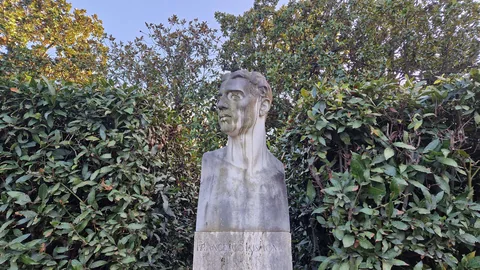
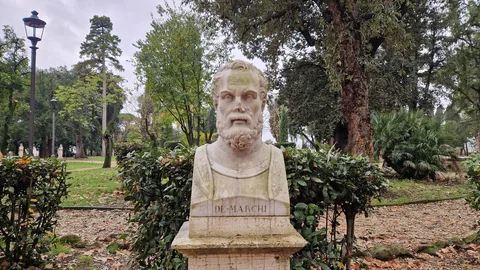
Francesco De Marchi
De Marchi studied fortifications, explored the submerged ships at Lake Nemi, and recorded an ascent of the Gran Sasso in 1573.
Find on the mapThe Pincio busts commemorate people from different eras: poets, artists, scientists, and political figures. Browse their photographs, read their stories, and use the map to find a portrait along the garden paths.
181 places
Featured places first, then A–ZPincio gardens
De Marchi studied fortifications, explored the submerged ships at Lake Nemi, and recorded an ascent of the Gran Sasso in 1573.
Find on the mapPincio gardens
A novelist of historical resistance who also governed during Tuscany’s revolution of 1849.
Find on the mapPincio gardens
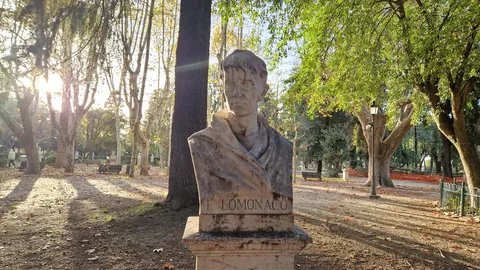
Lomonaco turned the defeat of the Neapolitan Republic into a written indictment and later taught history in Napoleonic Italy.
Find on the mapPincio gardens
Pagano brought Enlightenment arguments about criminal justice into the short-lived Neapolitan Republic of 1799.
Find on the mapPincio gardens
A volunteer from Split in Dalmatia, Rismondo disappeared after capture in 1915 and became a symbol of Italian irredentism.
Find on the mapPincio gardens
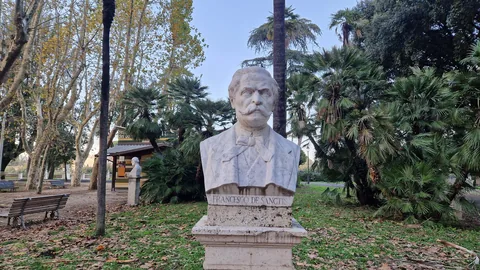
De Sanctis wrote literary history as an account of changing Italian intellectual and moral life.
Find on the mapPincio gardens
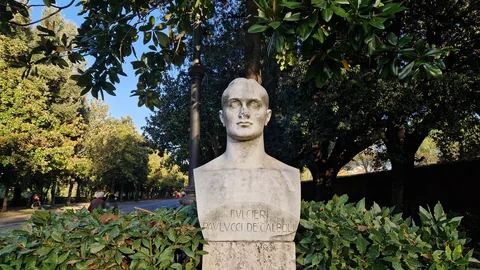
Severely wounded in 1917, Paulucci di Calboli became a public advocate for Italy’s war effort before his death in 1919.
Find on the mapPincio gardens
An exiled poet and Dante scholar whose London household produced Christina and Dante Gabriel Rossetti.
Find on the mapPincio gardens
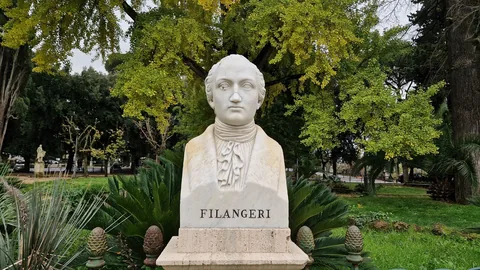
Gaetano Filangieri examined how laws could change society and exchanged ideas with Benjamin Franklin across the Atlantic.
Find on the mapPincio gardens
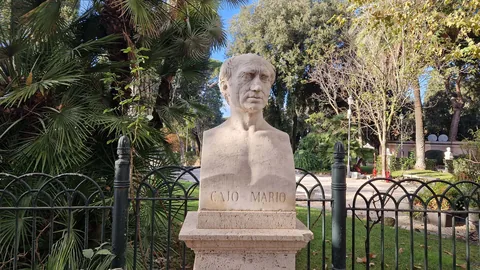
Seven consulships made Marius an exceptional figure in a republic increasingly troubled by military competition and political violence.
Find on the mapPincio gardens
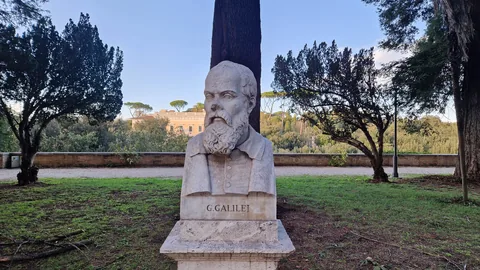
Galileo joined instrument-making, mathematical argument, and observation, while his Roman trial exposed the limits placed on cosmological debate.
Find on the mapPincio gardens
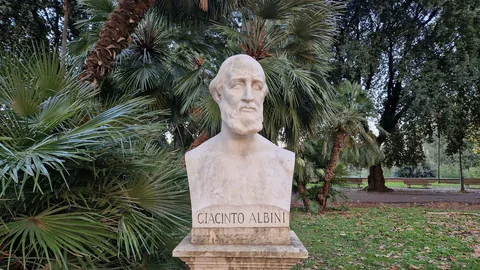
Albini organized the 1860 uprising in Basilicata and helped transfer the region from Bourbon rule to the new Italian state.
Find on the mapPincio gardens
Vignola made the classical orders easier to apply and designed major buildings for papal and Farnese patrons.
Find on the mapPincio gardens
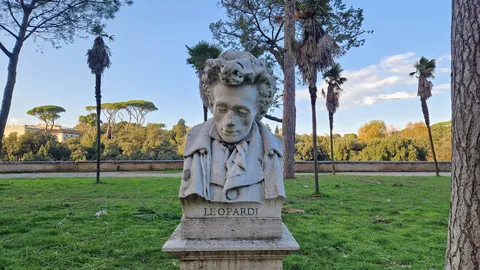
Leopardi’s poetry examines desire and imagination without assuming that the natural world exists for human consolation.
Find on the mapPincio gardens
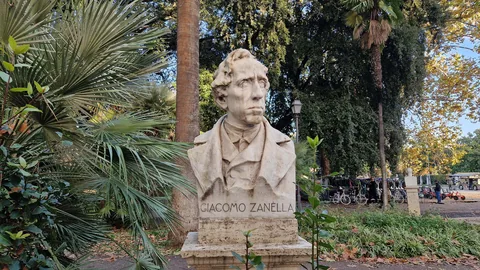
Zanella used a fossil shell to bring geological time into a poem shaped by Catholic belief and nineteenth-century science.
Find on the mapPincio gardens
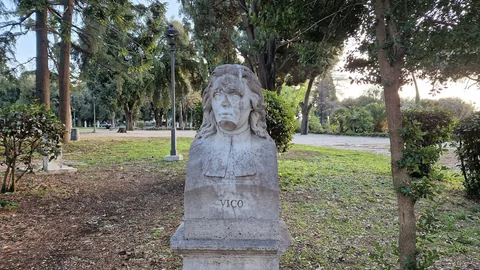
Vico used language and myth to investigate how people create the institutions and assumptions of their social world.
Find on the mapPincio gardens
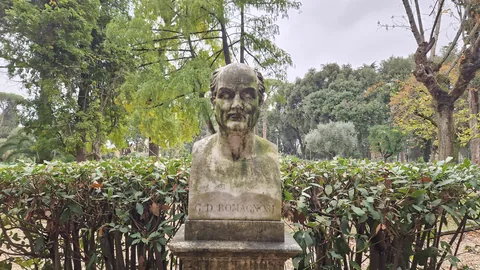
Romagnosi examined punishment, administration, and social development, linking legal thought to the study of human society.
Find on the mapPincio gardens
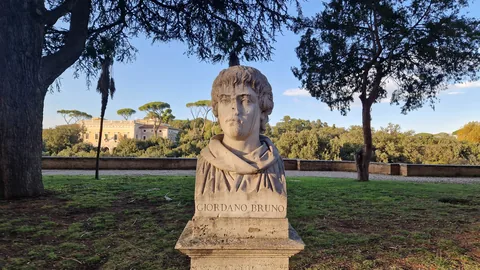
Bruno’s infinite universe formed part of a wider philosophy of nature, religion, and memory that brought him into conflict with the Inquisition.
Find on the map