Pincio gardens · Nearby
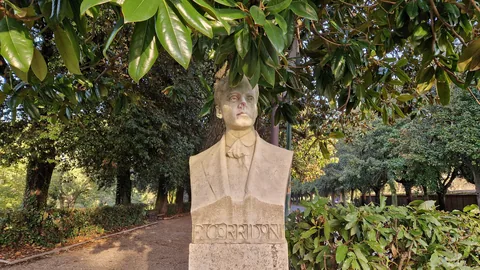
Filippo Corridoni
A revolutionary labor organizer who backed Italy’s entry into the First World War, Corridoni was killed on the Carso in 1915.
Find on the mapRead aloud with your device’s voice.
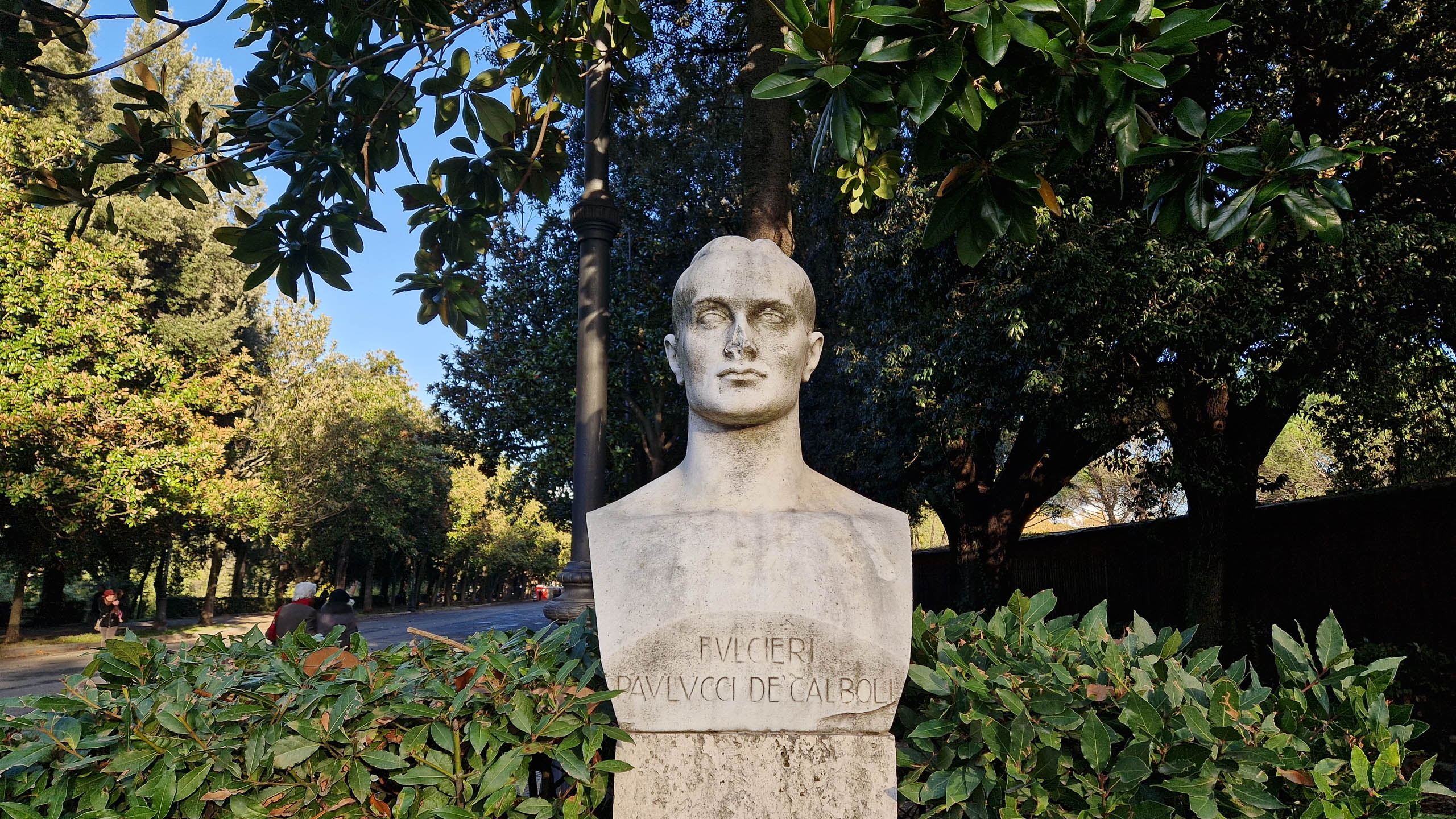
Paulucci survived the battlefield and became a public advocate for the war. Born in Naples in 1893 into a diplomatic family, he volunteered for military service and repeatedly sought to return to active duty after being wounded.
In January 1917 a further wound damaged his spinal cord and left his legs permanently paralyzed. He received the Gold Medal of Military Valor. Unable to resume combat, he addressed audiences and wrote in support of continuing the war, including after the Italian defeat at Caporetto.
His speeches and articles used the suffering of soldiers to demand commitment from civilians. They belonged to an organized effort to sustain morale and explain sacrifice, rather than to a neutral account of the conflict. His public authority depended in part on an audience's recognition of the injuries he had suffered.
His health deteriorated, and he died in a Swiss sanatorium at Saanen in February 1919. The date is significant: the costs of the war continued after the armistice. His commemorative portrait recalls both a particular political voice and the long physical consequences of military service.
Pincio gardens · Nearby
A revolutionary labor organizer who backed Italy’s entry into the First World War, Corridoni was killed on the Carso in 1915.
Find on the mapPincio gardens · Nearby
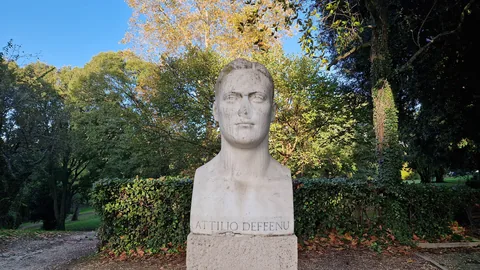
A Sardinian journalist and revolutionary syndicalist, Deffenu linked social reform to the island’s problems before dying on the Piave in 1918.
Find on the mapPincio gardens · 22 m away
Oberdan’s execution in Trieste in 1882 became a rallying point for Italian irredentism and its campaign against Habsburg rule.
Find on the mapPincio gardens · 33 m away
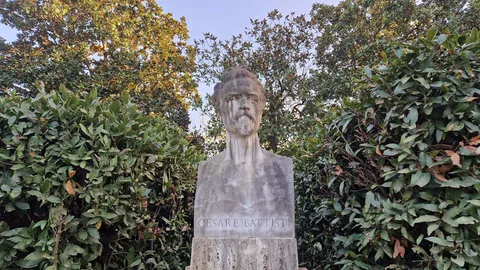
Battisti combined geographical research and socialist politics before volunteering for Italy and being executed by Austria-Hungary in 1916.
Find on the map