Pincio gardens · Nearby
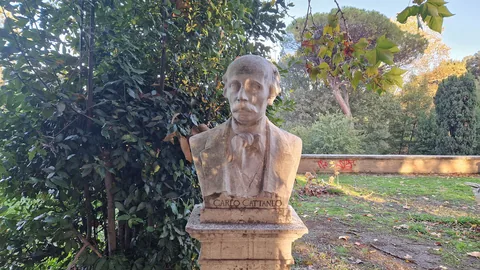
Carlo Cattaneo
Cattaneo argued for a federal republic and treated practical knowledge as a means of social and political improvement.
Find on the mapRead aloud with your device’s voice.
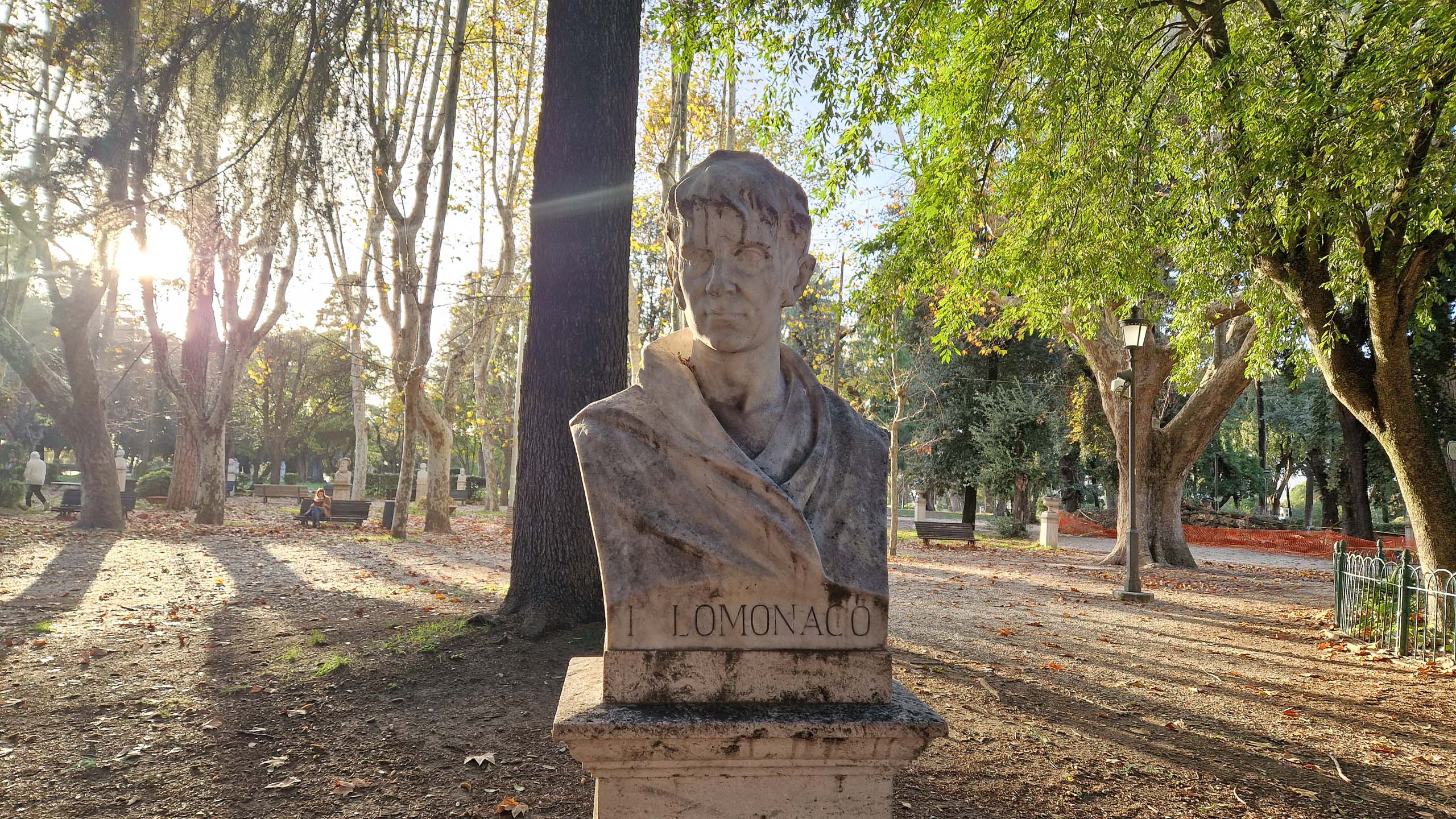
Francesco Lomonaco survived the fall of the Neapolitan Republic in 1799 and wrote about the repression that followed. His Rapporto al cittadino Carnot addressed the French statesman Lazare Carnot, bringing the republic’s fate before a wider political readership. It was an intervention by a participant, not a detached account written long afterward.
Born in Montalbano Jonico in 1772, Lomonaco studied medicine as well as the legal and philosophical debates of Naples. Political defeat led him north, where he entered the intellectual world of the Napoleonic period. He taught history and geography at the military school in Pavia.
His biographical writings assembled accounts of notable Italians. Such collections offered examples through which readers could think about character and public action before a unified Italian state existed. They also depended on choices about whose life deserved attention.
Lomonaco died in Pavia in 1810. His bust places the author of exemplary biographies within another selected assembly of historical figures.
Pincio gardens · Nearby
Cattaneo argued for a federal republic and treated practical knowledge as a means of social and political improvement.
Find on the mapPincio gardens · Nearby
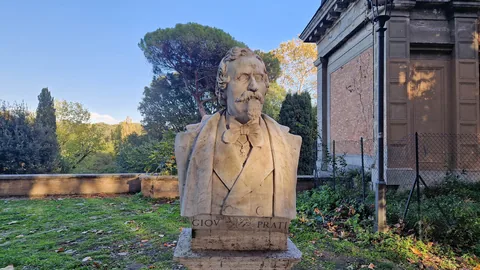
Prati’s popular verse moved between private emotional drama and public support for the Savoy monarchy.
Find on the mapPincio gardens · 26 m away
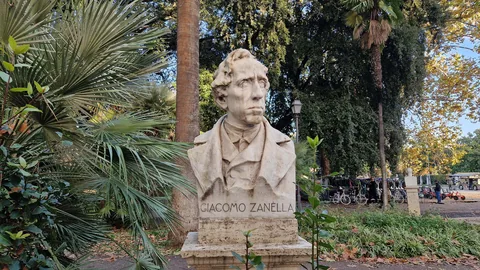
Zanella used a fossil shell to bring geological time into a poem shaped by Catholic belief and nineteenth-century science.
Find on the mapPincio gardens · 27 m away
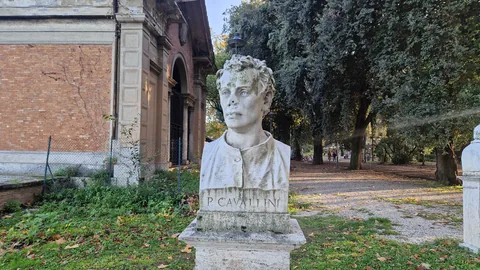
Cavallini’s Roman mosaics and frescoes give sacred figures weight and presence without abandoning their ceremonial order.
Find on the map