Pincio gardens · Nearby
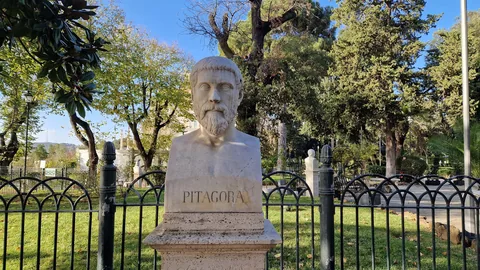
Pythagoras
A Greek thinker associated with Croton in southern Italy, whose historical life must be separated from later Pythagorean legend.
Find on the mapRead aloud with your device’s voice.
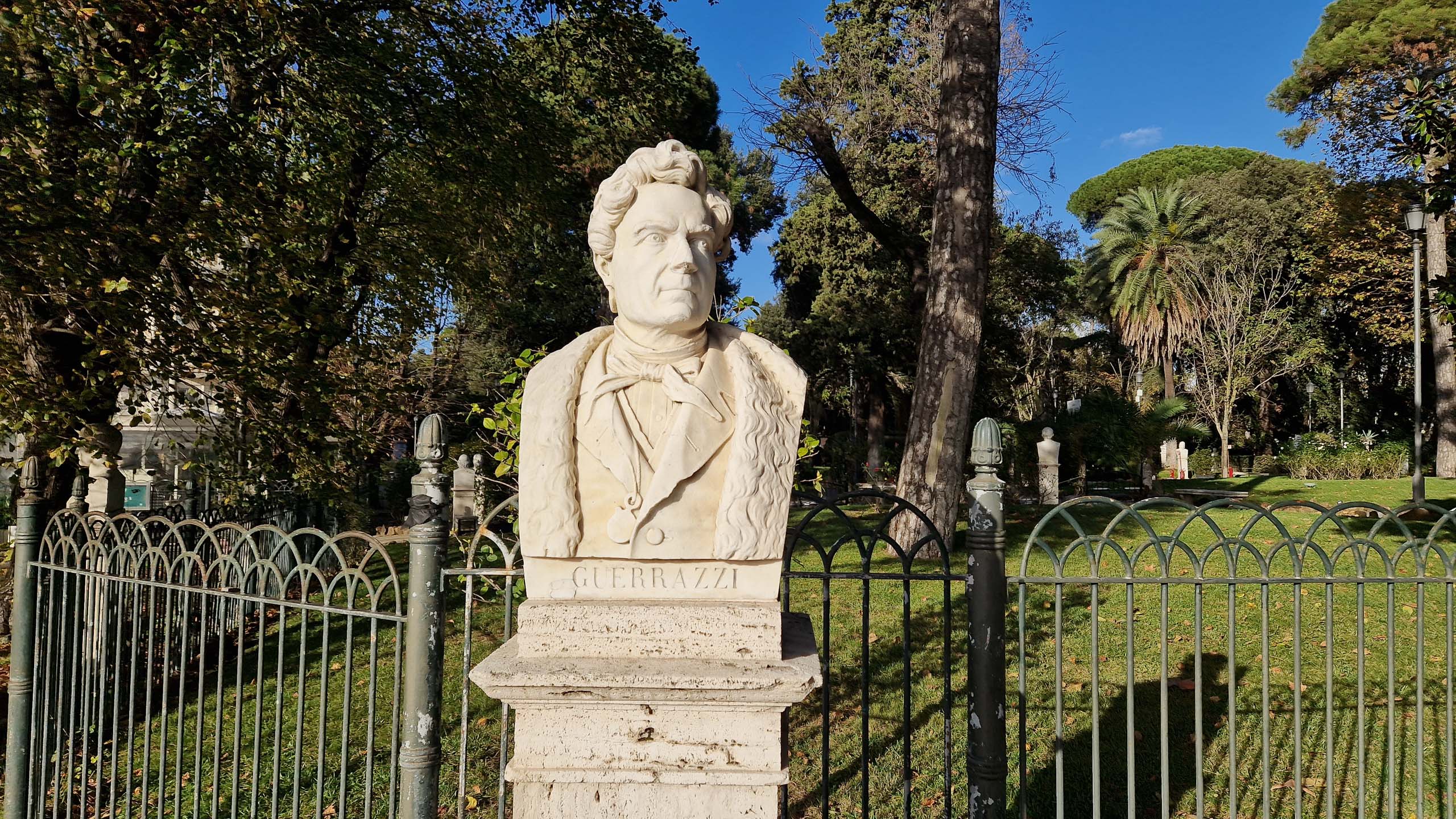
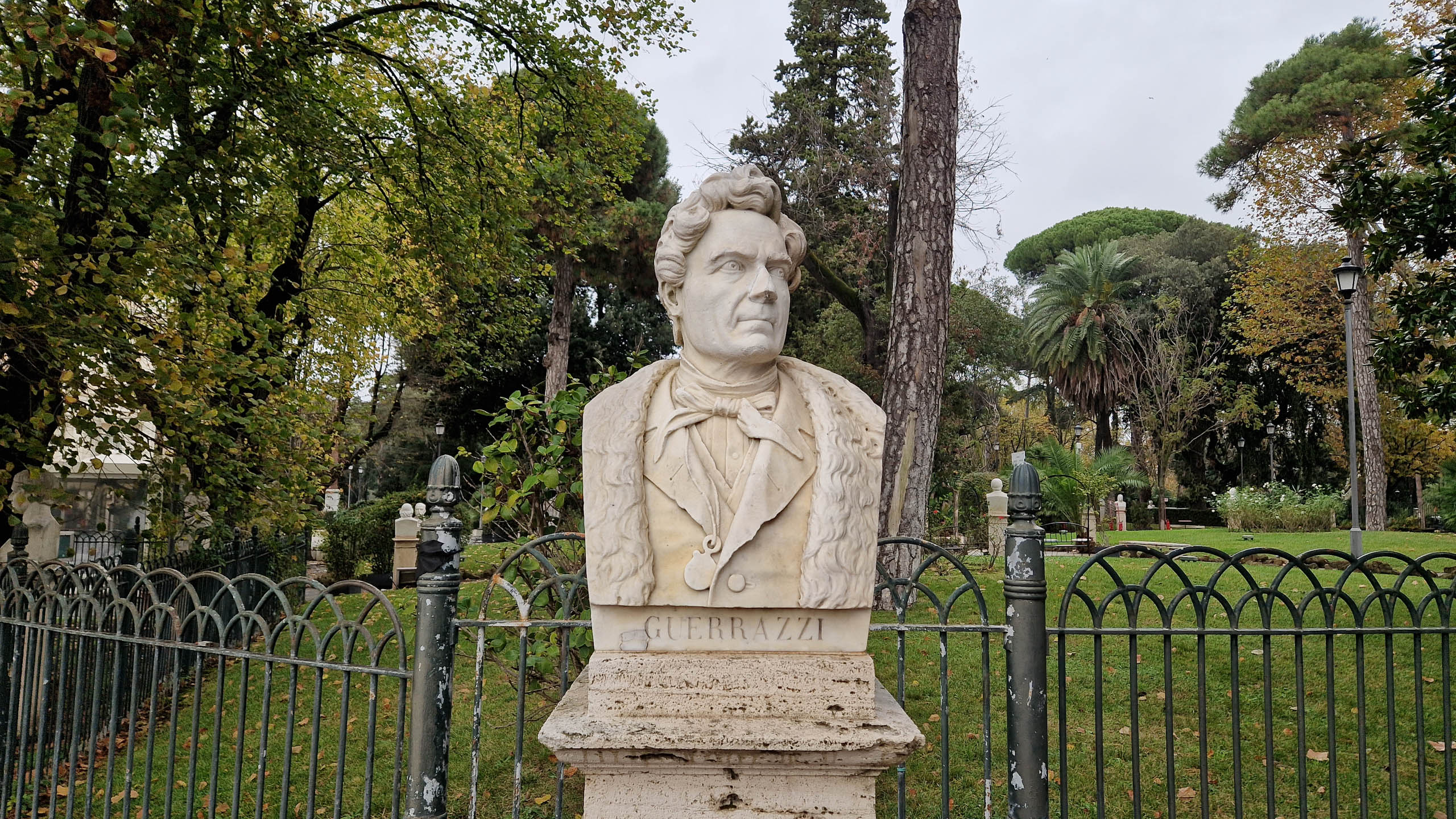
Francesco Domenico Guerrazzi used historical fiction to address the politics of his own century. His novel L’assedio di Firenze, The Siege of Florence, returned to the city’s resistance in 1529–1530. For readers living before Italian unification, an account of an earlier struggle could carry an immediate political charge.
Born in Livorno in 1804, Guerrazzi also worked as a journalist and political organizer. In 1849 he joined the provisional government in Tuscany. The novelist who had written about resistance now had to contend with divided political allies and the practical dangers of revolutionary government.
His career resists a tidy account of the Risorgimento as a movement with a single program. During the crisis he opposed merging Tuscany’s government with the Roman revolutionary project. His fiction, political choices, and later recollections need to be read together, without assuming that they always express the same position. He died in 1873, after the creation of a united Italian kingdom.
Pincio gardens · Nearby
A Greek thinker associated with Croton in southern Italy, whose historical life must be separated from later Pythagorean legend.
Find on the mapPincio gardens · Nearby
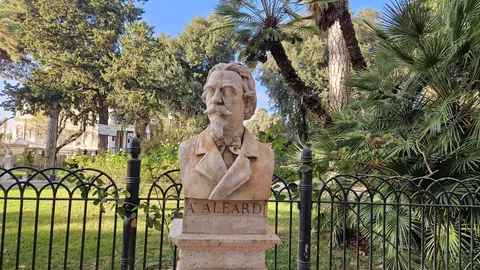
A Romantic poet whose verse joined landscape, political exile, and the movement for Italian unification.
Find on the mapPincio gardens · Nearby
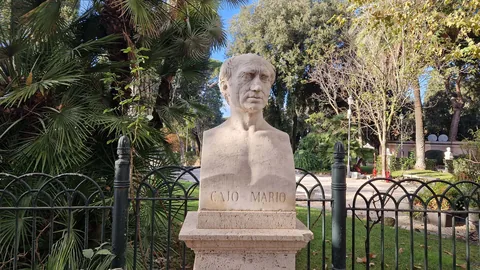
Seven consulships made Marius an exceptional figure in a republic increasingly troubled by military competition and political violence.
Find on the mapPincio gardens · Nearby
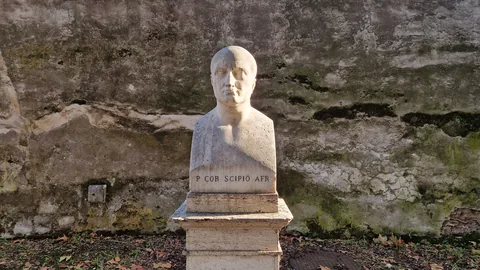
Scipio Africanus defeated Hannibal at Zama, but his later political standing in Rome was less secure than his military reputation.
Find on the map