Pincio gardens · Nearby
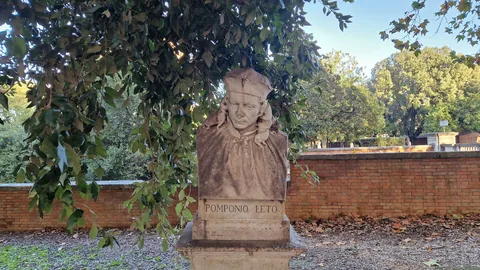
Giulio Pomponio Leto
Pomponio Leto made ancient Rome a subject of teaching and collective study, attracting papal suspicion as well as devoted pupils.
Find on the mapRead aloud with your device’s voice.
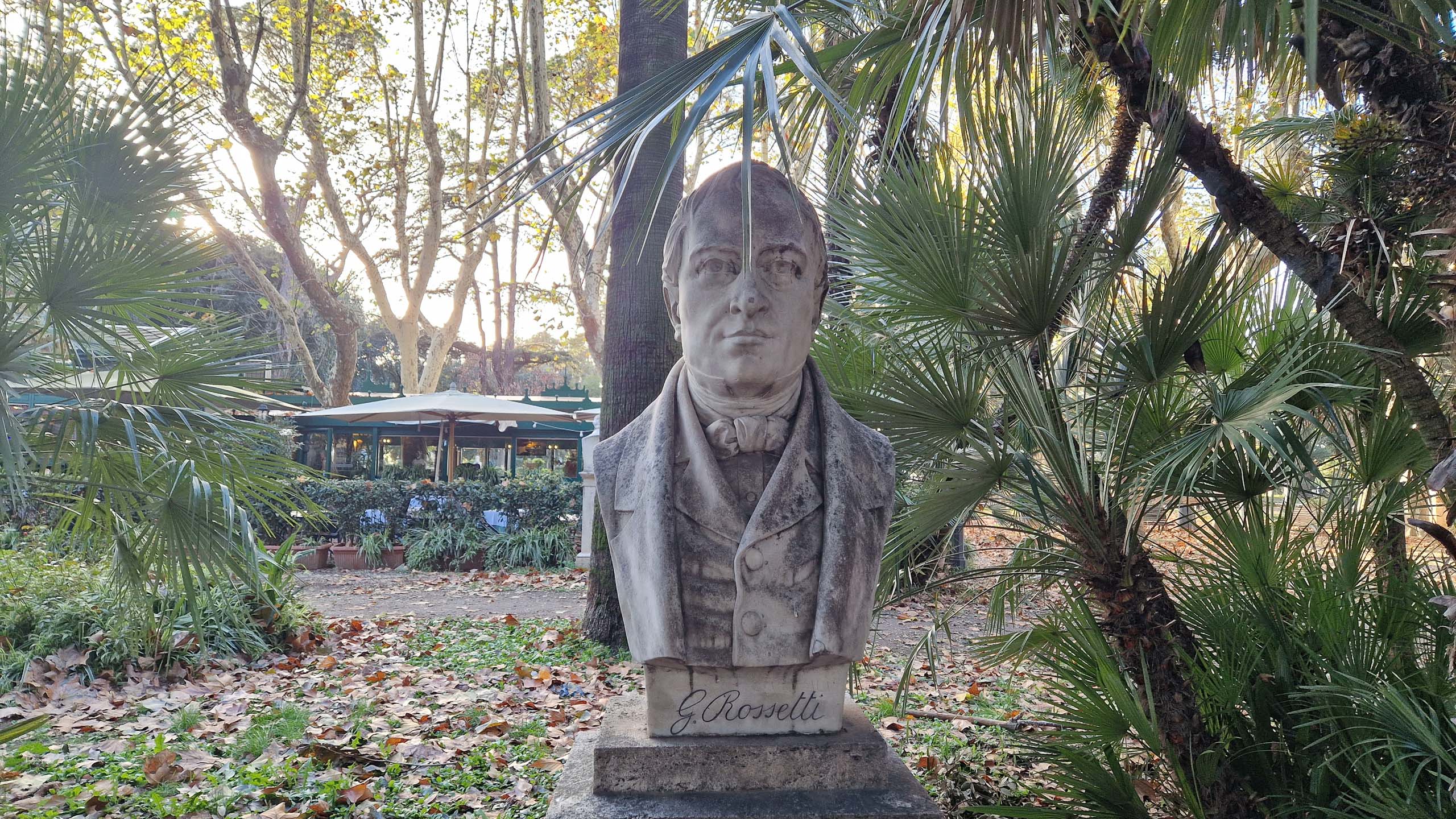
Gabriele Rossetti carried the politics of southern Italy into a London classroom. Born in Vasto in 1783, the poet supported the constitutional movement in Naples in 1820. When that movement failed, he went into exile, first in Malta and then, in 1824, in England. He taught Italian at King’s College London from 1831 to 1847.
His household connected two literary cultures. With Francesca Polidori he had four children, including the poet Christina Rossetti and the painter and poet Dante Gabriel Rossetti. Their achievements belong to British cultural history, but the family’s language, books, and political memories were also shaped by Italian exile.
For Gabriele, Dante was a continuing intellectual preoccupation. He argued that medieval love poetry concealed the language of an anti-papal fellowship. This was his interpretation, rather than an established explanation of the Divine Comedy. Reading him today means distinguishing the historical poet from the nineteenth-century political hopes Rossetti brought to that poet’s work. His bust preserves the memory of an exile who made the study of Italian literature part of his life abroad.
Pincio gardens · Nearby
Pomponio Leto made ancient Rome a subject of teaching and collective study, attracting papal suspicion as well as devoted pupils.
Find on the mapPincio gardens · Nearby
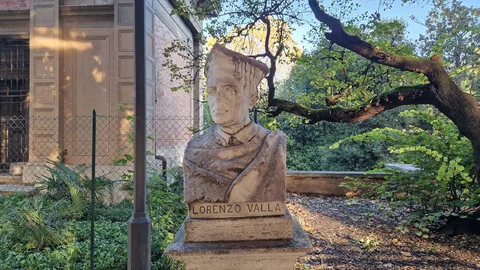
Valla used the history of Latin to expose the Donation of Constantine as a document written centuries after the events it claimed to record.
Find on the mapPincio gardens · Nearby
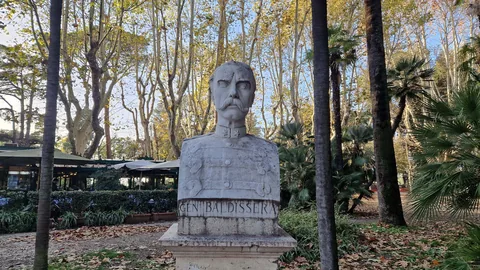
A general who moved from Austrian to Italian service, Baldissera commanded colonial forces in Eritrea before and after the defeat at Adwa.
Find on the mapPincio gardens · Nearby
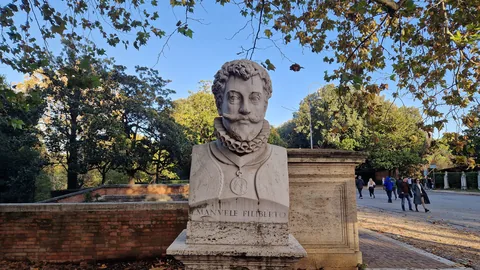
The sixteenth-century Duke of Savoy recovered his dynasty’s territories and made Turin his capital in 1563.
Find on the map