Pincio gardens · Nearby
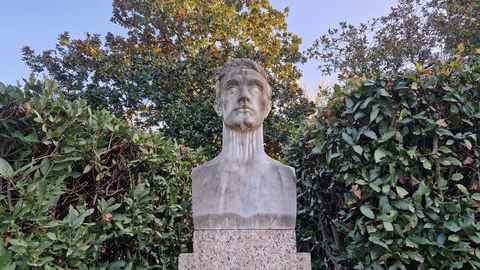
Cesare Battisti
Battisti combined geographical research and socialist politics before volunteering for Italy and being executed by Austria-Hungary in 1916.
Find on the mapRead aloud with your device’s voice.
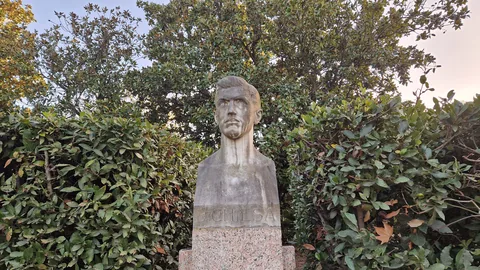
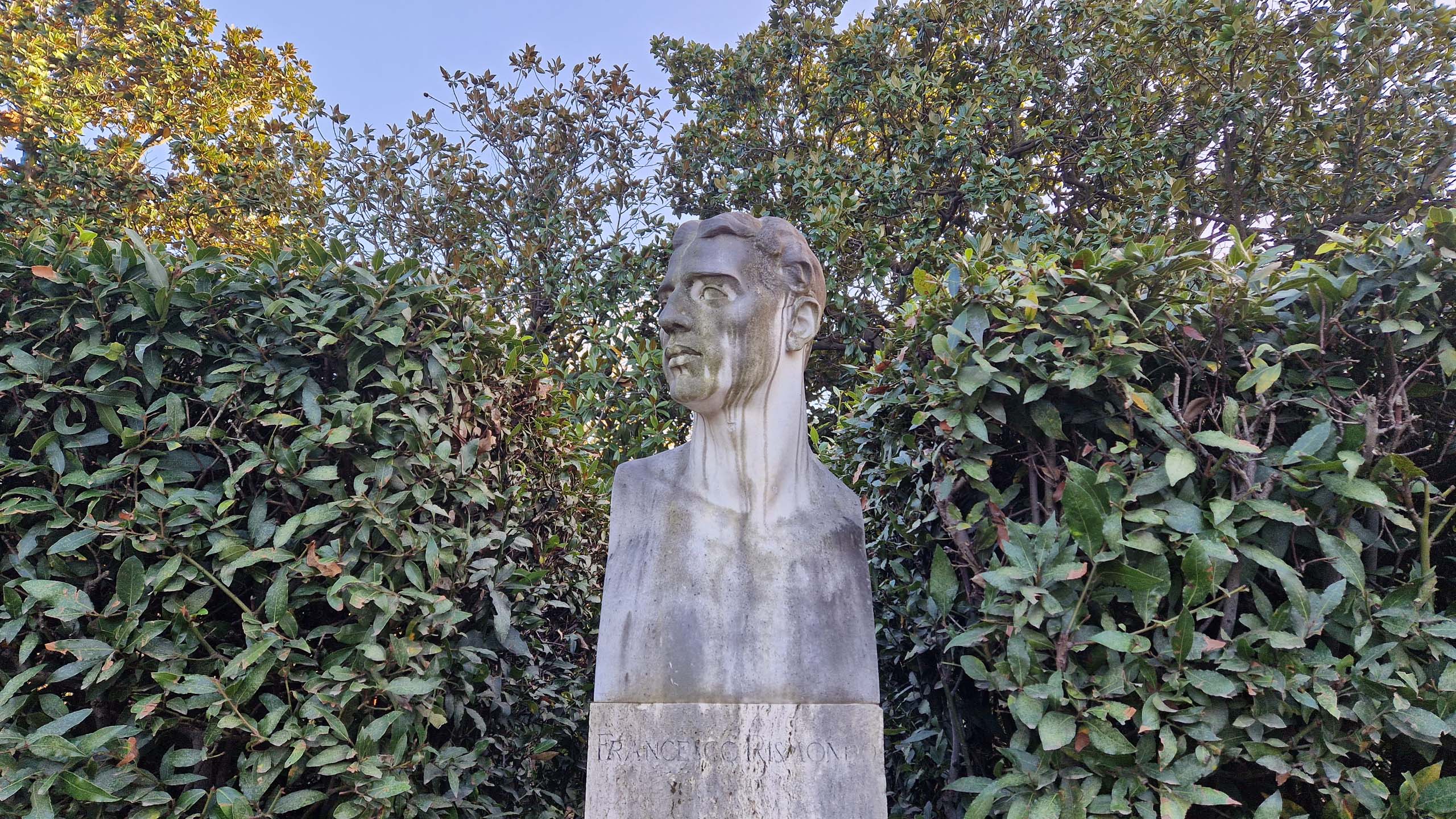
Francesco Rismondo came from Split, then known in Italian as Spalato, in Habsburg Dalmatia. Born in 1885 into a shipping family, he studied commerce and worked in the maritime business. His enthusiasm for cycling also drew him into associations where sport and Italian national activism overlapped.
In 1915 he crossed into Italy and volunteered for the Bersaglieri cyclists. He fought on Monte San Michele during the opening months of Italy's war against Austria-Hungary and was captured after being wounded in July.
The circumstances of his death remain uncertain. Accounts circulated that he had been executed as an irredentist; another version described his killing during a revolt by prisoners. The older Treccani biography records both traditions rather than resolving them. A precise story of his final moments would go beyond that evidence.
Gabriele D'Annunzio helped turn Rismondo into a symbol of Italian claims in Dalmatia, and a commemorative bust was dedicated in Rome in 1919. That afterlife matters: the portrait belongs to the history of a contested Adriatic region as well as to the memory of an individual volunteer.
Pincio gardens · Nearby
Battisti combined geographical research and socialist politics before volunteering for Italy and being executed by Austria-Hungary in 1916.
Find on the mapPincio gardens · Nearby
A student from Habsburg Trentino who volunteered for Italy, Chiesa was captured and executed for treason in 1916.
Find on the mapPincio gardens · Nearby
A lawyer and Italian volunteer from the Habsburg Adriatic borderlands, Filzi was executed with Cesare Battisti in Trento in 1916.
Find on the mapPincio gardens · Nearby
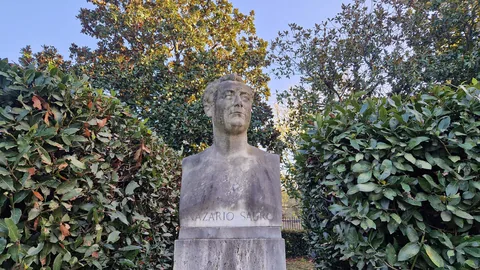
An Istrian mariner who volunteered for the Italian navy, Sauro was captured after the submarine Pullino grounded in 1916.
Find on the map