Pincio gardens · Nearby
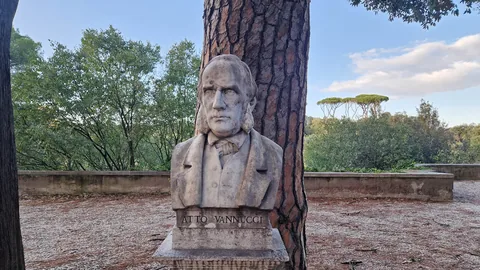
Atto Vannucci
Vannucci assembled biographies of political martyrs, helping shape how the struggle for Italian liberty would be remembered.
Find on the mapRead aloud with your device’s voice.
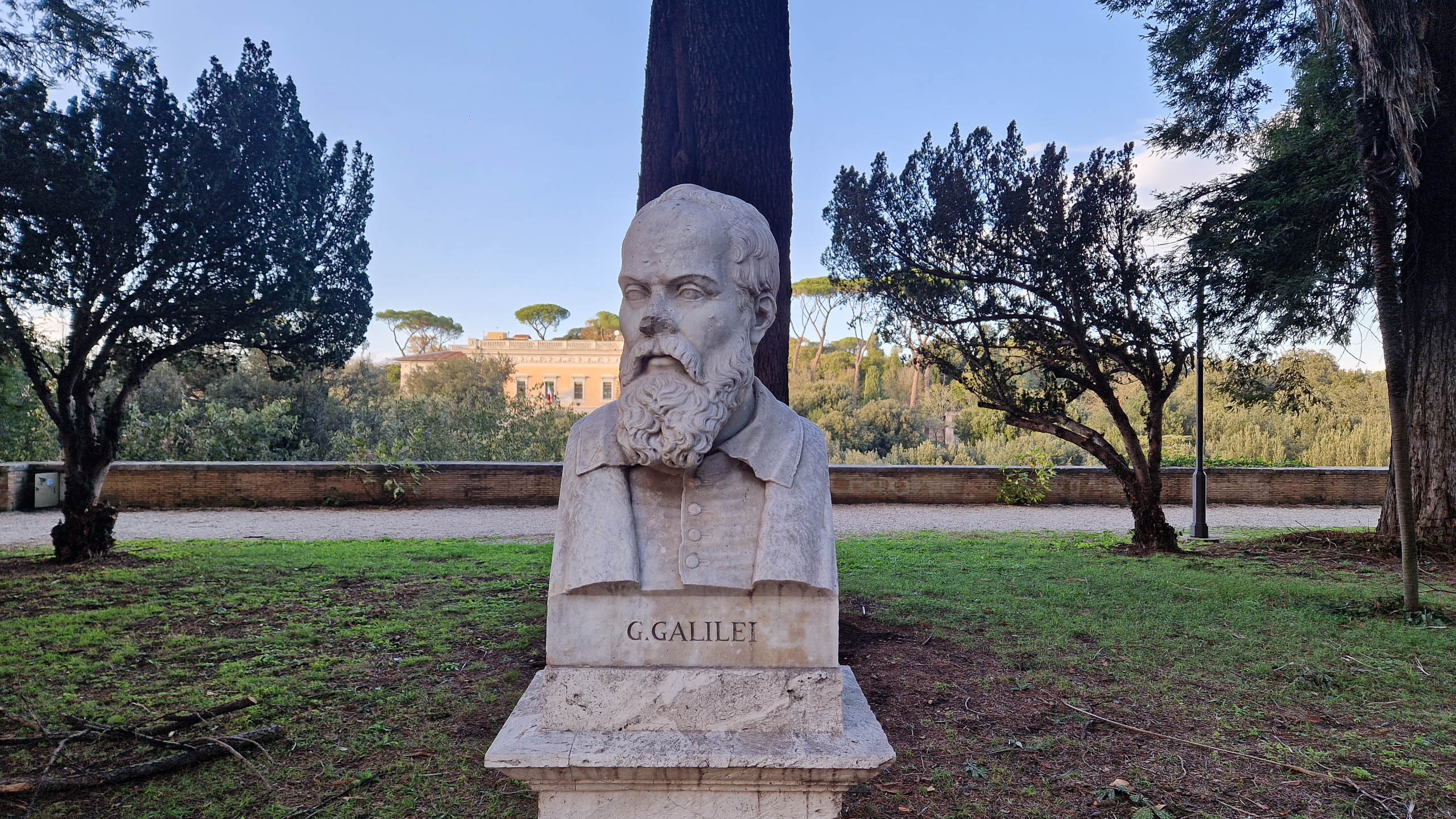
Galileo’s telescope changed what could count as visible evidence in a discussion of the heavens. In 1610, he published observations of the Moon and the stars, including satellites orbiting Jupiter. These findings challenged assumptions about celestial perfection and showed that some bodies circled something other than Earth.
He did not invent the telescope. He improved instruments of a recently developed type and used them to pursue astronomical questions. The distinction connects his achievement to the craftsmen and optical knowledge on which the instrument depended.
Born in Pisa in 1564, Galileo also investigated motion through mathematical reasoning and experiment. His arguments for the Earth’s movement included powerful observations alongside explanations that later proved incorrect, distinctions essential to understanding his science.
The Dialogue Concerning the Two Chief World Systems appeared in 1632. In Rome the following year, the Inquisition compelled him to recant and imposed restrictions on his life. He spent his final years under house arrest, continuing work that included the Two New Sciences, published in 1638.
Galileo’s death in 1642 did not end the influence of his methods. His Pincio portrait belongs to the later public history of that reputation. The familiar story of a lone observer immediately proving the whole Copernican system is too compressed to explain either the discoveries or the trial.
Pincio gardens · Nearby
Vannucci assembled biographies of political martyrs, helping shape how the struggle for Italian liberty would be remembered.
Find on the mapPincio gardens · Nearby
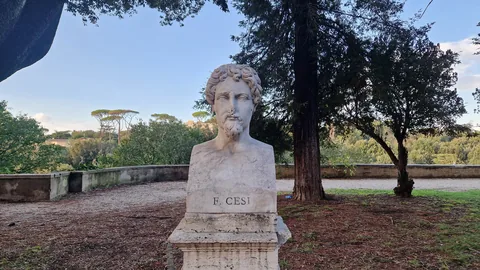
Cesi made the Accademia dei Lincei a setting for collaborative observation, with Galileo among its members.
Find on the mapPincio gardens · Nearby
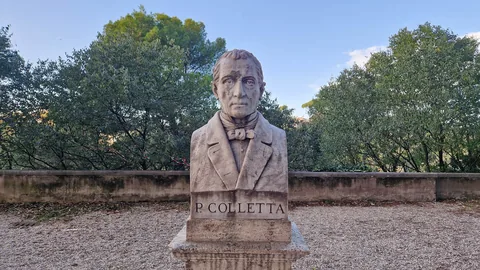
Colletta wrote the history of Naples after serving successive regimes. His account combines firsthand knowledge with the judgments of a participant.
Find on the mapPincio gardens · 21 m away
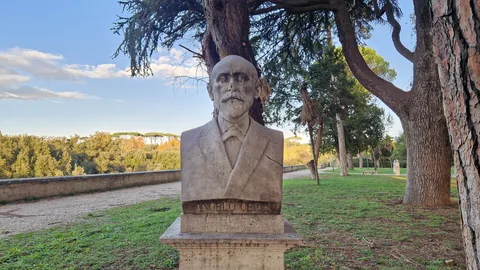
Celli connected malaria research with access to medicine, education, and the living conditions of rural workers around Rome.
Find on the map