Pincio gardens · Nearby
Alberico Gentili
An Italian religious exile at Oxford, Gentili examined war and diplomacy as legal problems between political communities.
Find on the mapRead aloud with your device’s voice.
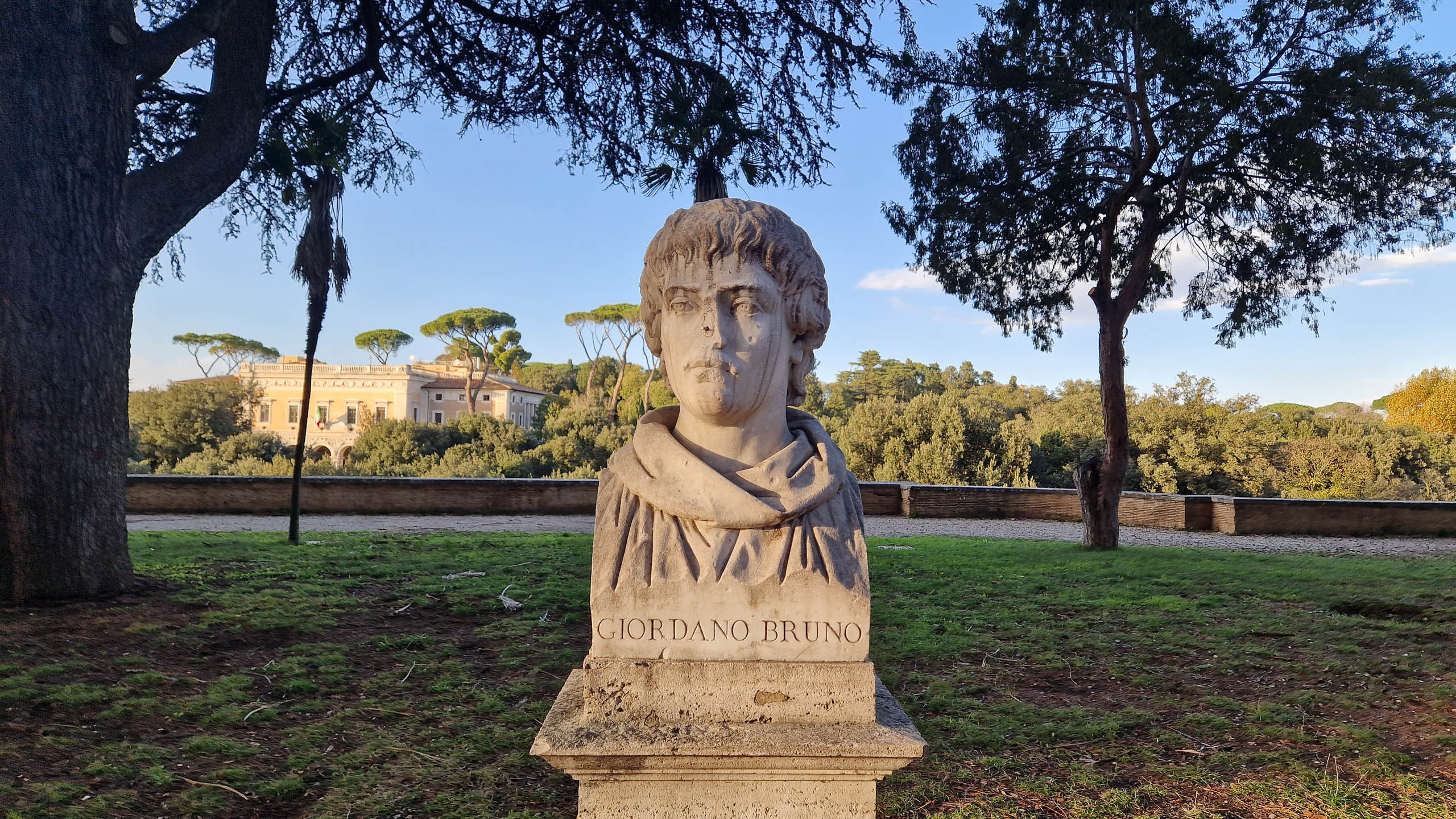
Giordano Bruno imagined an infinite universe containing innumerable worlds. The idea challenged a closed cosmos with a privileged center, but his intellectual project extended beyond astronomy. It included the nature of divinity and elaborate systems for organizing memory.
Born in Nola in 1548, Bruno entered the Dominican order before leaving Italy and moving through several European intellectual settings. His Italian dialogues of the 1580s used argument, satire, and dramatic voices to attack established assumptions. The changing speakers matter: a philosophical dialogue is not always a list of statements made directly by its author.
After arrest in Venice and transfer to Rome, he underwent a long trial before the Roman Inquisition. He was executed in Campo de’ Fiori on February 17, 1600. The case involved a range of theological positions. Describing him simply as a scientist killed for proving that the Earth moves replaces the historical conflict with a misleadingly tidy story.
His later commemoration as a symbol of free thought belongs to another period. The Pincio bust and the monument in Campo de’ Fiori are separate works. Both invite consideration of how a complex Renaissance thinker became a public emblem in the disputes of modern Rome.
Pincio gardens · Nearby
An Italian religious exile at Oxford, Gentili examined war and diplomacy as legal problems between political communities.
Find on the mapPincio gardens · Nearby
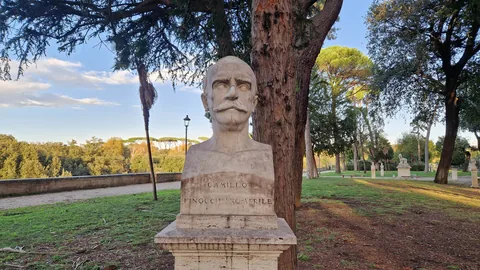
Finocchiaro Aprile’s name is attached to the 1913 criminal procedure code, which governed how cases moved through the Italian courts.
Find on the mapPincio gardens · Nearby
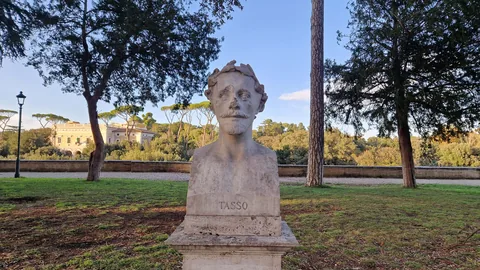
Tasso’s Jerusalem Delivered places a crusading army’s purpose against the desires and doubts of individual characters.
Find on the mapPincio gardens · 28 m away
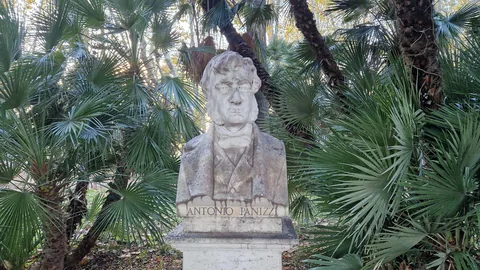
Panizzi helped make the British Museum’s books easier to find and its reading facilities better suited to a growing collection.
Find on the map