Pincio gardens · Nearby
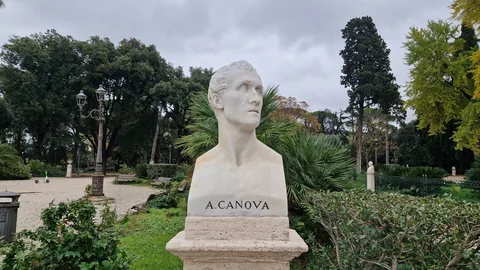
Antonio Canova
Canova’s sculpture joined classical forms to carefully finished marble, including the Borghese portrait of Pauline Bonaparte as Venus.
Find on the mapRead aloud with your device’s voice.
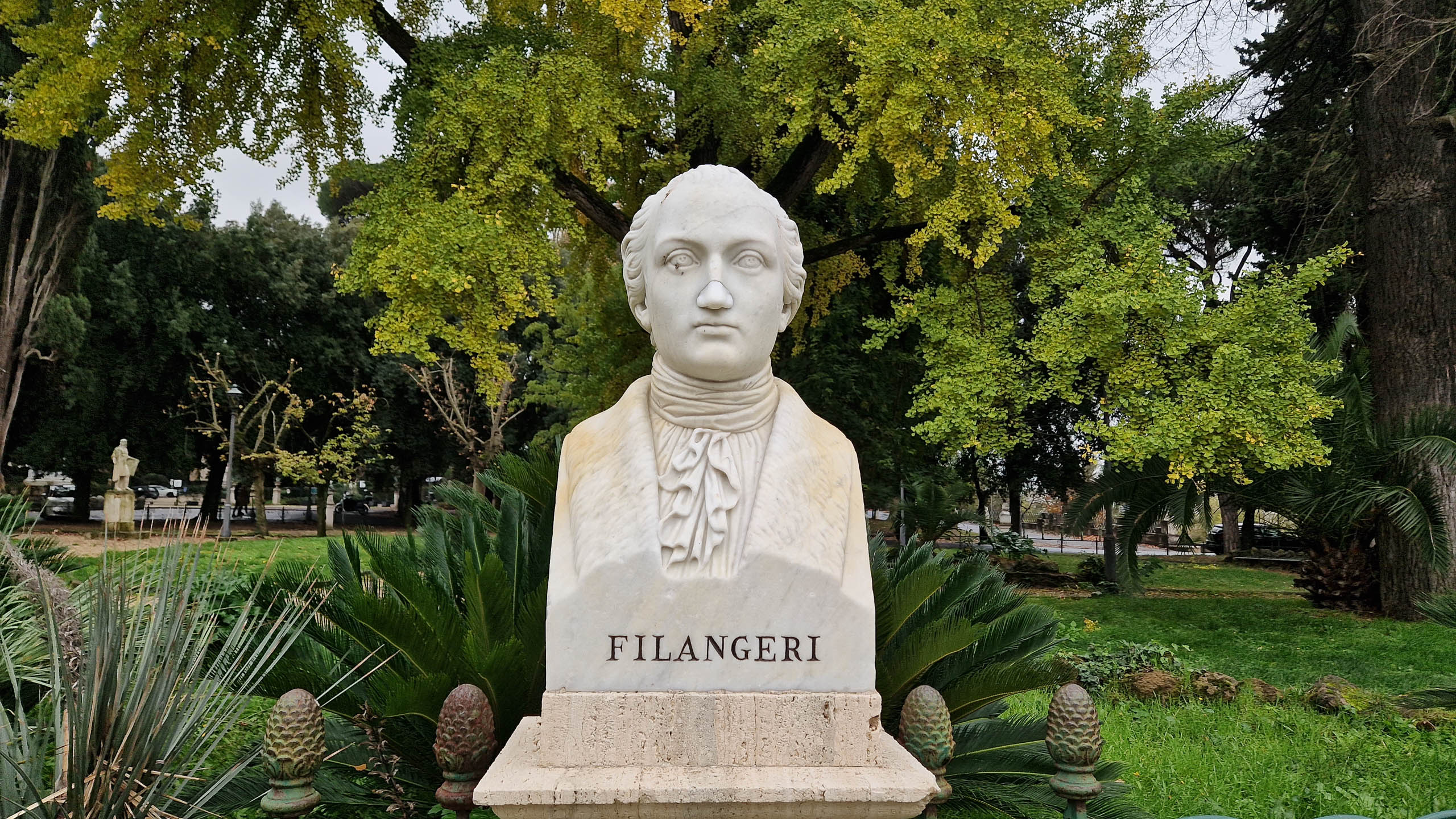
Gaetano Filangieri treated legislation as a way to change the conditions of social life. Born near Naples in 1752, he began publishing La scienza della legislazione in 1780. The ambitious work examined government, economic arrangements, criminal law, and education as connected problems.
Filangieri challenged inherited privileges and asked how institutions could serve public welfare. His project belonged to the southern Italian Enlightenment, where reformers debated the power of the monarchy, the claims of the nobility, and the obstacles to economic activity. He hoped reasoned proposals could influence those who governed.
His correspondence with Benjamin Franklin gives this intellectual world a direct American connection. The surviving letters document the exchange of books and ideas; they do not, by themselves, establish that a particular clause of the U.S. Constitution came from Filangieri.
He died in 1788 before completing the full project. The scale of the unfinished work is revealing: reforming punishment alone was insufficient if education, property, and political institutions continued to produce the same inequalities.
Pincio gardens · Nearby
Canova’s sculpture joined classical forms to carefully finished marble, including the Borghese portrait of Pauline Bonaparte as Venus.
Find on the mapPincio gardens · Nearby
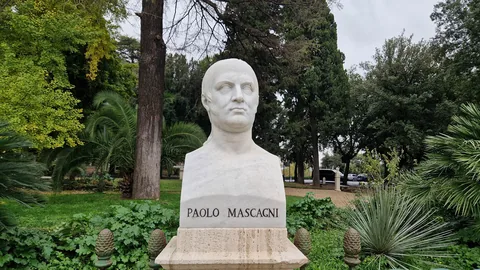
Mascagni mapped the lymphatic system and helped make anatomical illustration a precise instrument of study.
Find on the mapPincio gardens · Nearby
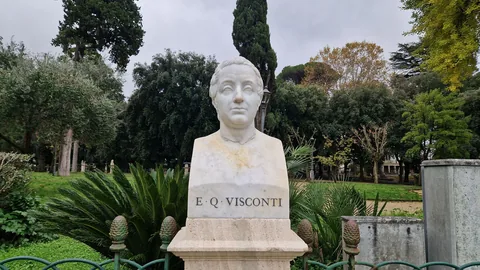
Visconti interpreted ancient sculpture for the Vatican collections and later worked with antiquities in Paris.
Find on the mapPincio gardens · Nearby
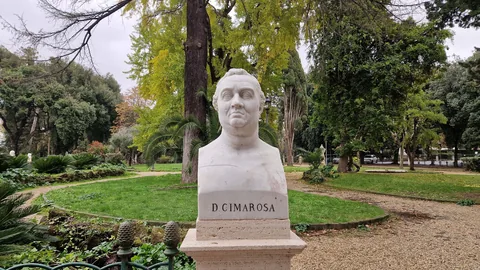
Cimarosa’s comic operas use ensembles and sharply drawn situations to turn social confusion into musical drama.
Find on the map