Pincio gardens
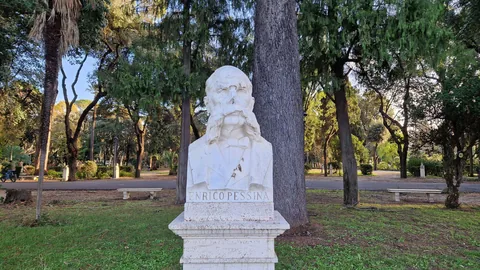
Enrico Pessina
Pessina taught criminal law as a discipline concerned with responsibility and the limits of the state’s authority to punish.
Find on the mapChoose a place to visit in Villa Borghese and the Pincio gardens. Browse the photographs and stories, or narrow the list by name and interest.
198 places
Featured places first, then A–ZPincio gardens
Pessina taught criminal law as a discipline concerned with responsibility and the limits of the state’s authority to punish.
Find on the mapPincio gardens
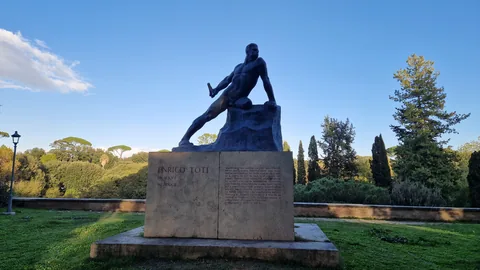
Arturo Dazzi’s bronze monument commemorates a Roman railway worker whose death in World War I became a national heroic image.
Find on the mapPincio gardens
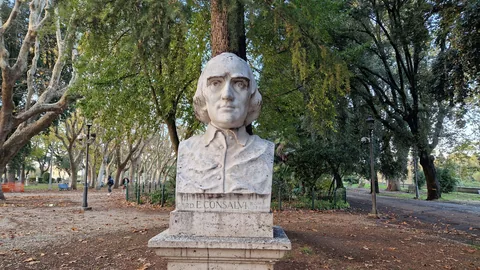
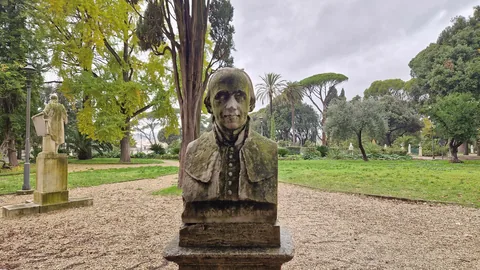
As Pius VII’s secretary of state, Consalvi negotiated with Napoleon and worked to restore the Papal States after the empire’s fall.
Find on the mapPincio gardens
A lawyer and Italian volunteer from the Habsburg Adriatic borderlands, Filzi was executed with Cesare Battisti in Trento in 1916.
Find on the mapPincio gardens
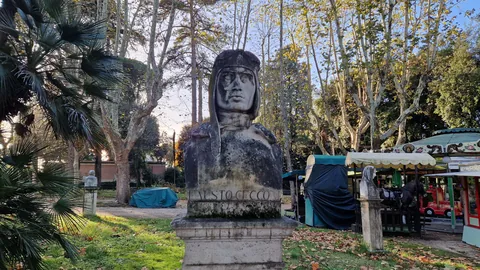
Cecconi flew with Umberto Maddalena in endurance trials that tested how long an aircraft and its crew could remain aloft.
Find on the mapPincio gardens
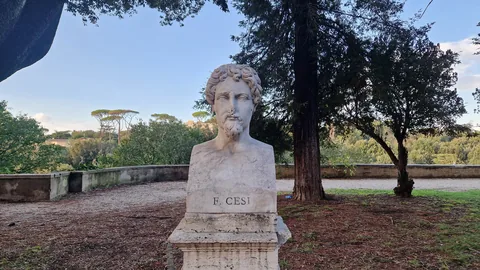
Cesi made the Accademia dei Lincei a setting for collaborative observation, with Galileo among its members.
Find on the mapPincio gardens
Scarpellini organized experimental science in Rome and helped revive the name of the Lincei in the early nineteenth century.
Find on the mapPincio gardens
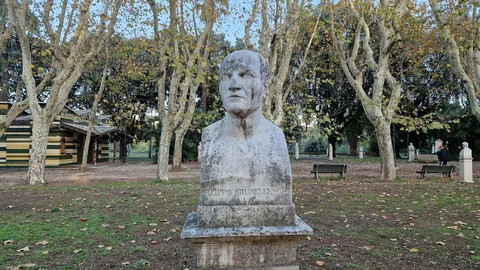
Brunelleschi solved the construction of Florence Cathedral’s vast dome and developed a measured architectural language for the early Renaissance.
Find on the mapPincio gardens
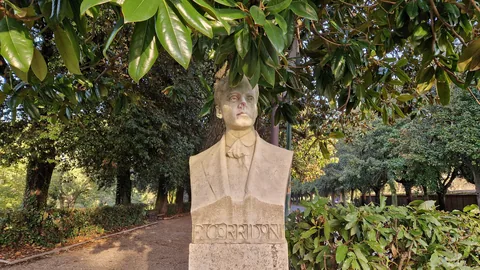
A revolutionary labor organizer who backed Italy’s entry into the First World War, Corridoni was killed on the Carso in 1915.
Find on the mapCentral park
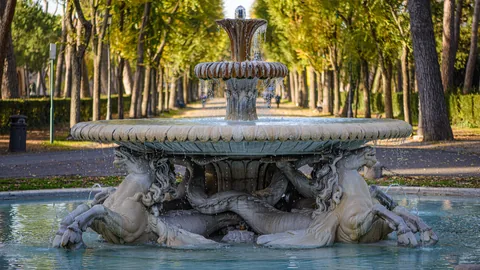
A late-eighteenth-century fountain whose winged sea horses reveal a collaboration among designers, modelers, and stone carvers.
Find on the mapPincio gardens
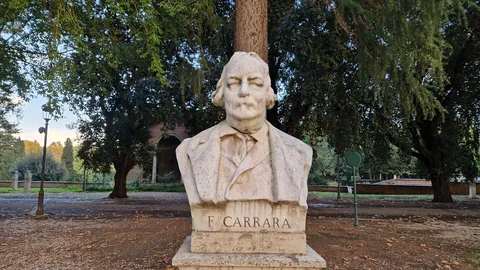
Carrara built a systematic account of criminal law and campaigned against the death penalty in nineteenth-century Italy.
Find on the mapPincio gardens
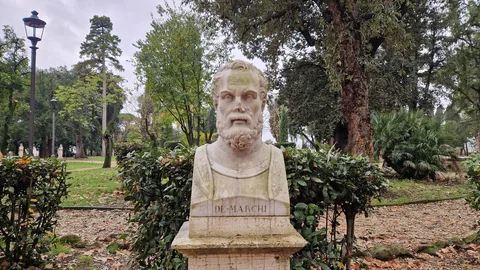
De Marchi studied fortifications, explored the submerged ships at Lake Nemi, and recorded an ascent of the Gran Sasso in 1573.
Find on the mapPincio gardens
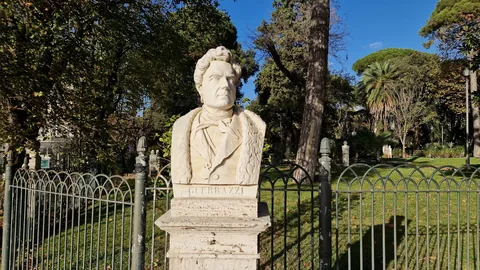
A novelist of historical resistance who also governed during Tuscany’s revolution of 1849.
Find on the mapPincio gardens
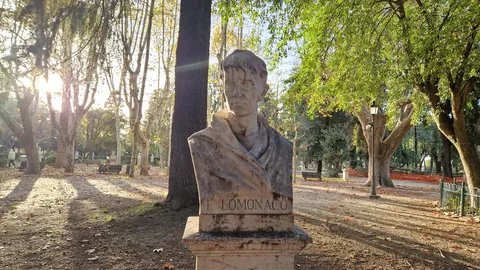
Lomonaco turned the defeat of the Neapolitan Republic into a written indictment and later taught history in Napoleonic Italy.
Find on the mapPincio gardens
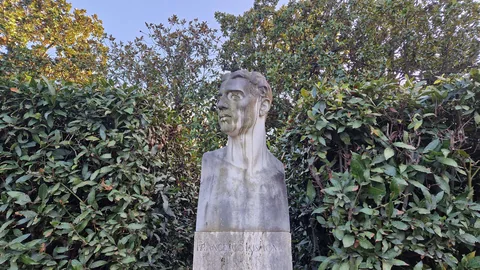
Pagano brought Enlightenment arguments about criminal justice into the short-lived Neapolitan Republic of 1799.
Find on the mapPincio gardens
A volunteer from Split in Dalmatia, Rismondo disappeared after capture in 1915 and became a symbol of Italian irredentism.
Find on the mapPincio gardens
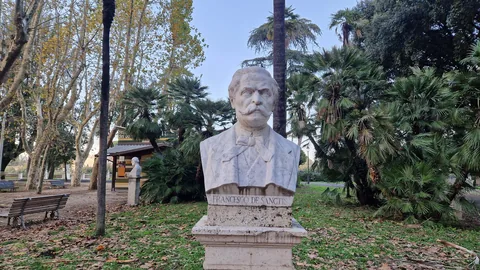
De Sanctis wrote literary history as an account of changing Italian intellectual and moral life.
Find on the mapPincio gardens
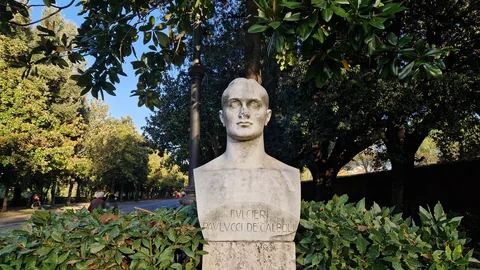
Severely wounded in 1917, Paulucci di Calboli became a public advocate for Italy’s war effort before his death in 1919.
Find on the map