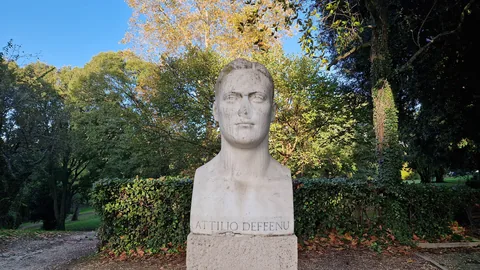
Pincio gardens · Nearby
Attilio Deffenu
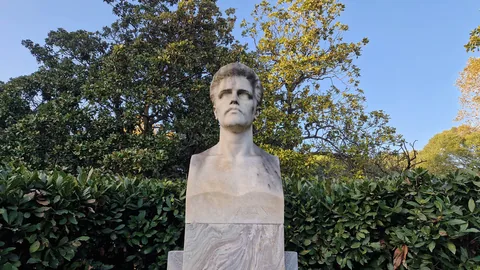
A Sardinian journalist and revolutionary syndicalist, Deffenu linked social reform to the island’s problems before dying on the Piave in 1918.
Find on the mapRead aloud with your device’s voice.
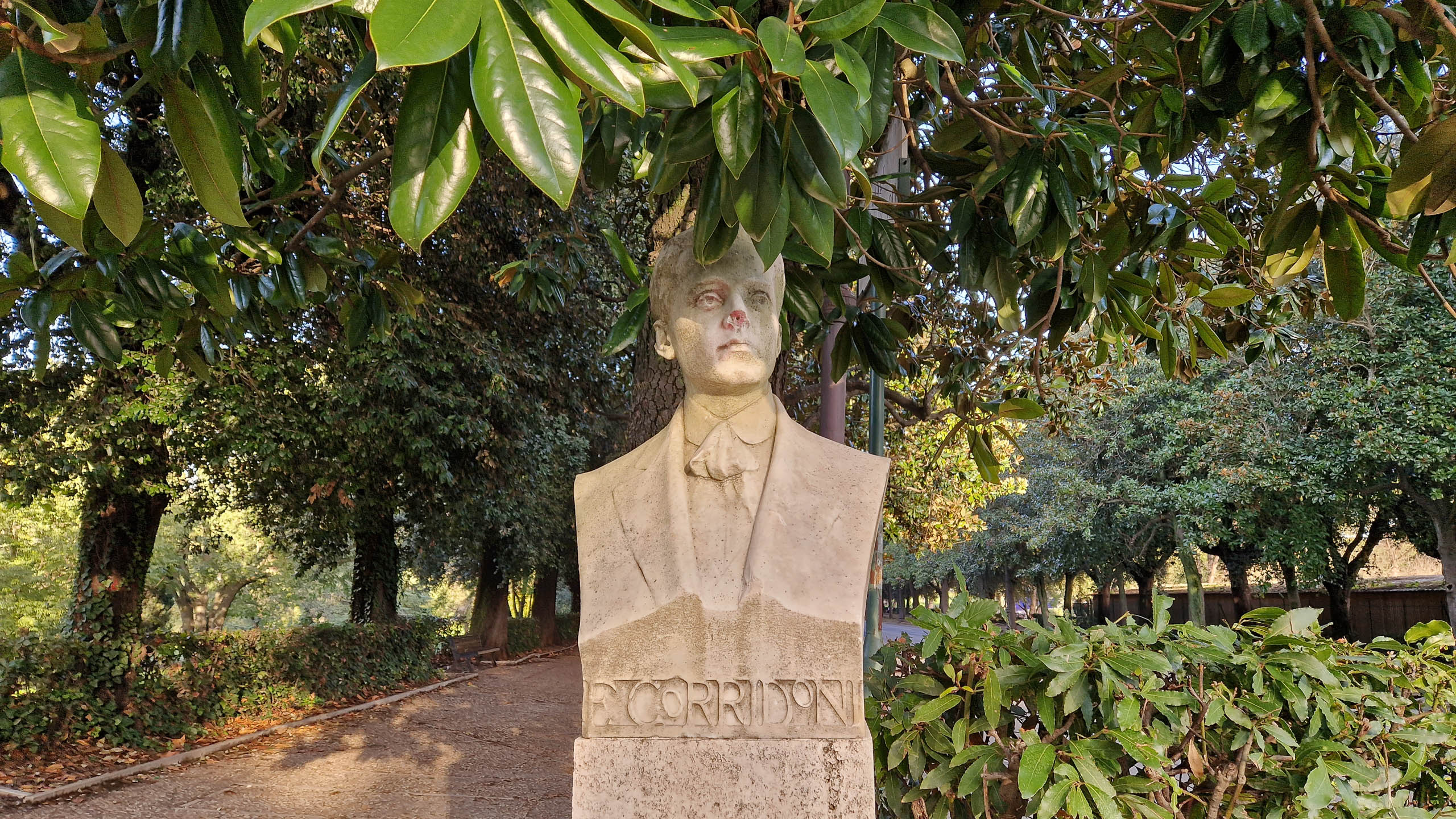
Filippo Corridoni came to the First World War through the politics of labor revolt. Born in 1887 in Pausula, later renamed Corridonia, he became an organizer in revolutionary syndicalism. Its supporters placed strikes and direct action at the center of the struggle to change society.
Corridoni worked among industrial workers and challenged the cautious strategies of reformist socialism. In 1914 he supported Italian intervention in the European war, part of a minority on the radical left that hoped conflict would open the way to political transformation. This brought him into contact with Benito Mussolini's interventionist movement.
He volunteered for the army and was killed near San Martino del Carso on October 23, 1915. His death came years before Mussolini founded the Fascist movement and took power.
Fascism subsequently claimed Corridoni as a precursor and gave his name to institutions and public spaces. That appropriation should not erase the labor conflicts and revolutionary arguments that formed his politics. His biography shows how a dead activist's reputation can be reorganized by a later regime.
Pincio gardens · Nearby
A Sardinian journalist and revolutionary syndicalist, Deffenu linked social reform to the island’s problems before dying on the Piave in 1918.
Find on the mapPincio gardens · Nearby
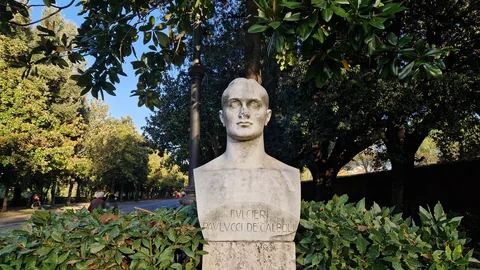
Severely wounded in 1917, Paulucci di Calboli became a public advocate for Italy’s war effort before his death in 1919.
Find on the mapPincio gardens · Nearby
Oberdan’s execution in Trieste in 1882 became a rallying point for Italian irredentism and its campaign against Habsburg rule.
Find on the mapPincio gardens · 22 m away
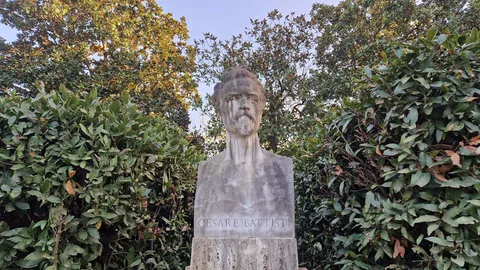
Battisti combined geographical research and socialist politics before volunteering for Italy and being executed by Austria-Hungary in 1916.
Find on the map