Pincio gardens · Nearby
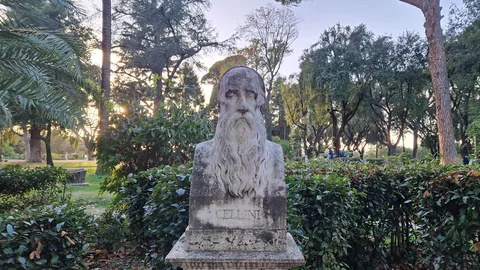
Benvenuto Cellini
Cellini made goldsmithing and sculpture serve princely display, then cast his own turbulent career as the subject of an autobiography.
Find on the mapVoice changes restart the current paragraph.
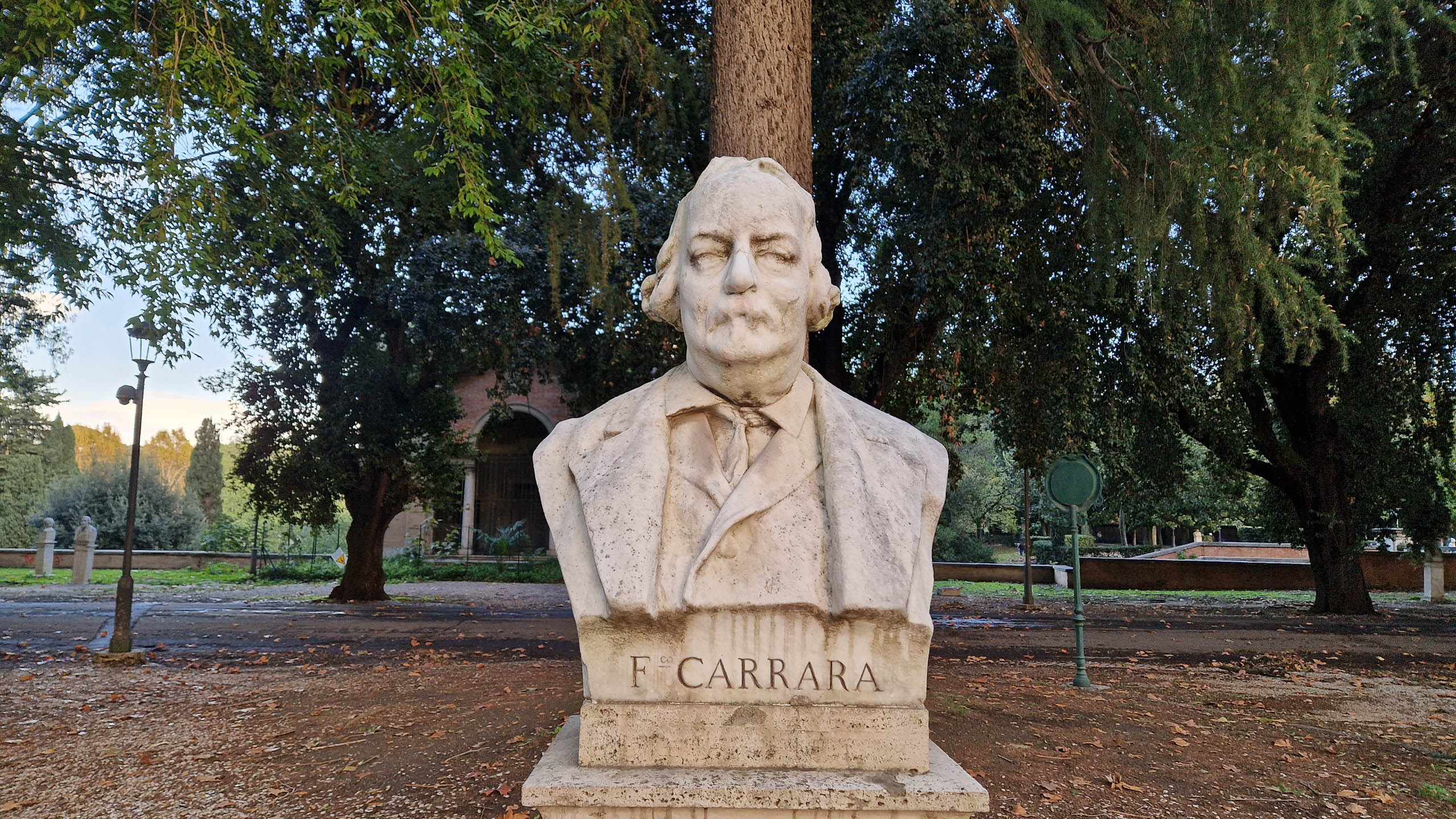
Francesco Carrara treated criminal law as a limit on the power to punish. Born in Lucca in 1805, he practiced as a defense lawyer and later taught criminal law, most prominently at Pisa. Courtroom work and theoretical writing remained connected throughout his career.
His Programma del corso di diritto criminale organized the principles of what became known as the classical school of Italian criminal law. It examined offenses, responsibility, and punishment through legal categories rather than treating a defendant's presumed biological character as the explanation for crime. The distinction became sharper as positivist criminology developed later in the century.
Carrara also campaigned for abolition of the death penalty. He argued for reform in court, in teaching, and in public debate, drawing those activities into a sustained campaign. He participated in the political life of the new Italian state but retained a critical view of coercive power.
He died in 1888. His portrait recognizes an understanding of legal scholarship in which precision had a civic purpose: a poorly defined offense or excessive penalty could become an instrument of injustice.
Pincio gardens · Nearby
Cellini made goldsmithing and sculpture serve princely display, then cast his own turbulent career as the subject of an autobiography.
Find on the mapPincio gardens · Nearby
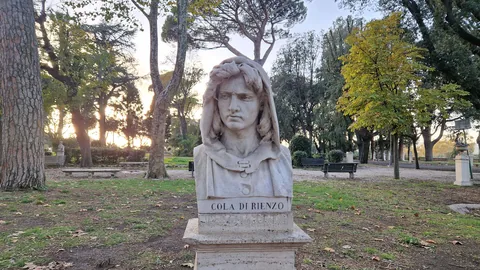
A Roman notary who became tribune in 1347, Cola di Rienzo used the language of ancient Rome to challenge the city’s barons.
Find on the mapPincio gardens · Nearby
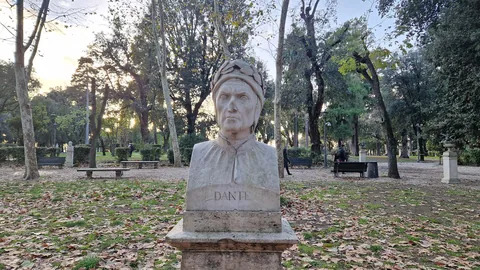
An exiled Florentine who made the afterlife a setting for arguments about language, power, love, and justice.
Find on the mapPincio gardens · Nearby
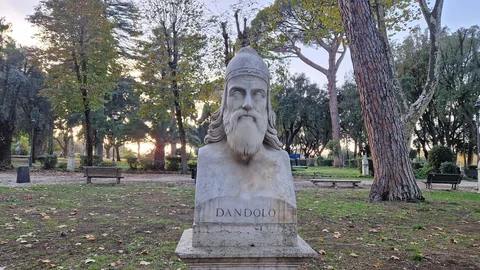
Venice’s doge during the Fourth Crusade, Dandolo helped direct the expedition that captured and sacked Constantinople in 1204.
Find on the map