Pincio gardens · Nearby
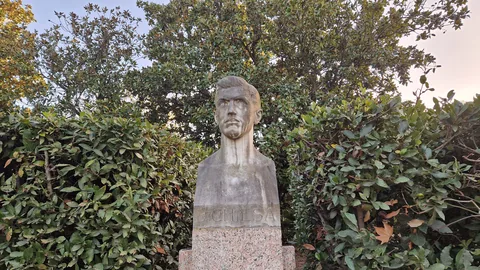
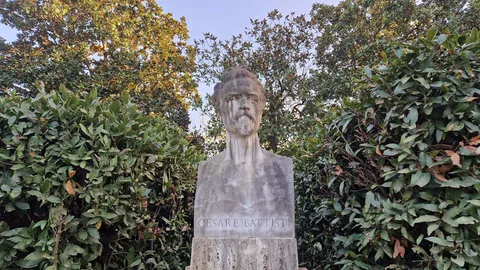
Cesare Battisti
Battisti combined geographical research and socialist politics before volunteering for Italy and being executed by Austria-Hungary in 1916.
Find on the mapRead aloud with your device’s voice.
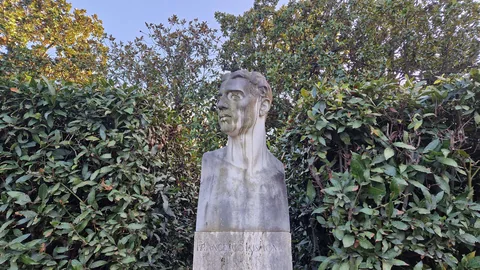
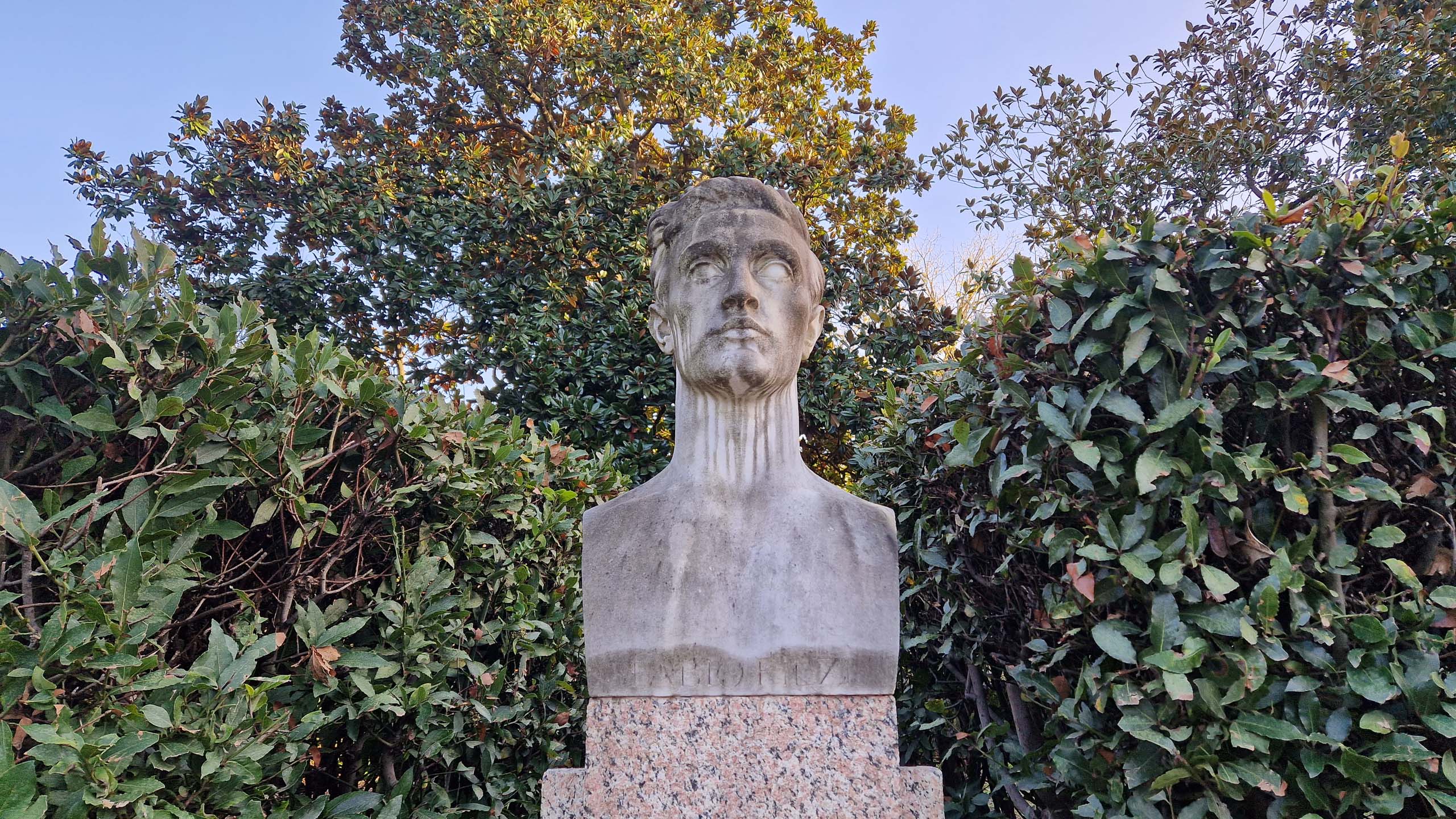
Fabio Filzi's life crossed several of the borders that became contested during the First World War. Born in 1884 in Pisino, now Pazin in Croatia, he grew up in a family whose teaching work took it through Istria and Trentino. He studied law and became active in Italian irredentist circles.
When Italy entered the war against Austria-Hungary, Filzi served in the Italian army. He was an Austrian subject, so enlistment placed him at risk of a treason prosecution if captured. That happened on Monte Corno in July 1916, when he and Cesare Battisti fell into Austrian hands.
Both men were tried at the Castello del Buonconsiglio in Trento and hanged on July 12. Their deaths became central episodes in Italian accounts of Trentino's incorporation into Italy. Commemoration transformed defeat and execution into proof of national commitment.
Filzi's portrait can be read beside those of Battisti and Damiano Chiesa as part of this shared commemorative language. Their individual backgrounds differ, but each biography raises the same difficult relationship between citizenship, political conviction, and the national claims of a border region.
Pincio gardens · Nearby
Battisti combined geographical research and socialist politics before volunteering for Italy and being executed by Austria-Hungary in 1916.
Find on the mapPincio gardens · Nearby
A student from Habsburg Trentino who volunteered for Italy, Chiesa was captured and executed for treason in 1916.
Find on the mapPincio gardens · Nearby
A volunteer from Split in Dalmatia, Rismondo disappeared after capture in 1915 and became a symbol of Italian irredentism.
Find on the mapPincio gardens · Nearby
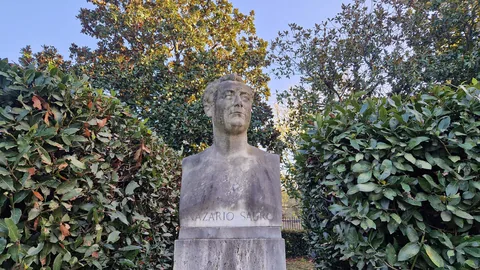
An Istrian mariner who volunteered for the Italian navy, Sauro was captured after the submarine Pullino grounded in 1916.
Find on the map