Pincio gardens · Nearby
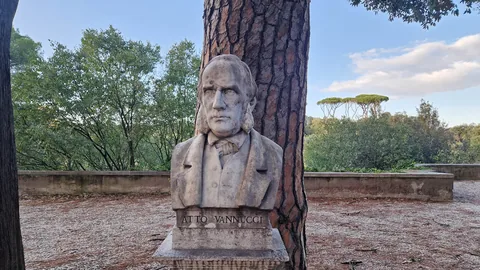
Atto Vannucci
Vannucci assembled biographies of political martyrs, helping shape how the struggle for Italian liberty would be remembered.
Find on the mapRead aloud with your device’s voice.
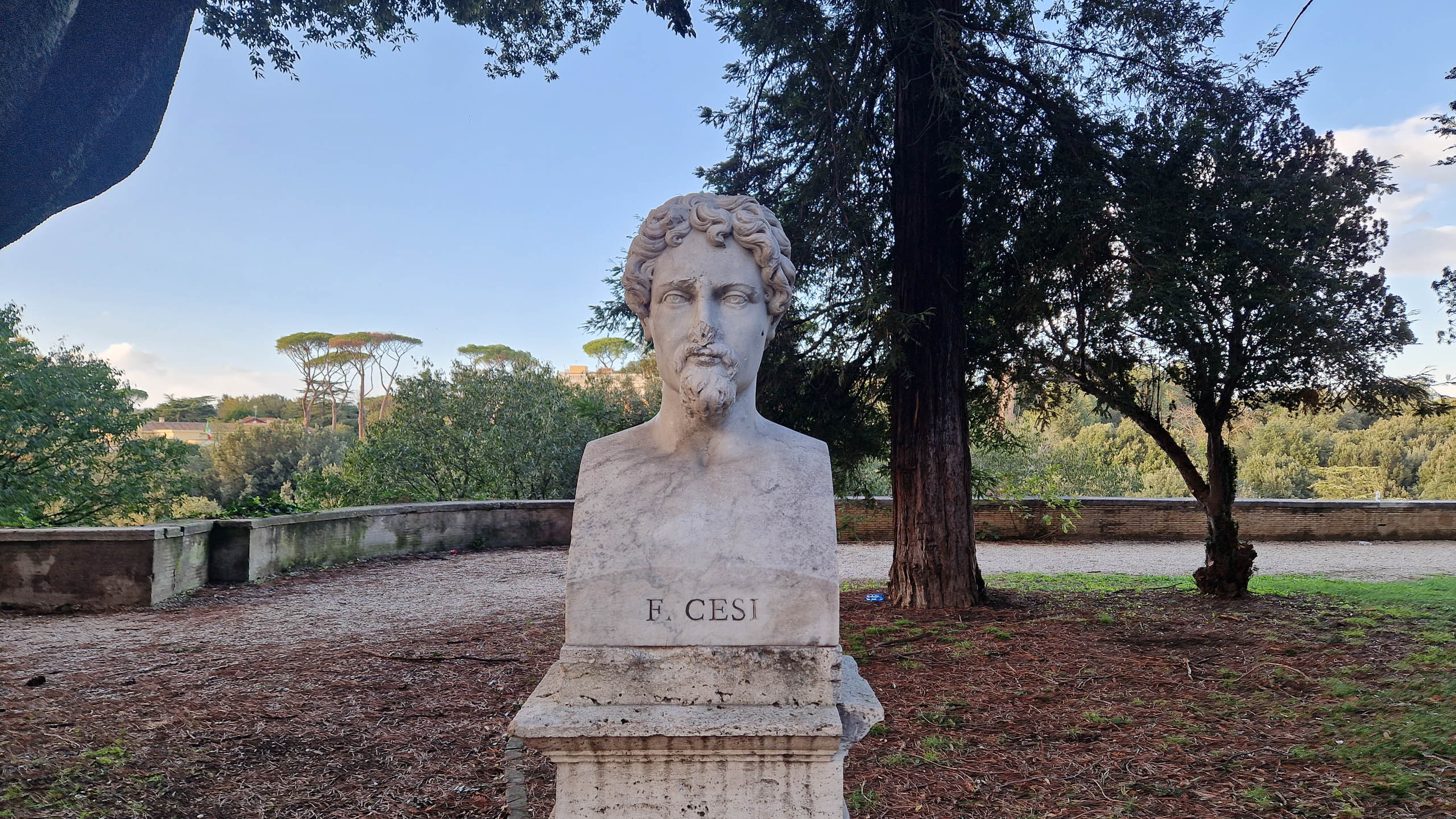
Federico Cesi helped found the Accademia dei Lincei in Rome in 1603 while still a teenager. The group joined natural inquiry to a program of shared study. Johannes van Heeck, Francesco Stelluti, and Anastasio de Filiis were fellow founders, so its origins should not be reduced to Cesi acting alone.
His family resources and personal commitment supported the academy through difficult early years. Galileo joined in 1611. Publication and correspondence allowed the members’ work to reach beyond their meetings, although patronage and relations with ecclesiastical authority remained important to what they could accomplish.
The Apiarium of 1625 brought together material on bees. Its setting joined close observation to the emblem of the Barberini family, whose member Urban VIII was pope. Scientific inquiry and the language of patronage occupied the same publication.
Colleagues continued several of Cesi’s projects after his death in 1630. His support for publication and collective inquiry helped make their work possible.
Pincio gardens · Nearby
Vannucci assembled biographies of political martyrs, helping shape how the struggle for Italian liberty would be remembered.
Find on the mapPincio gardens · Nearby
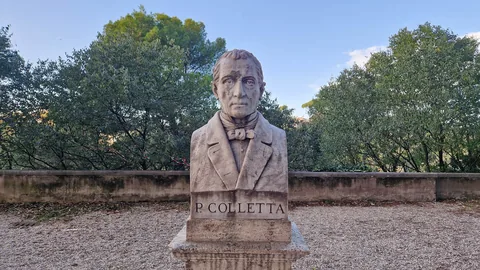
Colletta wrote the history of Naples after serving successive regimes. His account combines firsthand knowledge with the judgments of a participant.
Find on the mapPincio gardens · Nearby
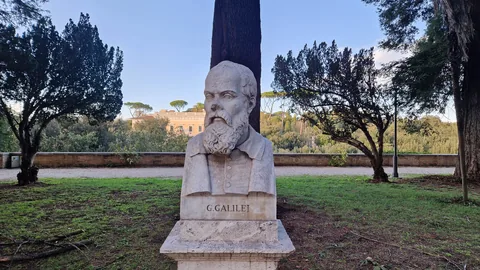
Galileo joined instrument-making, mathematical argument, and observation, while his Roman trial exposed the limits placed on cosmological debate.
Find on the mapPincio gardens · 28 m away
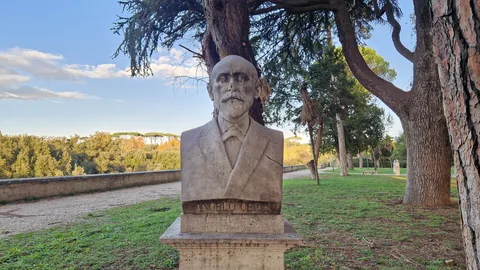
Celli connected malaria research with access to medicine, education, and the living conditions of rural workers around Rome.
Find on the map