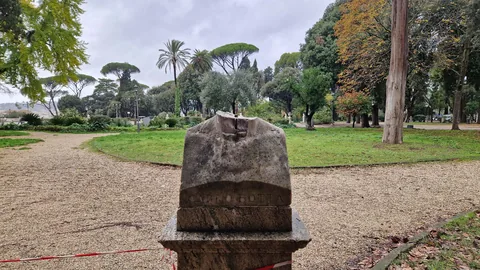
Pincio gardens · Nearby
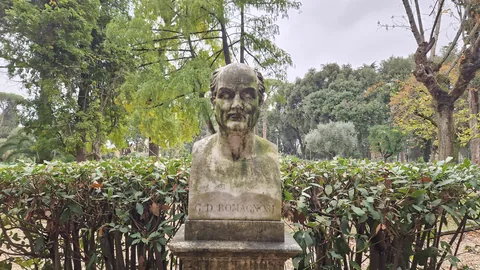
Carlo Botta
Carlo Botta wrote histories of the American Revolution and modern Italy after a career shaped by revolutionary politics and exile.
Find on the mapRead aloud with your device’s voice.
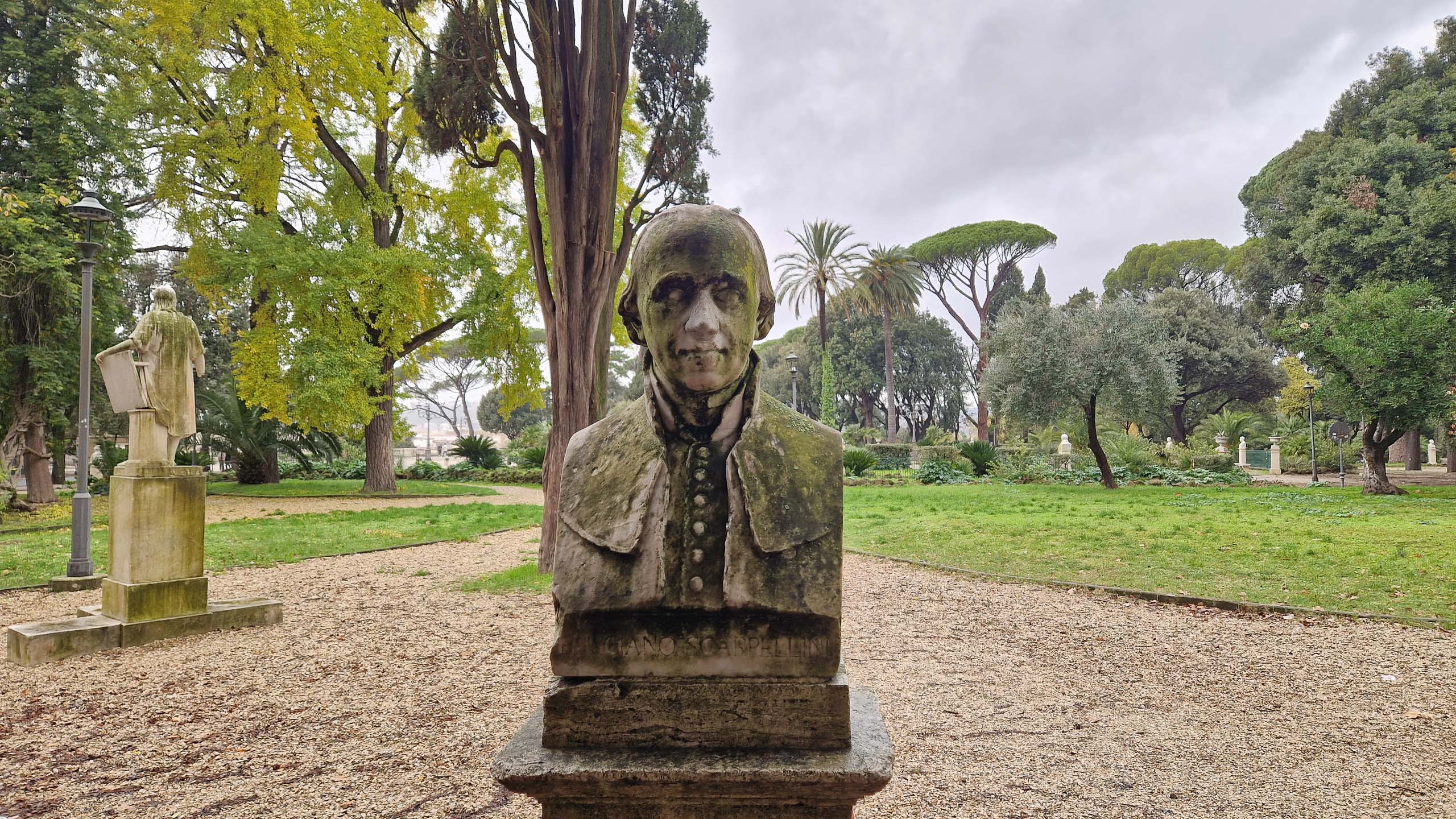
Feliciano Scarpellini gathered people around scientific instruments. Born in Foligno in 1762, he became a priest and teacher in Rome, where his demonstrations of physics and mathematics attracted students and other scholars. Equipment made an argument visible: a claim could be tested in front of an audience.
Political upheaval repeatedly changed the conditions of his work. After the Roman Republic fell in 1799, he found support in the household of Francesco Caetani, whose palace contained an observatory. In 1801 a new scientific academy adopted the name of the Lincei, recalling Federico Cesi's seventeenth-century institution without representing an uninterrupted survival of it.
Scarpellini served as secretary and worked to preserve instruments and sustain research. Teaching, patronage, publishing, and the maintenance of an observatory were interdependent activities. Scientific continuity often depended on finding another room, another sponsor, or another institutional arrangement.
He died in 1840. His niece Caterina Scarpellini developed her own career in astronomy and meteorology, extending the history of observation associated with the family.
Pincio gardens · Nearby
Carlo Botta wrote histories of the American Revolution and modern Italy after a career shaped by revolutionary politics and exile.
Find on the mapPincio gardens · Nearby
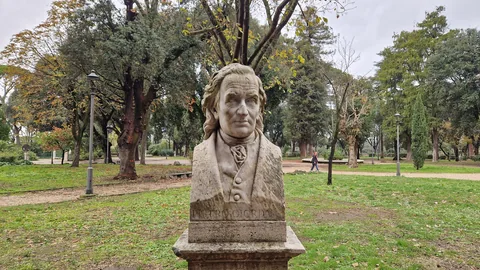
Romagnosi examined punishment, administration, and social development, linking legal thought to the study of human society.
Find on the mapPincio gardens · 35 m away
Giordani defended Italian literary tradition and became an important correspondent and early supporter of Giacomo Leopardi.
Find on the mapPincio gardens · 35 m away
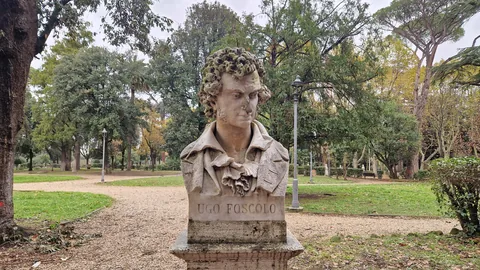
Foscolo made exile, political disappointment, and the power of remembrance central subjects of Italian poetry and fiction.
Find on the map