Pincio gardens · Nearby
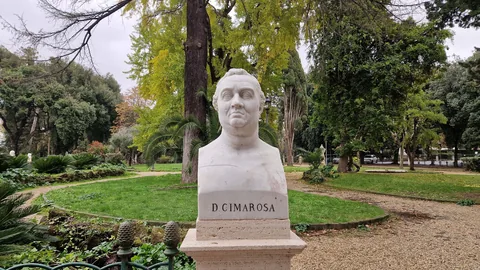
Domenico Cimarosa
Cimarosa’s comic operas use ensembles and sharply drawn situations to turn social confusion into musical drama.
Find on the mapVoice changes restart the current paragraph.
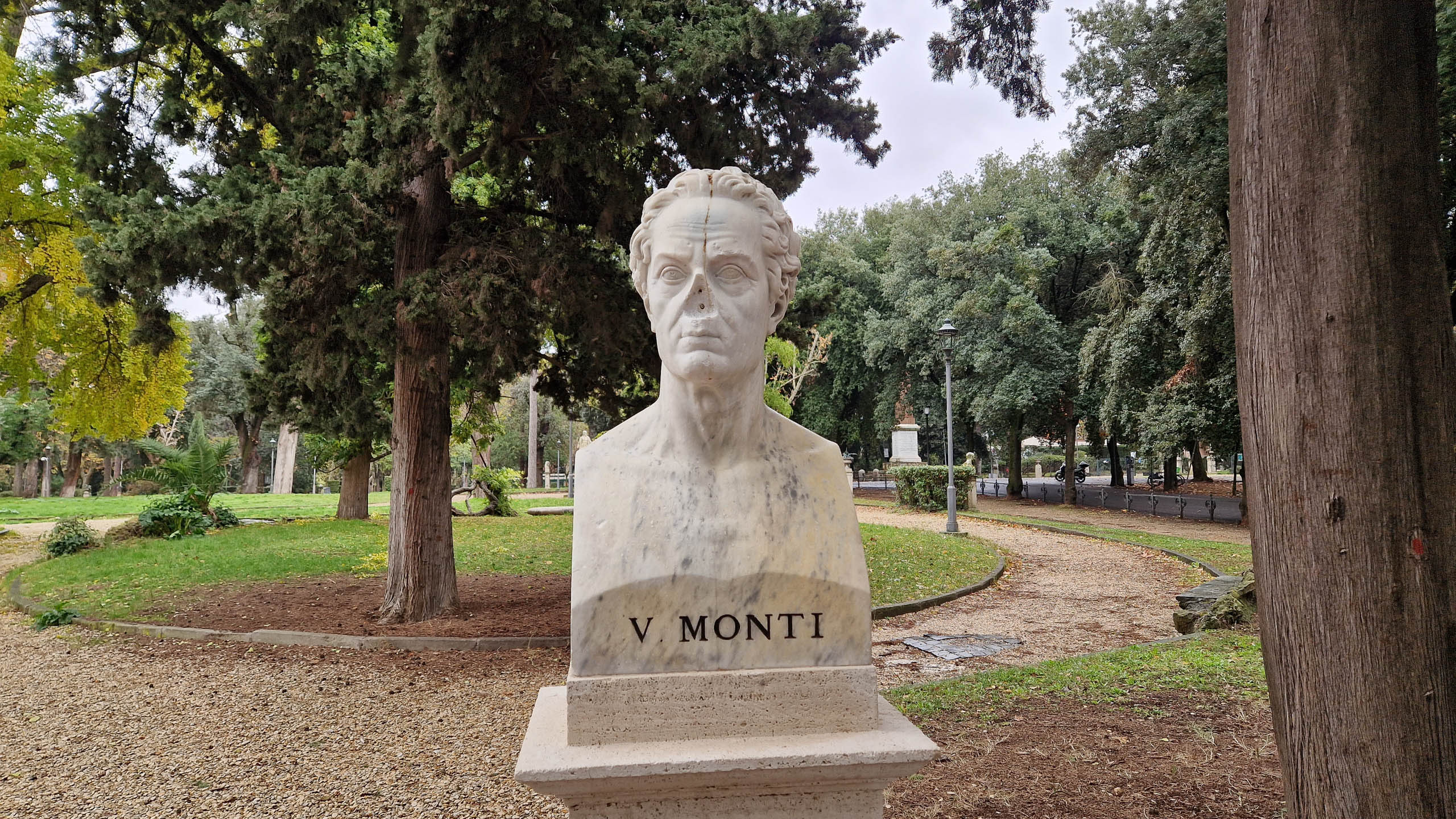
Vincenzo Monti wrote through the collapse and restoration of political orders. Born in 1754 near Ravenna, he worked in papal Rome, revolutionary and Napoleonic Italy, and the world that followed Napoleon's defeat. His public poetry often responded to the demands and opportunities of those changing settings.
The result made him both admired and controversial. Supporters praised his command of language and classical forms; critics questioned the speed with which his verse could accommodate new patrons and causes. Literary skill and political reliability became inseparable parts of his reputation.
His Italian translation of the Iliad established a more durable place in the literary tradition. Monti worked with existing translations and scholarly assistance rather than relying on a complete mastery of Greek. The achievement lay in the energy and movement of the Italian poem he produced.
He died in 1828. His biography helps explain a problem faced by many artists represented in these gardens: public work could depend on patronage while also becoming the evidence by which later generations judged the artist's independence.
Pincio gardens · Nearby
Cimarosa’s comic operas use ensembles and sharply drawn situations to turn social confusion into musical drama.
Find on the mapPincio gardens · Nearby
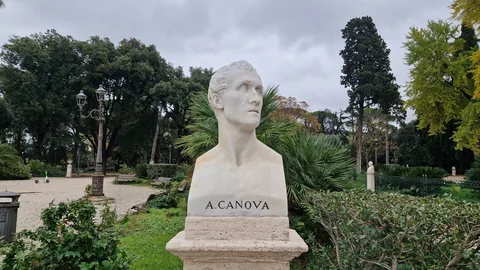
Canova’s sculpture joined classical forms to carefully finished marble, including the Borghese portrait of Pauline Bonaparte as Venus.
Find on the mapPincio gardens · Nearby
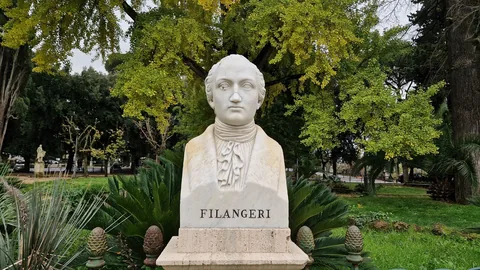
Gaetano Filangieri examined how laws could change society and exchanged ideas with Benjamin Franklin across the Atlantic.
Find on the mapPincio gardens · Nearby
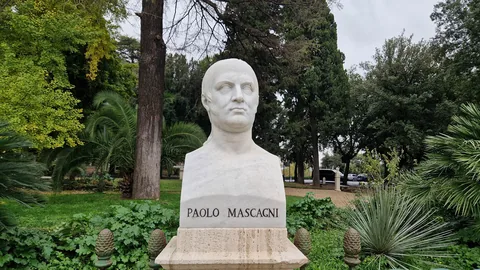
Mascagni mapped the lymphatic system and helped make anatomical illustration a precise instrument of study.
Find on the map