Pincio gardens · Nearby
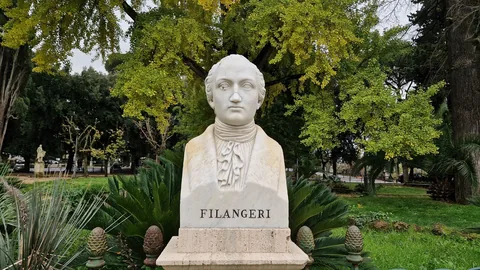
Gaetano Filangieri
Gaetano Filangieri examined how laws could change society and exchanged ideas with Benjamin Franklin across the Atlantic.
Find on the mapRead aloud with your device’s voice.
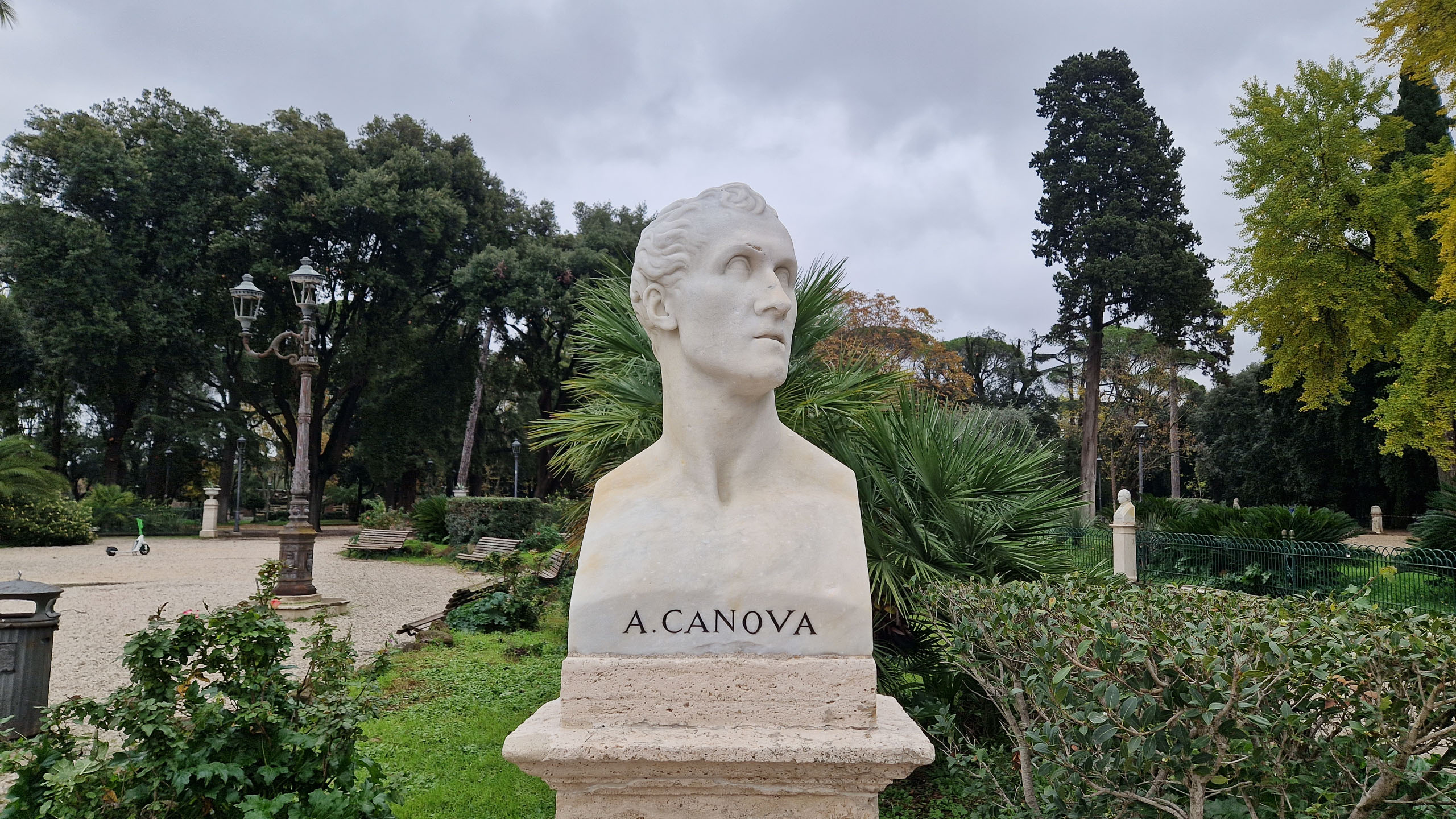
Antonio Canova made marble suggest the softness of skin and the pressure of a body on a cushion. His portrait of Pauline Bonaparte as Venus Victorious, commissioned by her husband Camillo Borghese and completed in 1808, gives that skill a particularly direct connection to the gallery in this park.
Pauline reclines with the apple awarded to Venus in the Judgment of Paris. The work combines a recognizable contemporary sitter with a classical divine role. Its pose and furnishings turn a family portrait into a statement about beauty, status, and dynastic ambition.
Born in Possagno in 1757, Canova trained in the Venetian region before establishing himself in Rome. Clay models, full-size plaster casts, workshop assistance, and prolonged finishing all contributed to his marble sculptures. The smooth surface can conceal the many stages of production.
He worked for patrons across political divisions and, after Napoleon's fall, helped negotiate the return of artworks taken from the Papal States. Canova died in 1822. His career joins the making of sculpture to the international movement, prestige, and contested ownership of art.
Pincio gardens · Nearby
Gaetano Filangieri examined how laws could change society and exchanged ideas with Benjamin Franklin across the Atlantic.
Find on the mapPincio gardens · Nearby
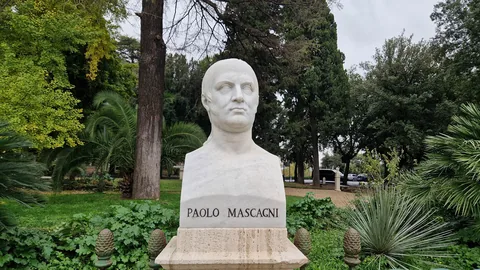
Mascagni mapped the lymphatic system and helped make anatomical illustration a precise instrument of study.
Find on the mapPincio gardens · Nearby
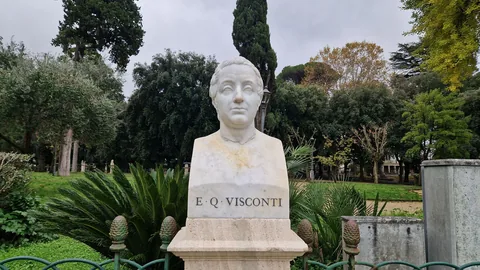
Visconti interpreted ancient sculpture for the Vatican collections and later worked with antiquities in Paris.
Find on the mapPincio gardens · Nearby
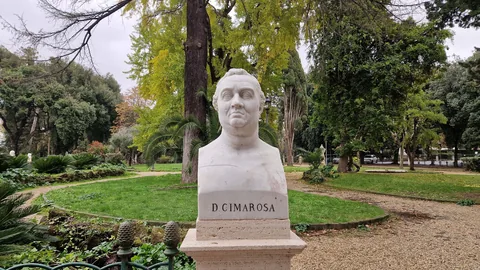
Cimarosa’s comic operas use ensembles and sharply drawn situations to turn social confusion into musical drama.
Find on the map