Pincio gardens · Nearby
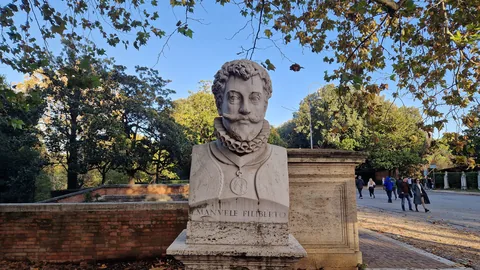
Emanuele Filiberto di Savoia
The sixteenth-century Duke of Savoy recovered his dynasty’s territories and made Turin his capital in 1563.
Find on the mapRead aloud with your device’s voice.
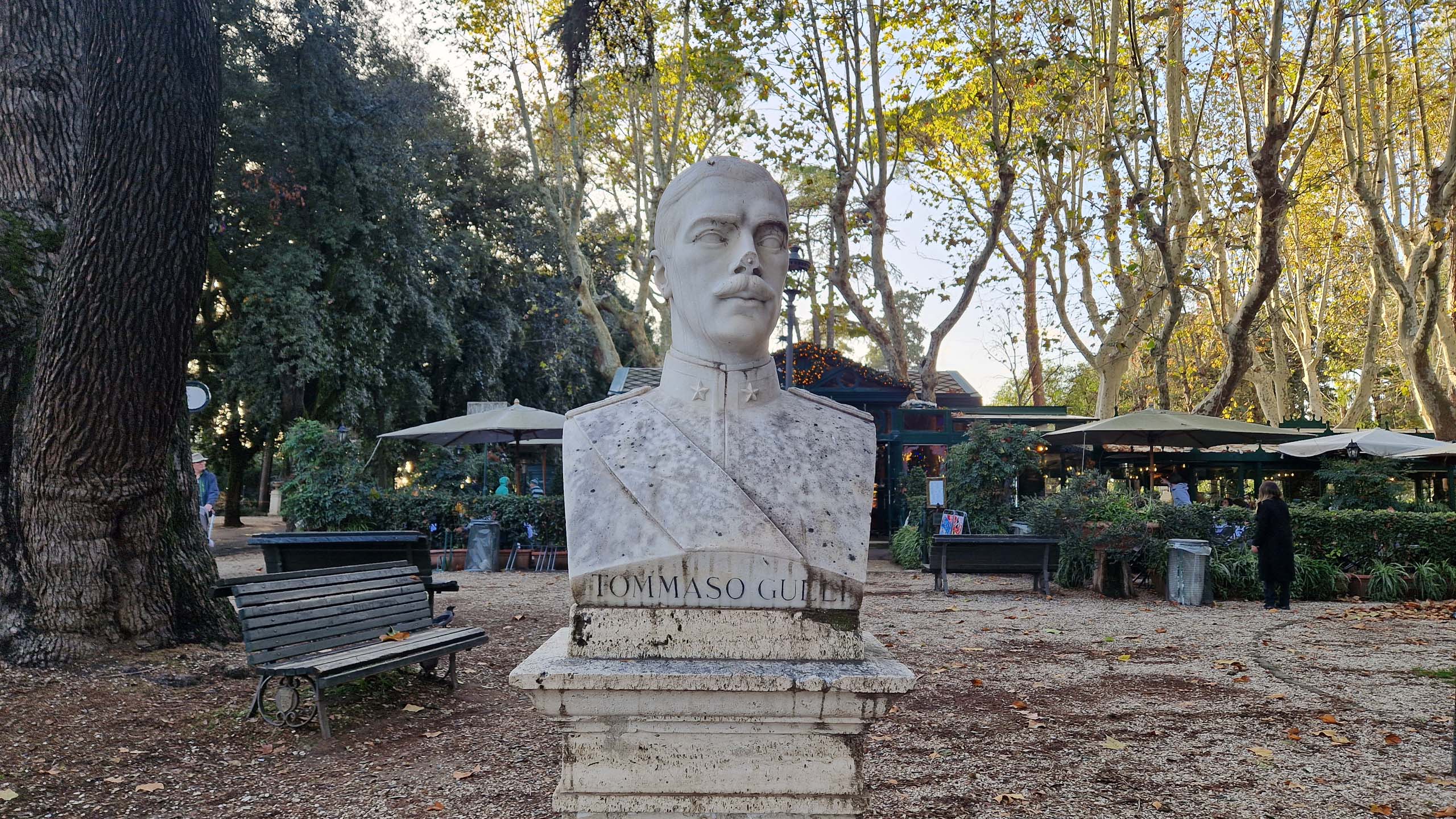
Tommaso Gulli's death belongs to the unsettled aftermath of the First World War. Born in Faenza in 1879, he became an officer in the Italian navy and took command of the vessel Puglia in January 1920. The ship was stationed in the eastern Adriatic while the postwar territorial settlement remained disputed.
In July 1920 violence broke out in Split, then commonly called Spalato in Italian. Gulli and the sailor Aldo Rossi were mortally wounded. Accounts differ over the sequence of the confrontation, which involved Italian naval personnel and people in the city, so a simple account of an unprovoked attack does not capture the uncertainty of the evidence.
Italian nationalists used the deaths to intensify agitation over the Adriatic borderlands. The episode became part of the immediate background to the burning of the Slovene Narodni dom in Trieste. Commemoration of Gulli subsequently developed within that climate of rival national claims.
The bow of the Puglia was later installed at Gabriele D'Annunzio's Vittoriale. Both that display and Gulli's portrait show how naval objects and individual deaths acquired a political afterlife beyond the circumstances of the original incident.
Pincio gardens · Nearby
The sixteenth-century Duke of Savoy recovered his dynasty’s territories and made Turin his capital in 1563.
Find on the mapPincio gardens · Nearby
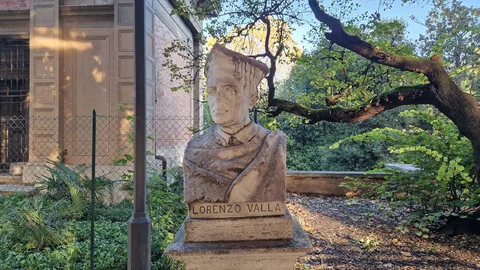
Valla used the history of Latin to expose the Donation of Constantine as a document written centuries after the events it claimed to record.
Find on the mapPincio gardens · Nearby
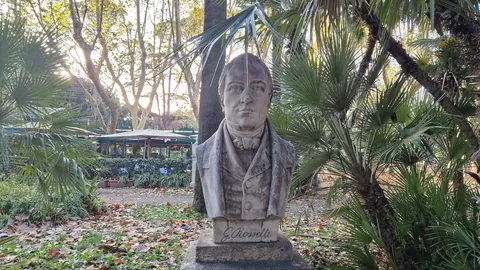
An exiled poet and Dante scholar whose London household produced Christina and Dante Gabriel Rossetti.
Find on the mapPincio gardens · Nearby
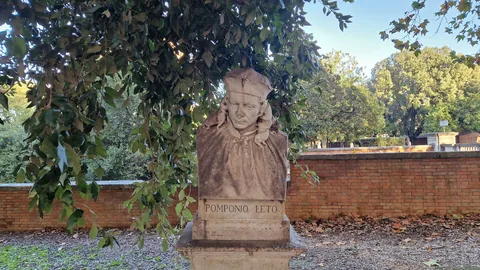
Pomponio Leto made ancient Rome a subject of teaching and collective study, attracting papal suspicion as well as devoted pupils.
Find on the map