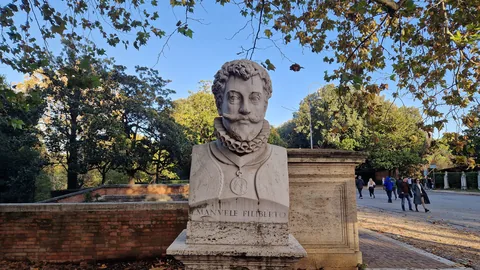
Pincio gardens · Nearby
Emanuele Filiberto di Savoia
The sixteenth-century Duke of Savoy recovered his dynasty’s territories and made Turin his capital in 1563.
Find on the mapRead aloud with your device’s voice.
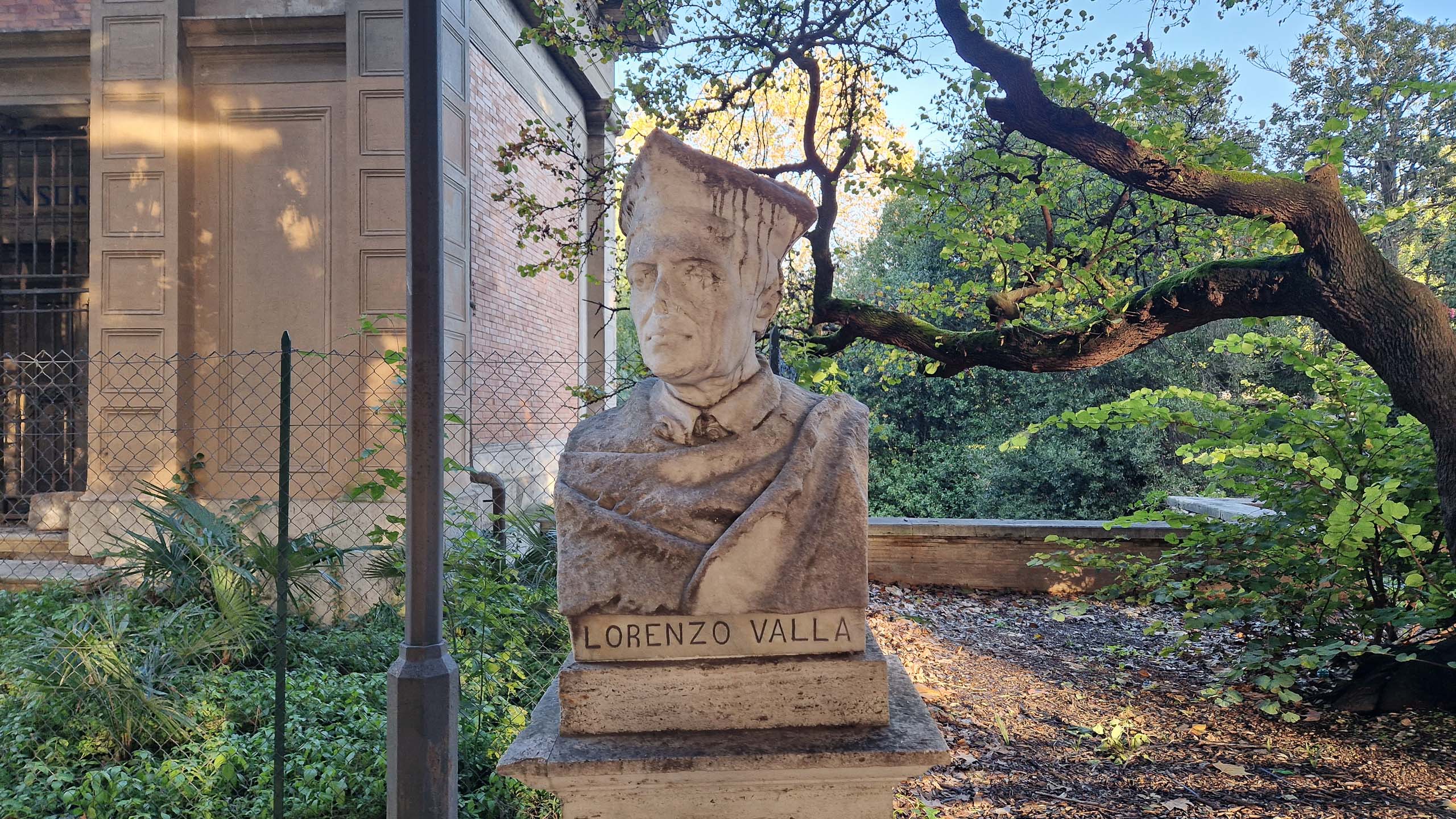
Lorenzo Valla treated language as historical evidence. An anachronistic word could expose a document’s false date. In his attack on the Donation of Constantine, written in 1440, he combined that attention to Latin with arguments about institutions and historical plausibility.
The Donation purported to record an imperial grant of authority to the pope. Valla showed that its claims could not be accepted as an authentic act of Constantine. The force of the argument lay in examining the text, rather than simply opposing the power it had been used to support.
Born in Rome in 1407, Valla worked at the court of Alfonso of Aragon before returning to a career that included papal service. His criticism of a document invoked for papal temporal authority did not place him permanently outside the Church’s institutions.
His writings on Latin usage and his examination of biblical language belong to the same demanding attention to words. Humanist learning here was an instrument of correction. A commemorative bust can honor the critic, but the more practical inheritance is a method: ask whether the language fits the claimed date and circumstances.
Pincio gardens · Nearby
The sixteenth-century Duke of Savoy recovered his dynasty’s territories and made Turin his capital in 1563.
Find on the mapPincio gardens · Nearby
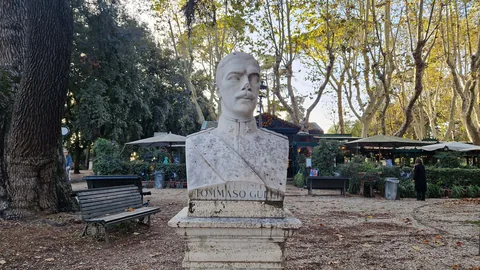
The commander of the Italian naval vessel Puglia died after violence in Split in July 1920, amid disputes over the postwar Adriatic.
Find on the mapPincio gardens · Nearby
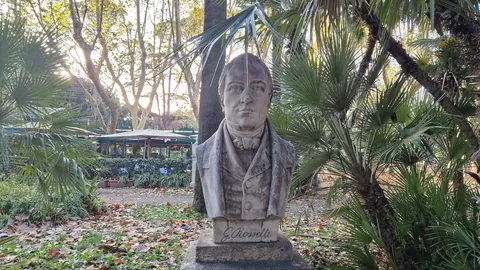
An exiled poet and Dante scholar whose London household produced Christina and Dante Gabriel Rossetti.
Find on the mapPincio gardens · Nearby
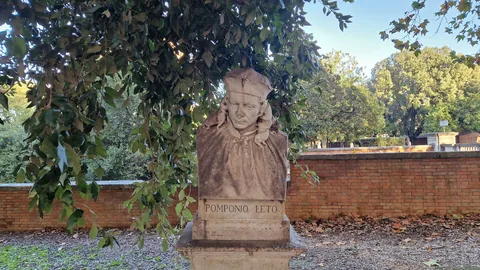
Pomponio Leto made ancient Rome a subject of teaching and collective study, attracting papal suspicion as well as devoted pupils.
Find on the map