Pincio gardens · Nearby
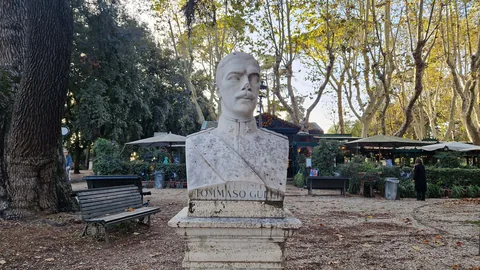
Tommaso Gulli
The commander of the Italian naval vessel Puglia died after violence in Split in July 1920, amid disputes over the postwar Adriatic.
Find on the mapRead aloud with your device’s voice.
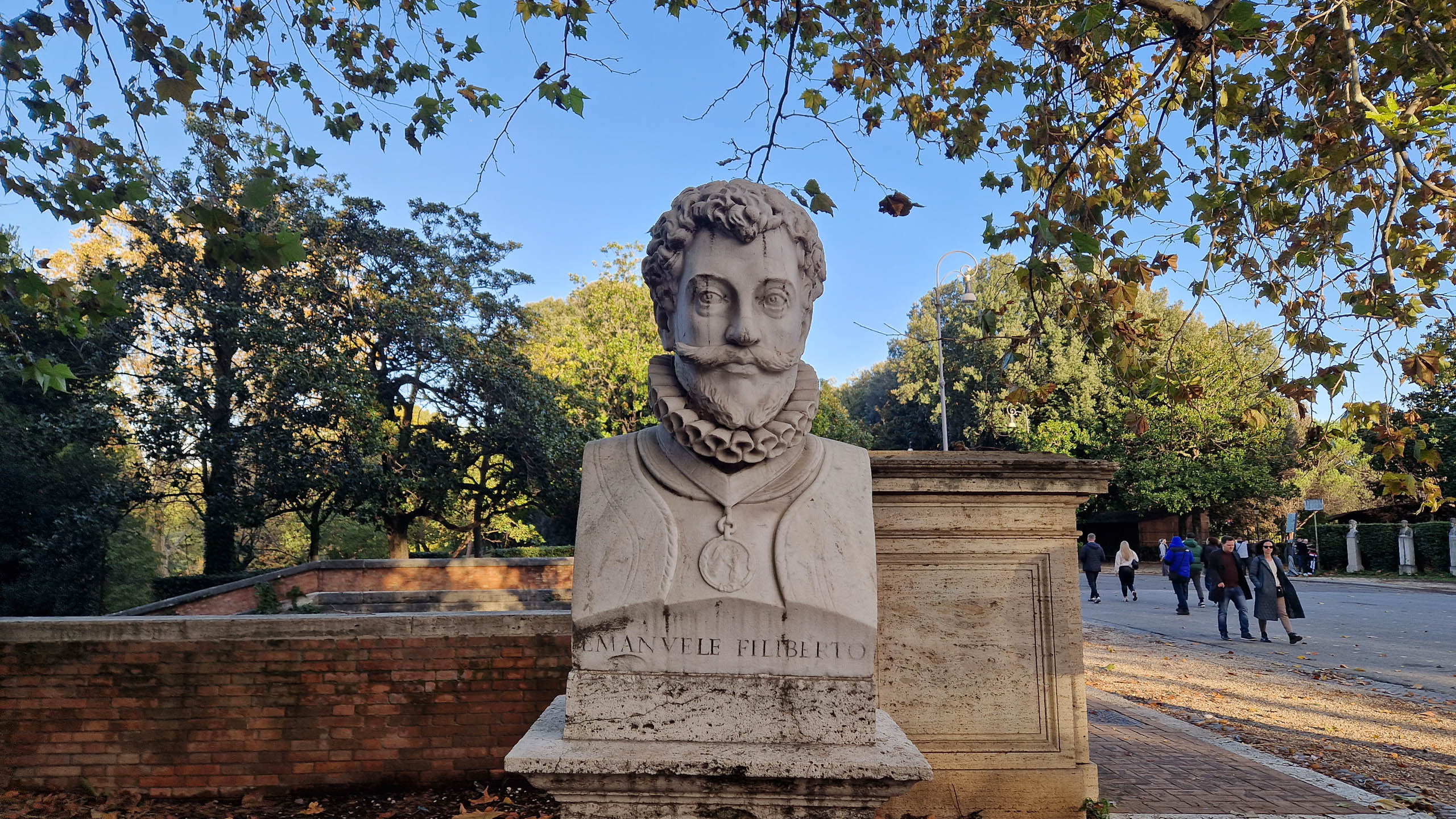
Emanuele Filiberto inherited a duchy largely occupied by stronger neighbors. Born in 1528, he became Duke of Savoy in 1553 while France and the Habsburg powers were fighting for control in Italy. Recovering his family's position required service abroad as well as negotiation.
Commanding forces for Philip II of Spain, he won the Battle of Saint-Quentin in 1557. The settlement at Cateau-Cambrésis in 1559 restored much of his territory, and his marriage to Margaret of France reinforced the diplomatic agreement. Recovery was gradual: foreign garrisons and competing interests did not disappear at once.
In 1563 he established Turin as the capital and seat of his court. Administrative and military reforms helped consolidate a state spanning the Alps, with an increasing emphasis on its Italian territories. This was a dynastic project in the sixteenth century, long before the Savoy monarchy led Italian unification.
The photographed bust presents a ruler in a ruff and armor. It commemorates this Renaissance duke, who died in 1580, rather than his much later namesake, the Duke of Aosta who commanded an army in the First World War.
Pincio gardens · Nearby
The commander of the Italian naval vessel Puglia died after violence in Split in July 1920, amid disputes over the postwar Adriatic.
Find on the mapPincio gardens · Nearby
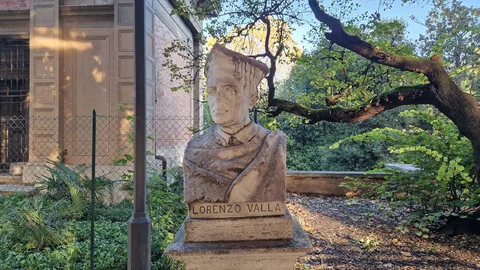
Valla used the history of Latin to expose the Donation of Constantine as a document written centuries after the events it claimed to record.
Find on the mapPincio gardens · Nearby
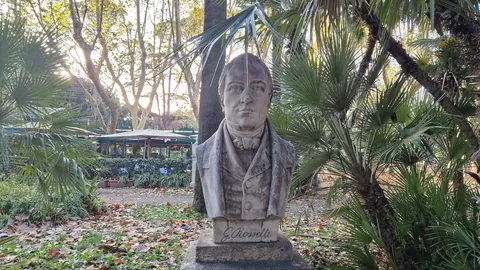
An exiled poet and Dante scholar whose London household produced Christina and Dante Gabriel Rossetti.
Find on the mapPincio gardens · Nearby
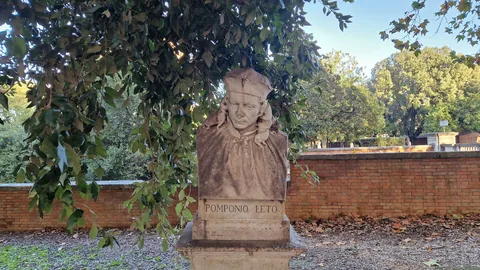
Pomponio Leto made ancient Rome a subject of teaching and collective study, attracting papal suspicion as well as devoted pupils.
Find on the map