Pincio gardens · Nearby
Gabriele Rossetti
An exiled poet and Dante scholar whose London household produced Christina and Dante Gabriel Rossetti.
Find on the mapRead aloud with your device’s voice.
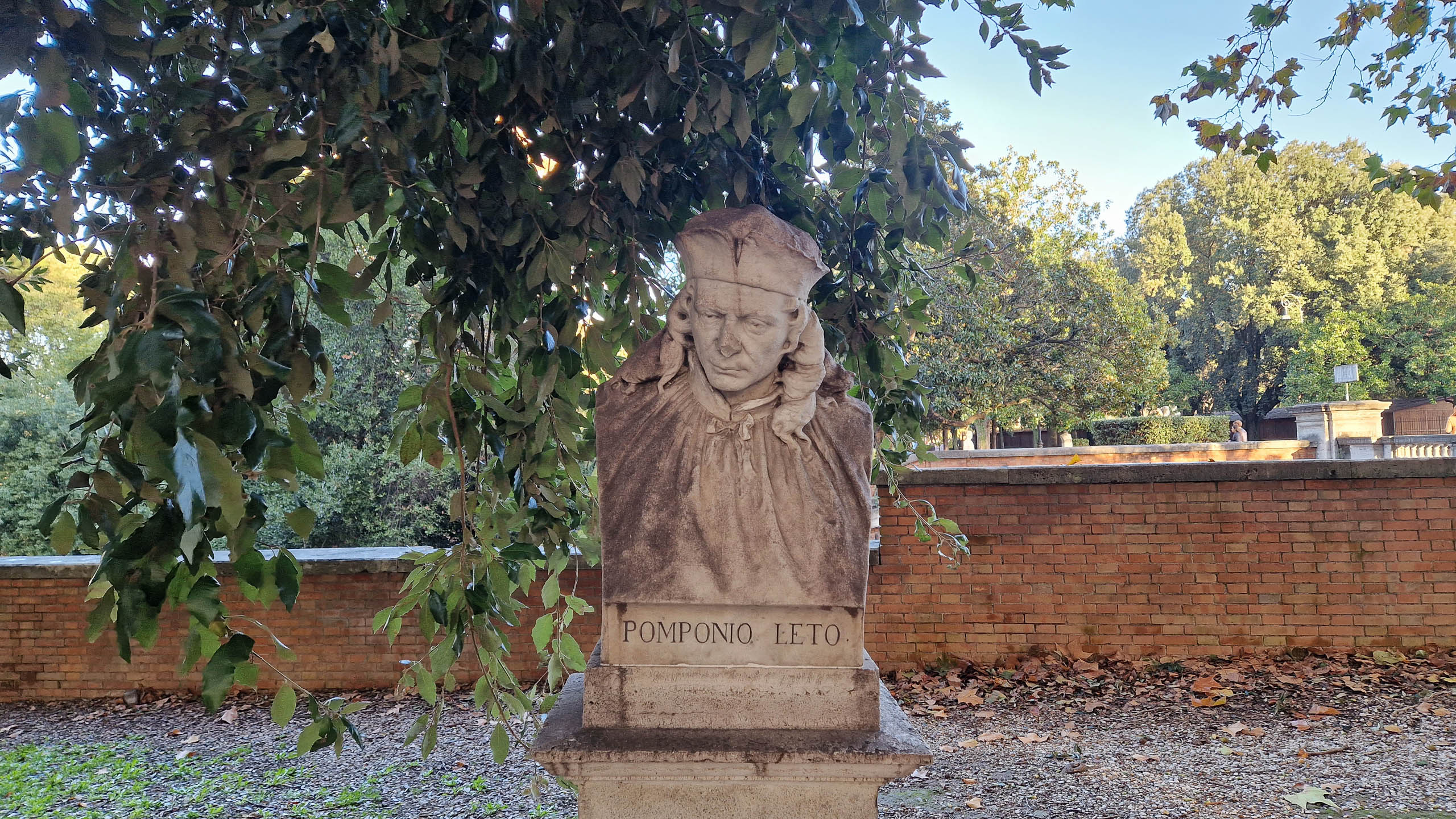
Giulio Pomponio Leto studied ancient Rome through its language, institutions, and surviving remains. His teaching helped make classical learning a shared activity among the humanists associated with the Roman Academy. Adopting ancient names and reviving commemorative practices gave that scholarship a public identity.
The group’s enthusiasm also attracted suspicion. In 1468, Pope Paul II’s government imprisoned several members on accusations that included conspiracy and irreligion. Pomponio was held in Castel Sant’Angelo and released the following year when the case against him could not be sustained. An accusation in the records is not proof that the alleged conspiracy occurred.
His academic work continued through teaching and the preparation of texts. Knowledge of Roman antiquity involved the labor of reading manuscripts and explaining difficult passages, alongside the more conspicuous gestures of classical revival.
Pomponio died in 1498. His place among the Pincio portraits brings together two different moments in Rome’s treatment of its past: Renaissance scholars who made antiquity part of their intellectual lives, and later commemorators who made those scholars part of a civic collection.
Pincio gardens · Nearby
An exiled poet and Dante scholar whose London household produced Christina and Dante Gabriel Rossetti.
Find on the mapPincio gardens · Nearby
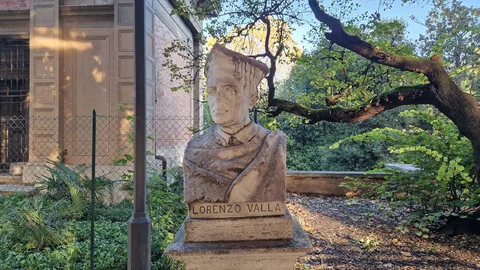
Valla used the history of Latin to expose the Donation of Constantine as a document written centuries after the events it claimed to record.
Find on the mapPincio gardens · Nearby
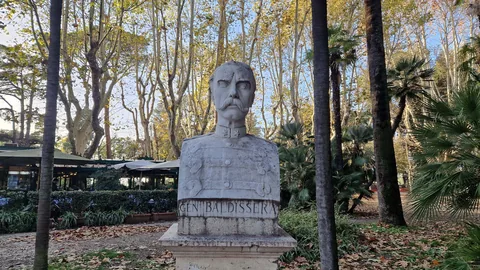
A general who moved from Austrian to Italian service, Baldissera commanded colonial forces in Eritrea before and after the defeat at Adwa.
Find on the mapPincio gardens · Nearby
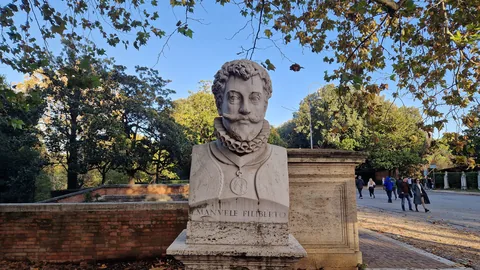
The sixteenth-century Duke of Savoy recovered his dynasty’s territories and made Turin his capital in 1563.
Find on the map