Pincio gardens · Nearby
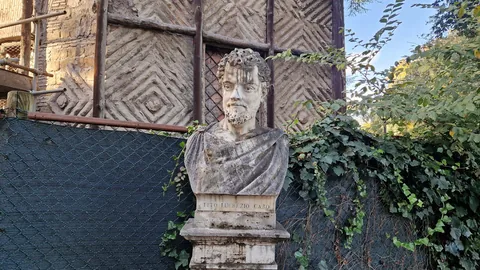
Lucretius
A Roman poet who used Epicurean explanations of nature to confront fear of the gods and of death.
Find on the mapRead aloud with your device’s voice.
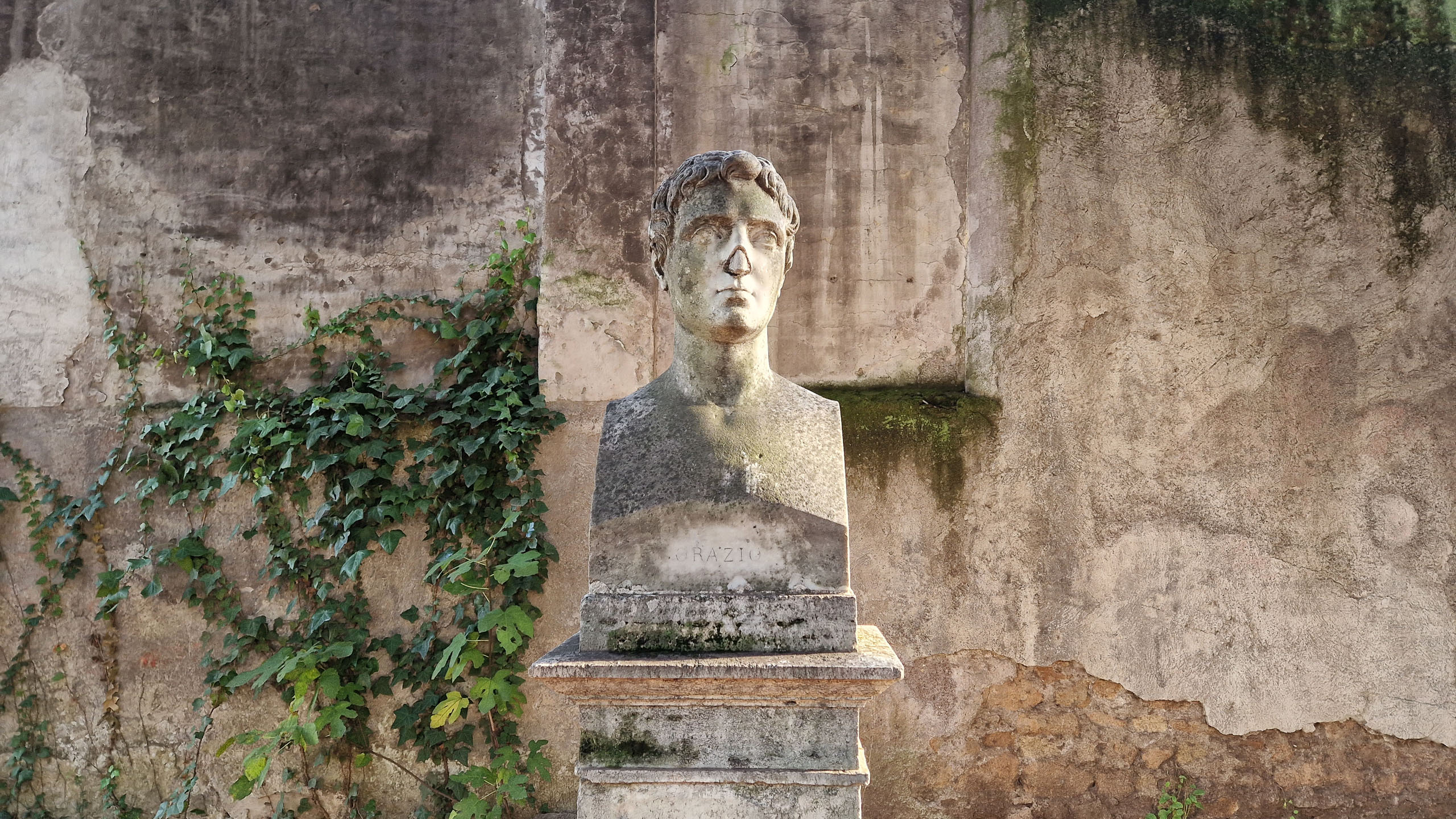
Horace’s poems often begin with a particular occasion: a friend's arrival, a drink, or a change in the weather. From such scenes, the Odes move toward questions about time and the limits of human control. The familiar phrase carpe diem answers that uncertainty. Its invitation to enjoy the present acknowledges a limit on what a person can know.
Born at Venusia in 65 BCE, Horace was the son of a freedman who invested in his education. He studied in Athens and fought on Brutus’s side at Philippi before returning to Italy. His later association with Maecenas placed him within the literary circle connected to Augustus.
The change of political setting did not make every poem a straightforward statement of official policy. Horace wrote civic verse, but also explored friendship, personal independence, and the attractions of a smaller life. His Satires and Epistles use different voices from the tightly patterned lyric poems.
Behind the apparent ease is demanding craftsmanship. Horace adapted Greek meters to Latin and made shifts of tone work within exact forms. A brief quotation can preserve his wit while losing the argument that surrounds it.
Pincio gardens · Nearby
A Roman poet who used Epicurean explanations of nature to confront fear of the gods and of death.
Find on the mapPincio gardens · Nearby
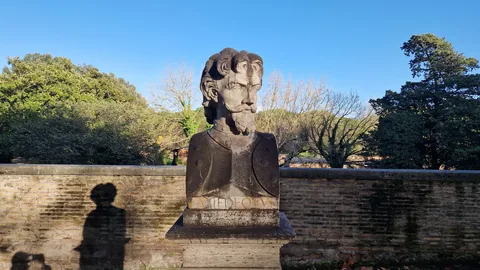
The Roman author of a ten-book work on architecture that connects buildings with materials, water, machines, and human proportions.
Find on the mapPincio gardens · Nearby
Amadeus V governed Savoy through disputed inheritance, marriage alliances, and negotiation across the Alps.
Find on the mapPincio gardens · Nearby
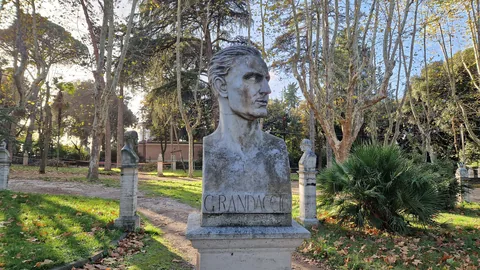
An infantry major killed near the Timavo in 1917, Randaccio became a prominent figure in Italy’s memory of the First World War.
Find on the map