Pincio gardens · Nearby
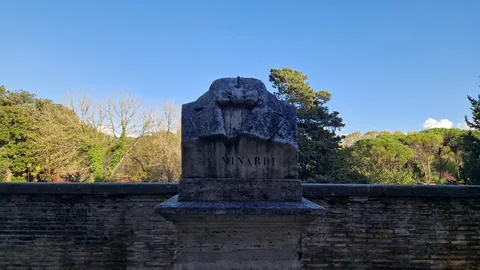
Amadeus V of Savoy
Amadeus V governed Savoy through disputed inheritance, marriage alliances, and negotiation across the Alps.
Find on the mapRead aloud with your device’s voice.
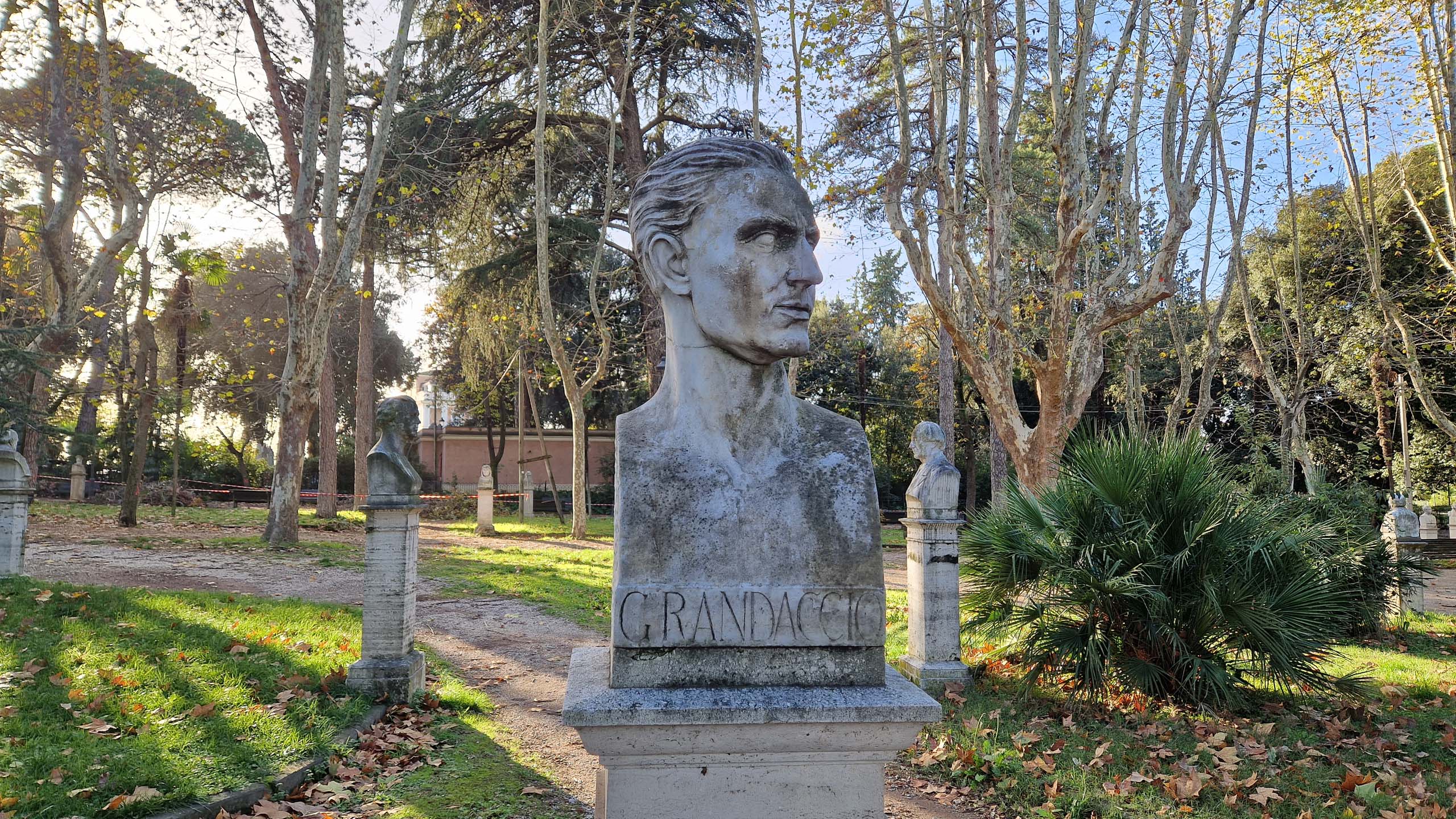
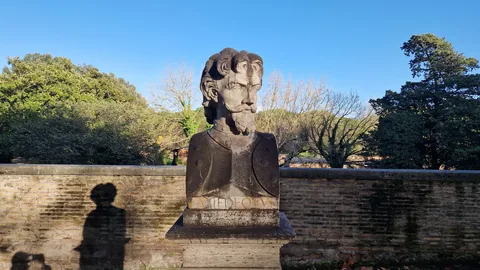
Giovanni Randaccio commanded the Second Battalion of the 77th Infantry Regiment during the First World War. Born in Turin in 1884, he became associated with the fighting near the Timavo, close to the northeastern Adriatic, during the Tenth Battle of the Isonzo.
On May 28, 1917, his men attacked a position known as Hill 28. Randaccio was fatally wounded during the action. The official citation for his posthumous Gold Medal of Military Valor records the attack and praises his conduct as a commander; its language also shows how the state presented an exemplary soldier to the public.
Gabriele D'Annunzio, who had served in contact with Randaccio's formation, helped shape his commemoration. This connection placed the officer's death within a broader culture of wartime speeches, commemorative writing, and public monuments. A particular battlefield loss became part of a national story about sacrifice.
The portrait on this walk belongs to that commemorative history. Understanding it requires both the military facts of the Timavo action and an awareness of the writers and institutions that kept Randaccio's name before later generations.
Pincio gardens · Nearby
Amadeus V governed Savoy through disputed inheritance, marriage alliances, and negotiation across the Alps.
Find on the mapPincio gardens · Nearby
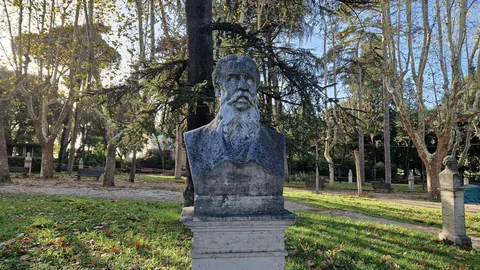
A teacher and draftsman who helped shape nineteenth-century Rome’s turn toward earlier Italian religious art.
Find on the mapPincio gardens · Nearby
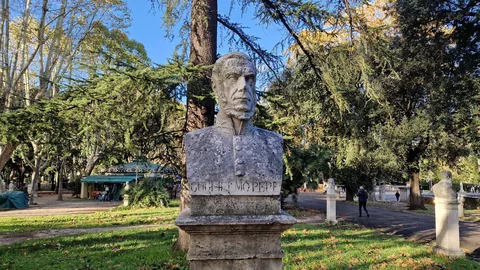
Visconti Venosta guided Italian foreign policy through the Roman question, European alliances, and a later rapprochement with France.
Find on the mapPincio gardens · Nearby
A southern Italian general whose campaigns connected the constitutional revolution in Naples with the defense of Venice.
Find on the map