Pincio gardens · Nearby
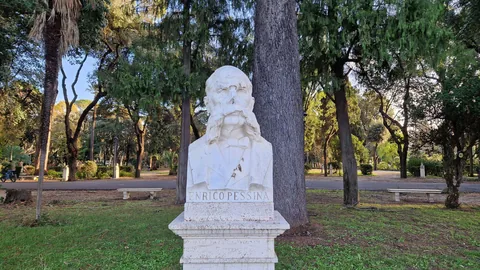
Enrico Pessina
Pessina taught criminal law as a discipline concerned with responsibility and the limits of the state’s authority to punish.
Find on the mapRead aloud with your device’s voice.
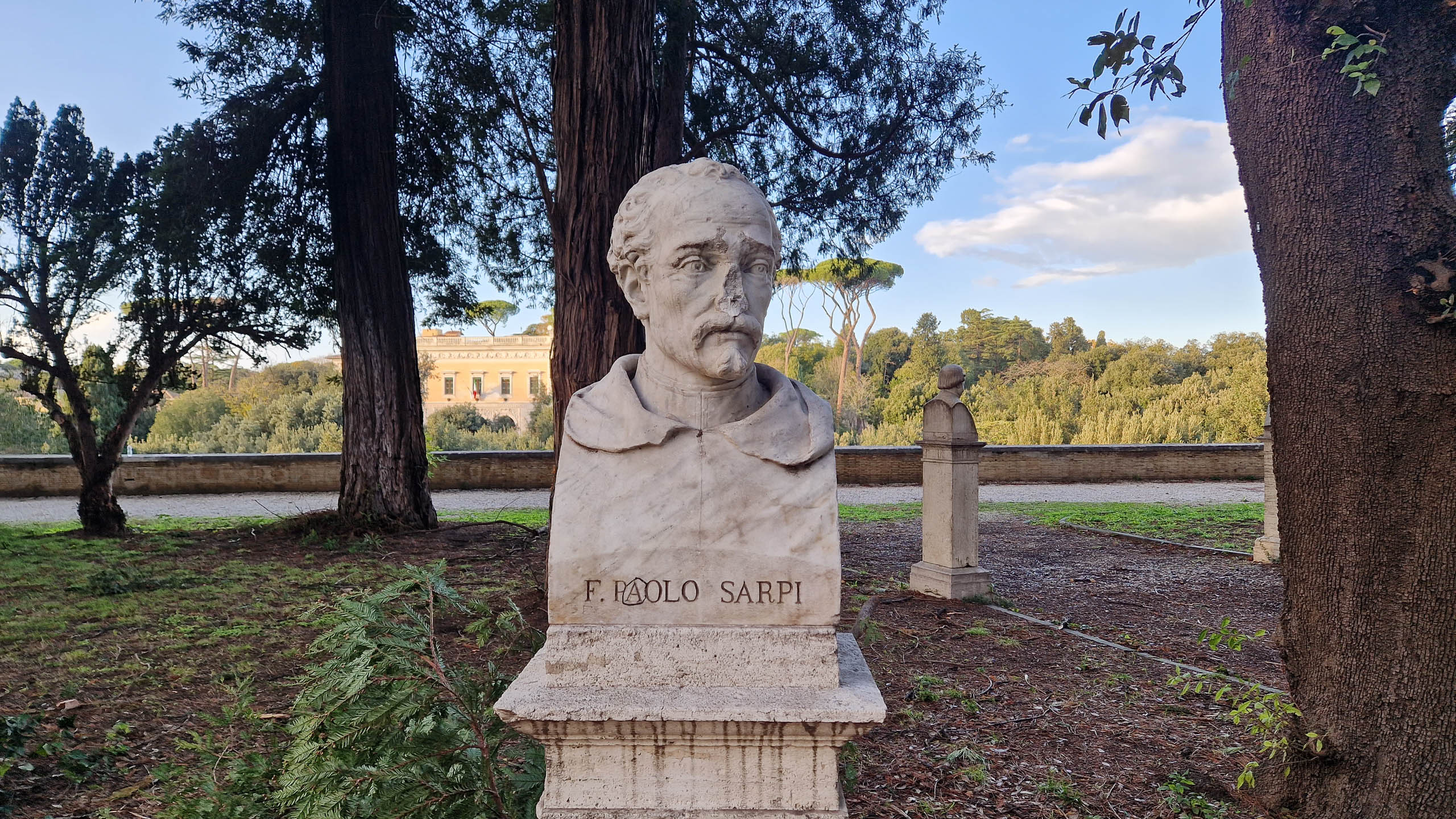
Paolo Sarpi was a Servite friar who defended the Venetian Republic in its conflict with Pope Paul V. During the interdict crisis of 1606, he argued against papal claims that threatened the state’s legal authority. His position involved the boundaries between civil government and ecclesiastical power, rather than a simple abandonment of religion.
Born in Venice in 1552, Sarpi combined theological learning with wide scientific interests. The republic employed him as an adviser on canon law. Printed opinions took the dispute beyond government chambers.
The History of the Council of Trent, published in London under a pseudonym in 1619, examined how papal policy shaped the council. Sarpi interpreted the proceedings as a strengthening of central authority. That critical purpose is essential when using his work as a historical source: it is a powerful interpretation with a position of its own.
His bust on the Pincio places a critic of papal jurisdiction within Rome’s later civic memory. A dispute centered on Venice became part of the Italian capital’s public account of political and intellectual independence.
Pincio gardens · Nearby
Pessina taught criminal law as a discipline concerned with responsibility and the limits of the state’s authority to punish.
Find on the mapPincio gardens · Nearby
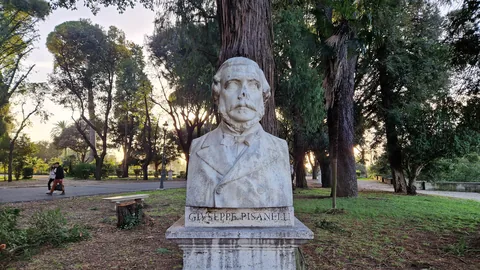
Pisanelli helped turn political unification into shared civil law, including the codes prepared for the new Kingdom of Italy.
Find on the mapPincio gardens · Nearby
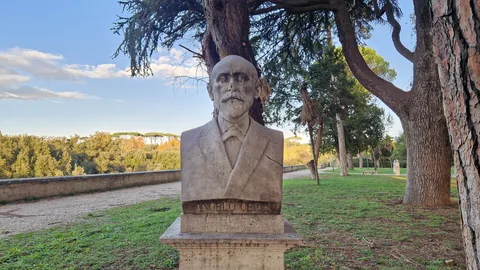
Celli connected malaria research with access to medicine, education, and the living conditions of rural workers around Rome.
Find on the mapPincio gardens · 30 m away
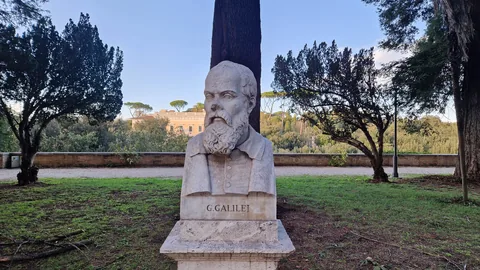
Galileo joined instrument-making, mathematical argument, and observation, while his Roman trial exposed the limits placed on cosmological debate.
Find on the map