Pincio gardens · Nearby
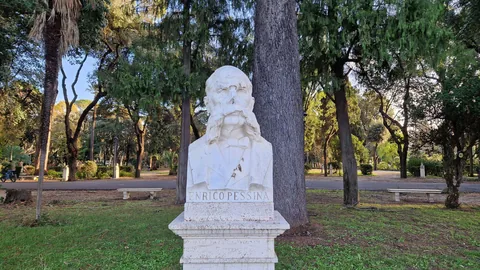
Enrico Pessina
Pessina taught criminal law as a discipline concerned with responsibility and the limits of the state’s authority to punish.
Find on the mapRead aloud with your device’s voice.
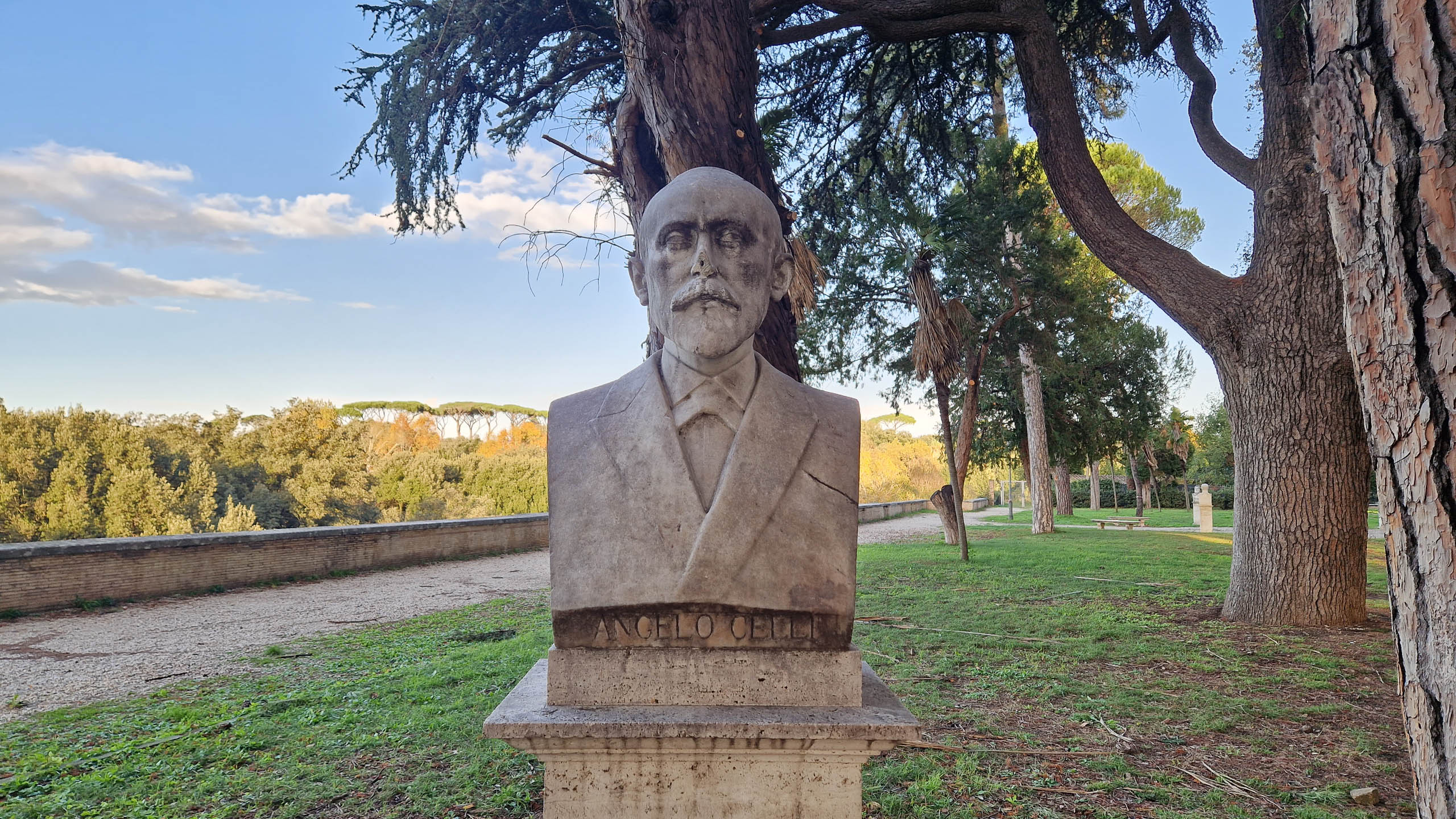
Angelo Celli treated malaria as a problem of social conditions as well as disease. Research into the parasite mattered, but a treatment was of limited use if the people most exposed could not obtain it. His parliamentary work helped make quinine available through a state distribution system.
Born in Cagli in 1857, Celli taught hygiene in Rome and worked with other researchers studying malaria. The law of 1900 on state quinine belongs to the practical history of public health: manufacturing and distribution became part of the response, alongside laboratory investigation.
His wife, Anna Fraentzel Celli, worked with him in the Roman countryside. Their activity connected prevention with schooling for agricultural workers and their families. Naming her role matters, since accounts centered on a single celebrated physician can leave the educational and organizational work largely invisible.
Celli died in 1914. His biography provides a direct connection between Rome’s commemorative landscape and the difficult conditions beyond the city at the beginning of the twentieth century.
Pincio gardens · Nearby
Pessina taught criminal law as a discipline concerned with responsibility and the limits of the state’s authority to punish.
Find on the mapPincio gardens · Nearby
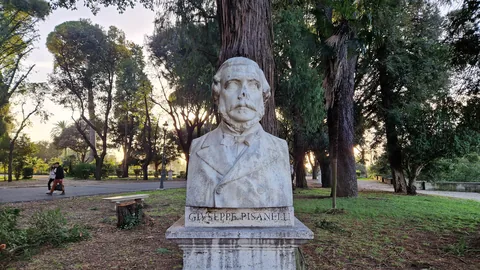
Pisanelli helped turn political unification into shared civil law, including the codes prepared for the new Kingdom of Italy.
Find on the mapPincio gardens · Nearby
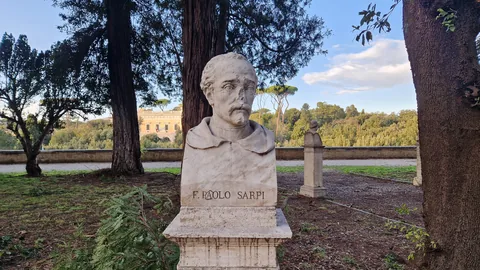
Sarpi defended Venice against papal jurisdiction and wrote a history of the Council of Trent that challenged the papacy’s account of reform.
Find on the mapPincio gardens · 21 m away
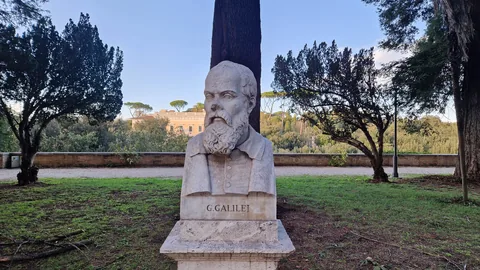
Galileo joined instrument-making, mathematical argument, and observation, while his Roman trial exposed the limits placed on cosmological debate.
Find on the map