Pincio gardens · Nearby
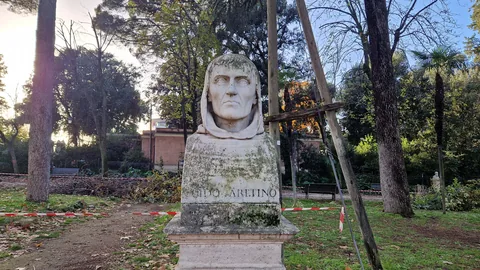
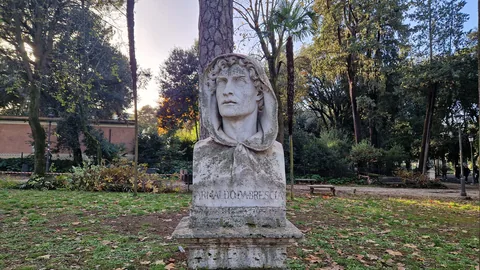
Arnold of Brescia
Arnold of Brescia challenged the Church’s worldly power and became involved in the medieval Roman commune.
Find on the mapVoice changes restart the current paragraph.
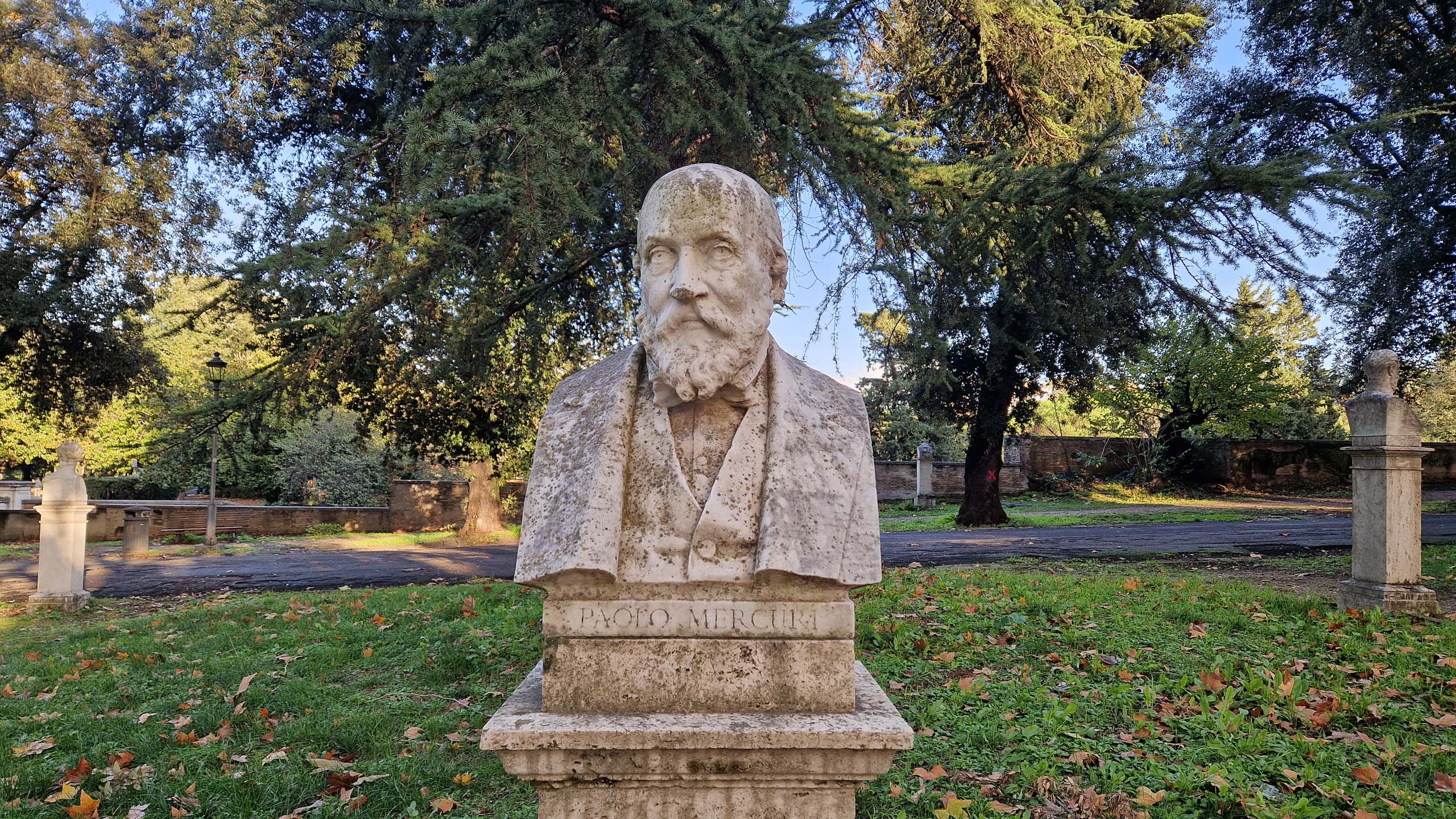
Paolo Mercuri made the translation of painting into print an exacting artistic practice. An engraver working with a burin cuts lines into a metal plate; their density and direction can suggest shadow, texture, and gradations that a painter produces with color. Mercuri was particularly admired for this tonal control.
Born in Rome in 1804, he developed a career that took him to Paris before his return to an institutional role in Rome. In 1847, he became director of the Calcografia camerale. The present Istituto Centrale per la Grafica records the provision of living and working space for him in its building near the Trevi Fountain.
His engravings after paintings, including Léopold Robert’s harvesters, belong to a culture in which prints carried artworks beyond the rooms where the originals were displayed. Reproduction involved decisions about emphasis and tone. It demanded interpretation as well as technical accuracy.
Mercuri’s bust gives that labor a place among the Pincio’s commemorations of painters and sculptors. He died in Bucharest in 1884, but his Roman career remains connected to a surviving institution devoted to the art of works on paper.
Pincio gardens · Nearby
Arnold of Brescia challenged the Church’s worldly power and became involved in the medieval Roman commune.
Find on the mapPincio gardens · Nearby
Pagano brought Enlightenment arguments about criminal justice into the short-lived Neapolitan Republic of 1799.
Find on the mapPincio gardens · Nearby
Guido helped singers learn unfamiliar chant through written pitch and a system of memorable syllables.
Find on the mapPincio gardens · Nearby
A physician and philosopher, De Meis treated the history of medicine as part of a larger argument about science and society.
Find on the map