Pincio gardens · Nearby
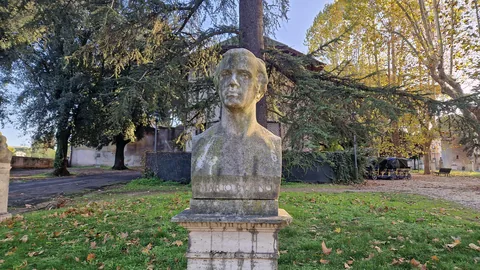
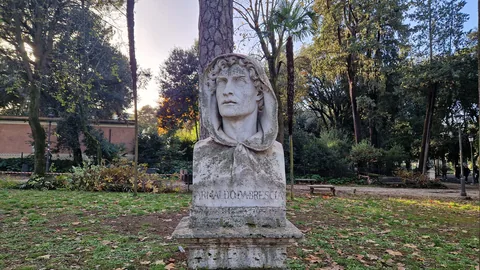
Arnold of Brescia
Arnold of Brescia challenged the Church’s worldly power and became involved in the medieval Roman commune.
Find on the mapRead aloud with your device’s voice.
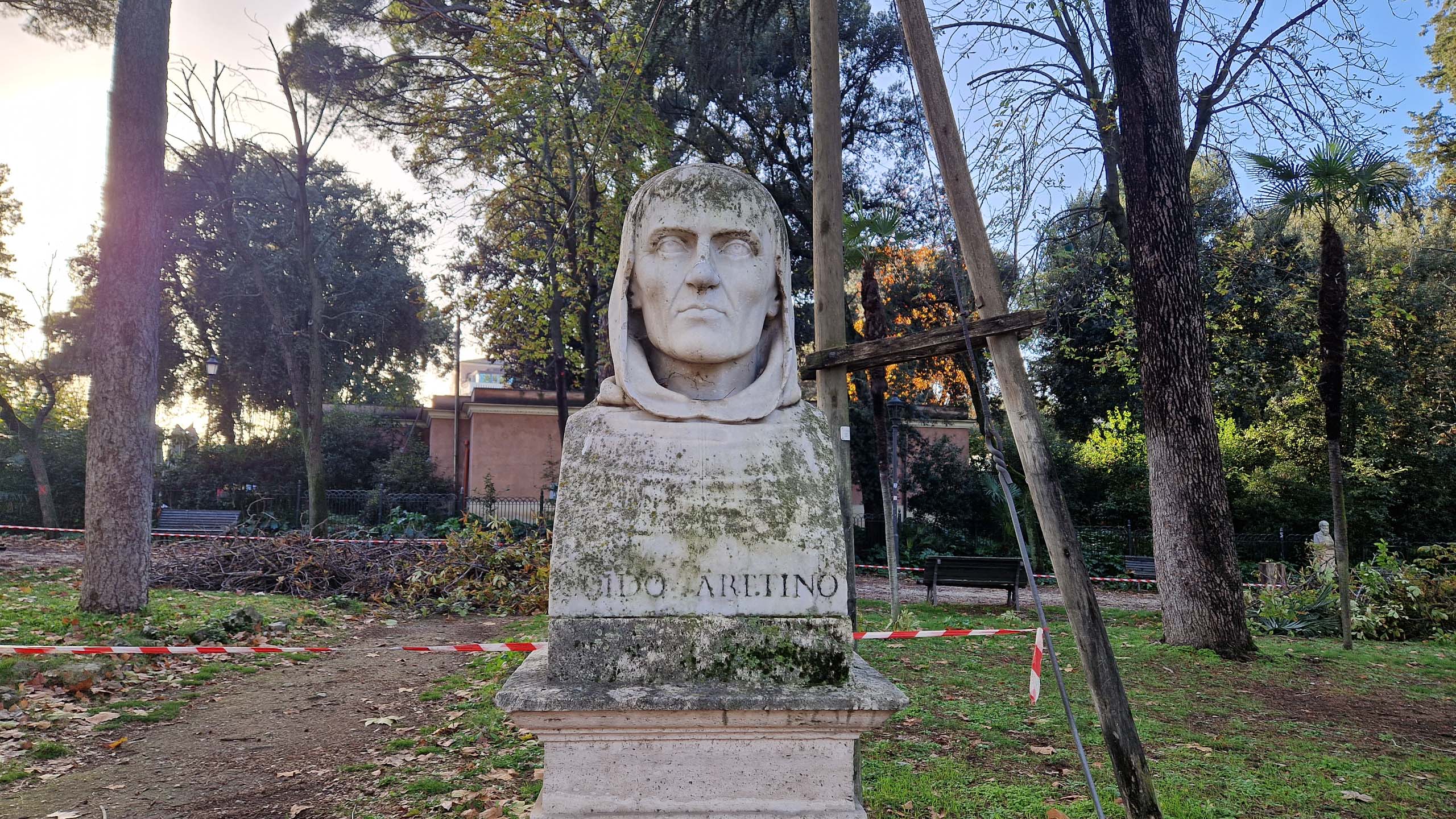
Guido of Arezzo addressed a practical problem in musical teaching: how could a singer learn an unfamiliar melody without hearing every phrase repeatedly from a teacher? His explanations of notation and pitch relationships made that task more manageable in the eleventh-century church.
A Benedictine monk associated with Pomposa and Arezzo, Guido wrote the Micrologus for Bishop Tedald of Arezzo. The work discusses musical intervals and the organization of chant. Its influence came through teaching and manuscript circulation long before music could be distributed in print.
He used the opening syllables of successive phrases in the hymn Ut queant laxis to help singers remember a sequence of pitches. The six syllables were ut, re, mi, fa, sol, and la. The later syllable si, and the widespread replacement of ut by do, should not be attributed to him.
Guido’s contribution is often compressed into the claim that he invented musical notation. Systems for recording chant already existed. His achievement lay in developing and explaining methods that made pitch clearer and learning more systematic, part of a longer history of changes in how music could be read.
Pincio gardens · Nearby
Arnold of Brescia challenged the Church’s worldly power and became involved in the medieval Roman commune.
Find on the mapPincio gardens · Nearby
Pagano brought Enlightenment arguments about criminal justice into the short-lived Neapolitan Republic of 1799.
Find on the mapPincio gardens · Nearby
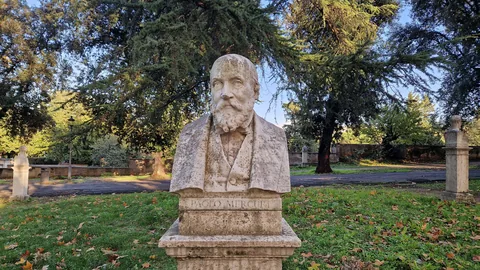
Mercuri translated paintings into engraved lines and directed Rome’s Calcografia, where prints were made, preserved, and taught.
Find on the mapPincio gardens · Nearby
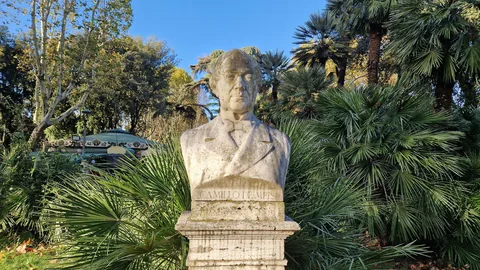
A physician and philosopher, De Meis treated the history of medicine as part of a larger argument about science and society.
Find on the map