Pincio gardens · Nearby
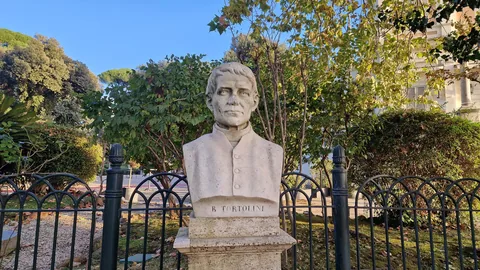
Barnaba Tortolini
Tortolini taught mathematics in Rome and founded a scientific journal that connected Italian researchers with colleagues abroad.
Find on the mapRead aloud with your device’s voice.
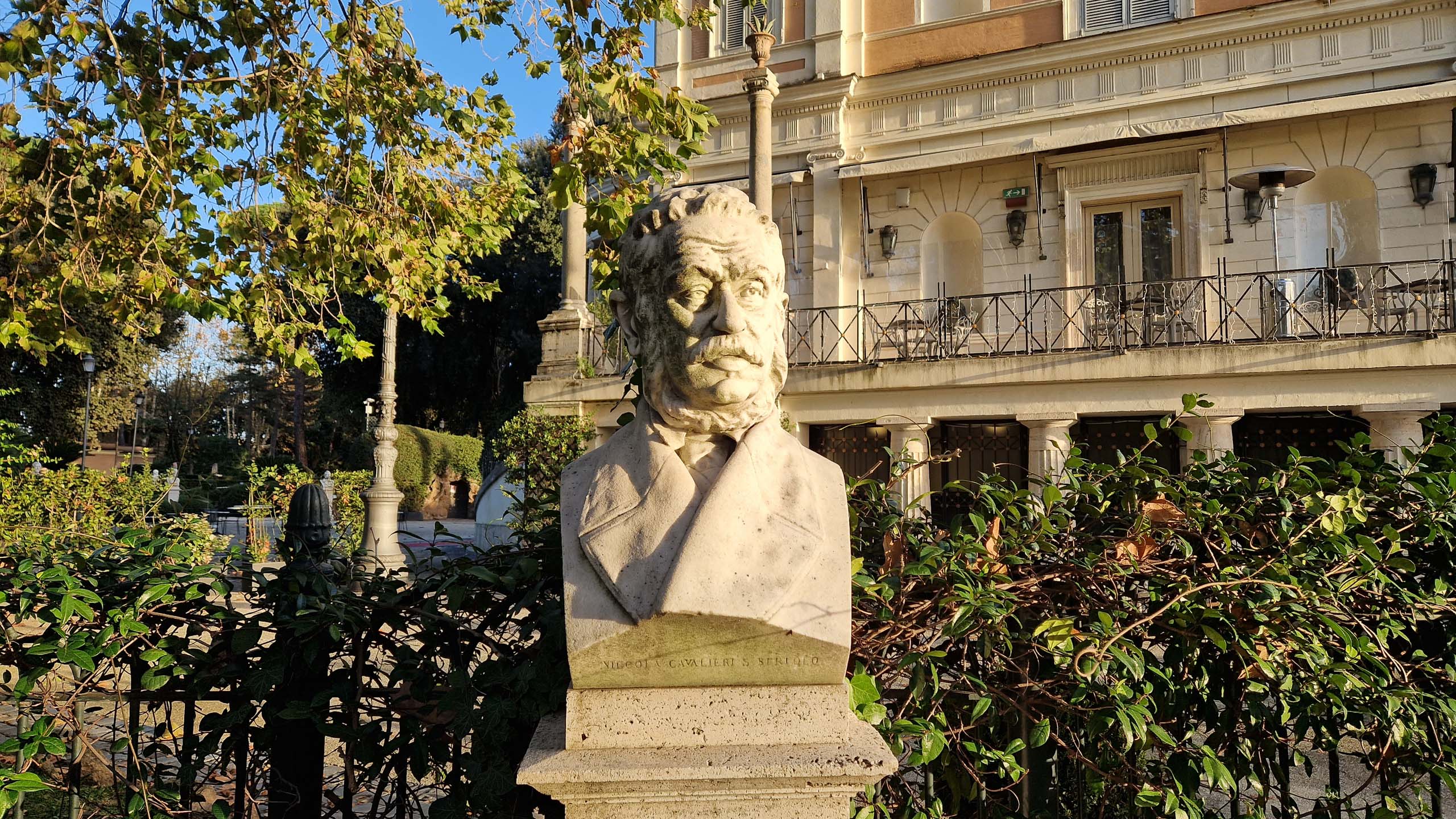
Nicola Cavalieri San Bertolo dealt with the physical systems that kept Rome working. Born in Civitavecchia in 1788, he studied mathematics and engineering before entering the administration of roads and water in the Papal States. He was called to Rome in 1818.
His Istituzioni di architettura statica e idraulica, first published in 1826 and 1827, presented engineering knowledge for students through explanations and illustrations. Teaching at the Sapienza accompanied a career in public works, where structural calculations had to answer the conditions of actual roads, bridges, and water supplies.
One substantial undertaking concerned the distribution of the Acqua Felice. Reorganizing it involved established rights and privileges as well as technical questions, so hydraulic administration could produce conflict with powerful property owners. Infrastructure was a matter of government and negotiation, not an isolated mathematical exercise.
Cavalieri continued to hold senior technical responsibilities through political changes in Rome and died in 1867. His portrait recognizes the engineers whose work joined scientific education to the daily management of a growing city.
Pincio gardens · Nearby
Tortolini taught mathematics in Rome and founded a scientific journal that connected Italian researchers with colleagues abroad.
Find on the mapPincio gardens · Nearby
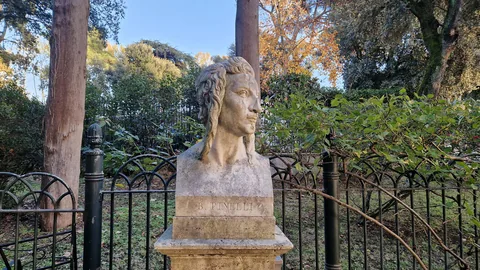
Pinelli’s prints and drawings made the people, gestures, and street life of Rome a subject for collectors and travelers.
Find on the mapPincio gardens · Nearby
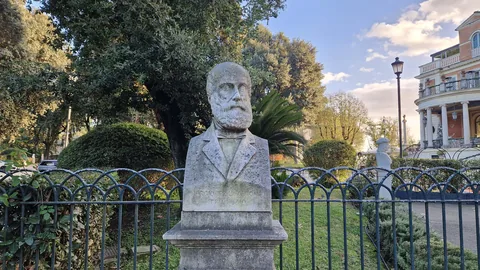
Pallavicino moved from anti-Austrian conspiracy to a campaign for Italian unity under the Savoy monarchy.
Find on the mapPincio gardens · Nearby
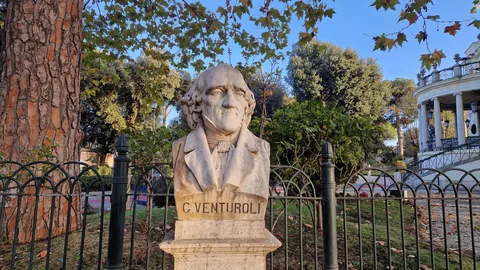
Venturoli applied mathematics to hydraulics and helped train engineers for public works in the Papal States.
Find on the map