Pincio gardens · Nearby
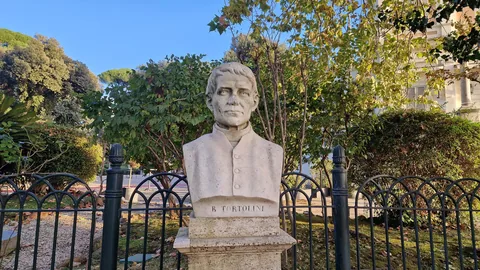
Barnaba Tortolini
Tortolini taught mathematics in Rome and founded a scientific journal that connected Italian researchers with colleagues abroad.
Find on the mapRead aloud with your device’s voice.
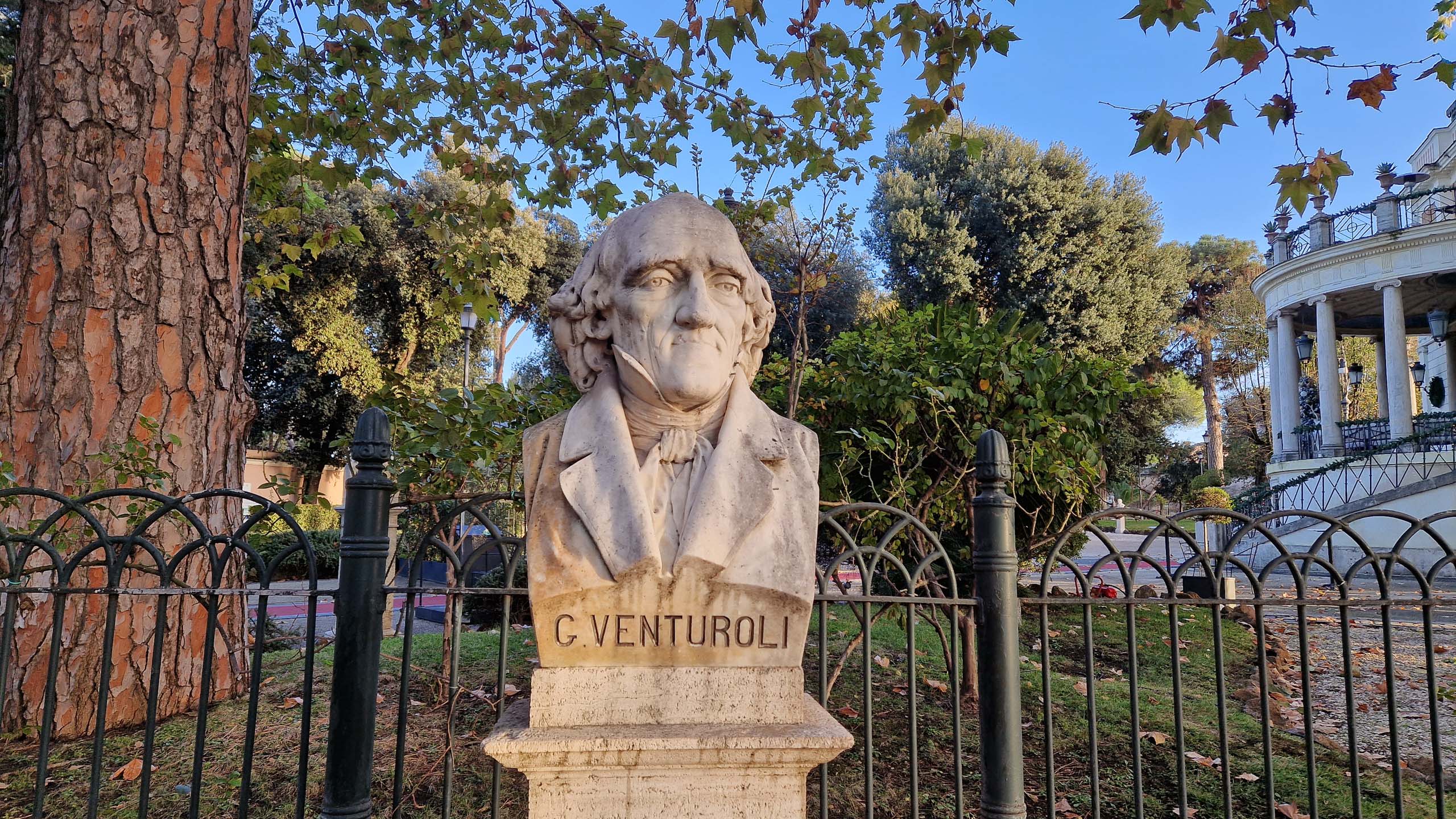
Giuseppe Venturoli worked where mathematical theory met the practical problem of moving water. Born in Bologna in 1768, he developed an interest in applied mathematics and hydraulics, the study of fluids at rest and in motion. Rivers, channels, and drainage made these subjects central to public administration.
His teaching and technical writing helped give engineers a systematic education. Calculation could be used to compare solutions, understand forces, and anticipate the behavior of a structure or watercourse. Such work required observations and measurements as well as equations.
Venturoli's career extended from Bologna to the administration of engineering in the Papal States. He was involved in the institutions responsible for roads and water, where trained specialists advised government on works with consequences for transport, agriculture, and urban life.
He died in 1846. His presence among commemorative portraits broadens the idea of public achievement beyond painting, literature, and political office: much of a functioning city depends on technical decisions whose authors are otherwise easy to overlook.
Pincio gardens · Nearby
Tortolini taught mathematics in Rome and founded a scientific journal that connected Italian researchers with colleagues abroad.
Find on the mapPincio gardens · Nearby
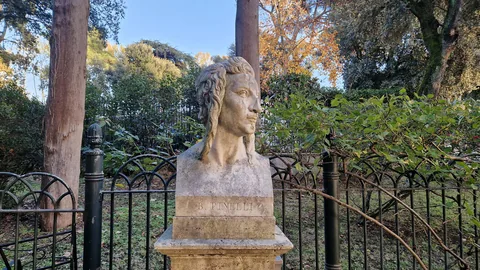
Pinelli’s prints and drawings made the people, gestures, and street life of Rome a subject for collectors and travelers.
Find on the mapPincio gardens · Nearby
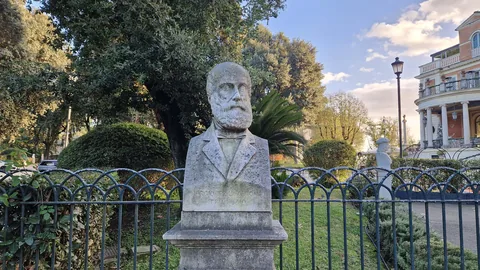
Pallavicino moved from anti-Austrian conspiracy to a campaign for Italian unity under the Savoy monarchy.
Find on the mapPincio gardens · Nearby
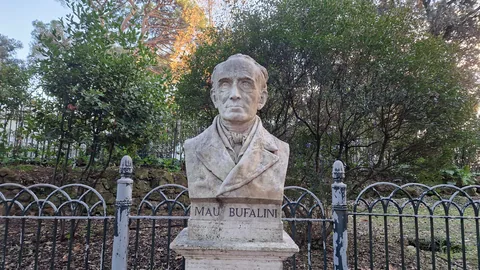
Bufalini challenged speculative medical systems and made close observation central to his teaching of pathology.
Find on the map