Pincio gardens · Nearby
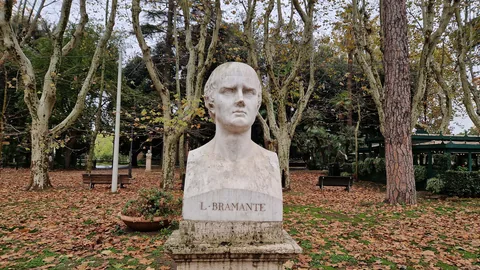
Donato Bramante
Donato Bramante used ancient Roman forms to rethink churches and helped launch the rebuilding of St. Peter’s in 1506.
Find on the mapRead aloud with your device’s voice.
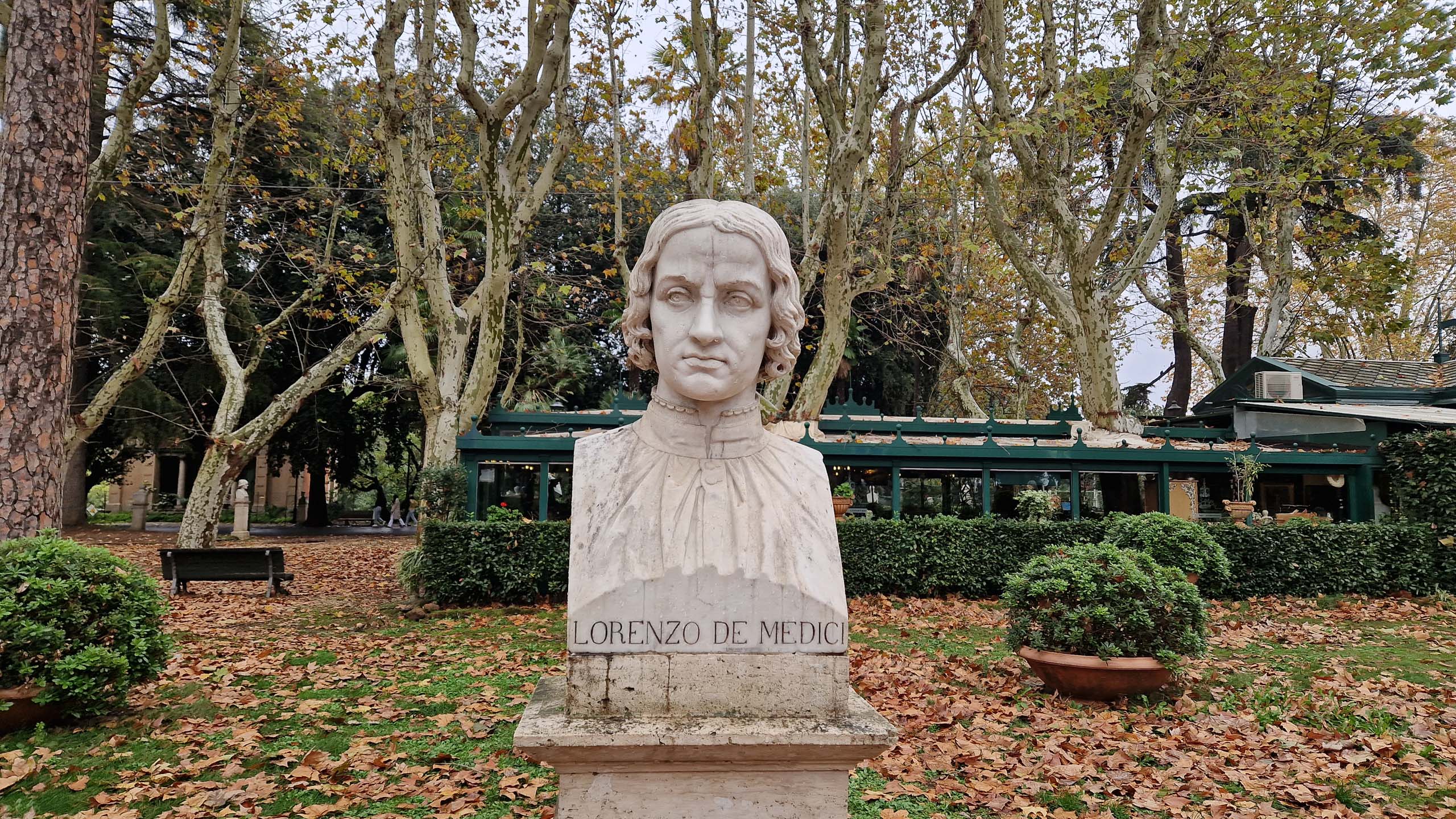
Lorenzo de' Medici governed Florence without being its king or duke. Born in 1449, he inherited his family's leading position in 1469 and exercised influence through alliances, appointments, wealth, and personal authority. The city's republican institutions remained, but access to power was increasingly shaped by the Medici network.
The Pazzi conspiracy of 1478 killed his brother Giuliano and nearly killed Lorenzo. Its aftermath brought conflict with the papacy and Naples, which Lorenzo addressed through diplomacy as well as force. Maintaining Florence's position required constant negotiation among the Italian states.
He was also a poet and an active participant in literary culture. His patronage and friendships connected figures such as Poliziano, Ficino, and the young Michelangelo, although the artistic life of Florence involved many patrons beyond the Medici household.
Lorenzo died in 1492. The name “the Magnificent” preserves the prestige of his cultural and political role, but it can obscure the harder mechanics of his rule. Poems, festivals, and works of art helped express an authority also maintained through family interest and the management of political opposition.
Pincio gardens · Nearby
Donato Bramante used ancient Roman forms to rethink churches and helped launch the rebuilding of St. Peter’s in 1506.
Find on the mapPincio gardens · Nearby
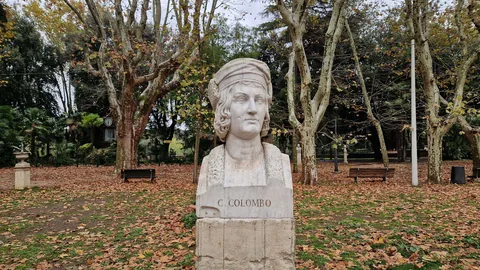
Columbus’s Atlantic voyages connected Europe and the Caribbean through navigation, conquest, colonization, and violence against Indigenous peoples.
Find on the mapPincio gardens · Nearby
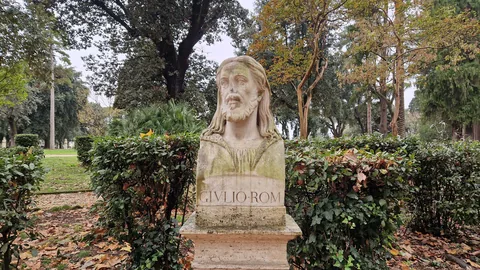
Raphael’s collaborator became a court artist in Mantua, where Palazzo Te turns classical order into theatrical surprise.
Find on the mapPincio gardens · Nearby
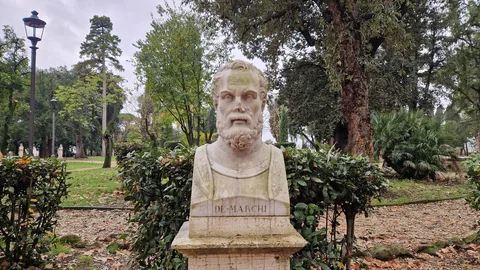
De Marchi studied fortifications, explored the submerged ships at Lake Nemi, and recorded an ascent of the Gran Sasso in 1573.
Find on the map