Pincio gardens · Nearby
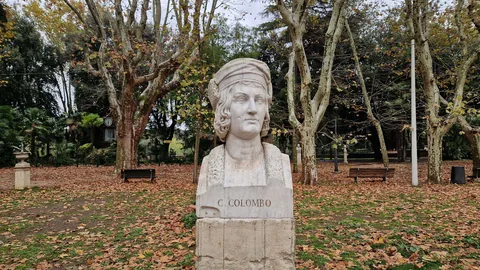
Christopher Columbus
Columbus’s Atlantic voyages connected Europe and the Caribbean through navigation, conquest, colonization, and violence against Indigenous peoples.
Find on the mapRead aloud with your device’s voice.
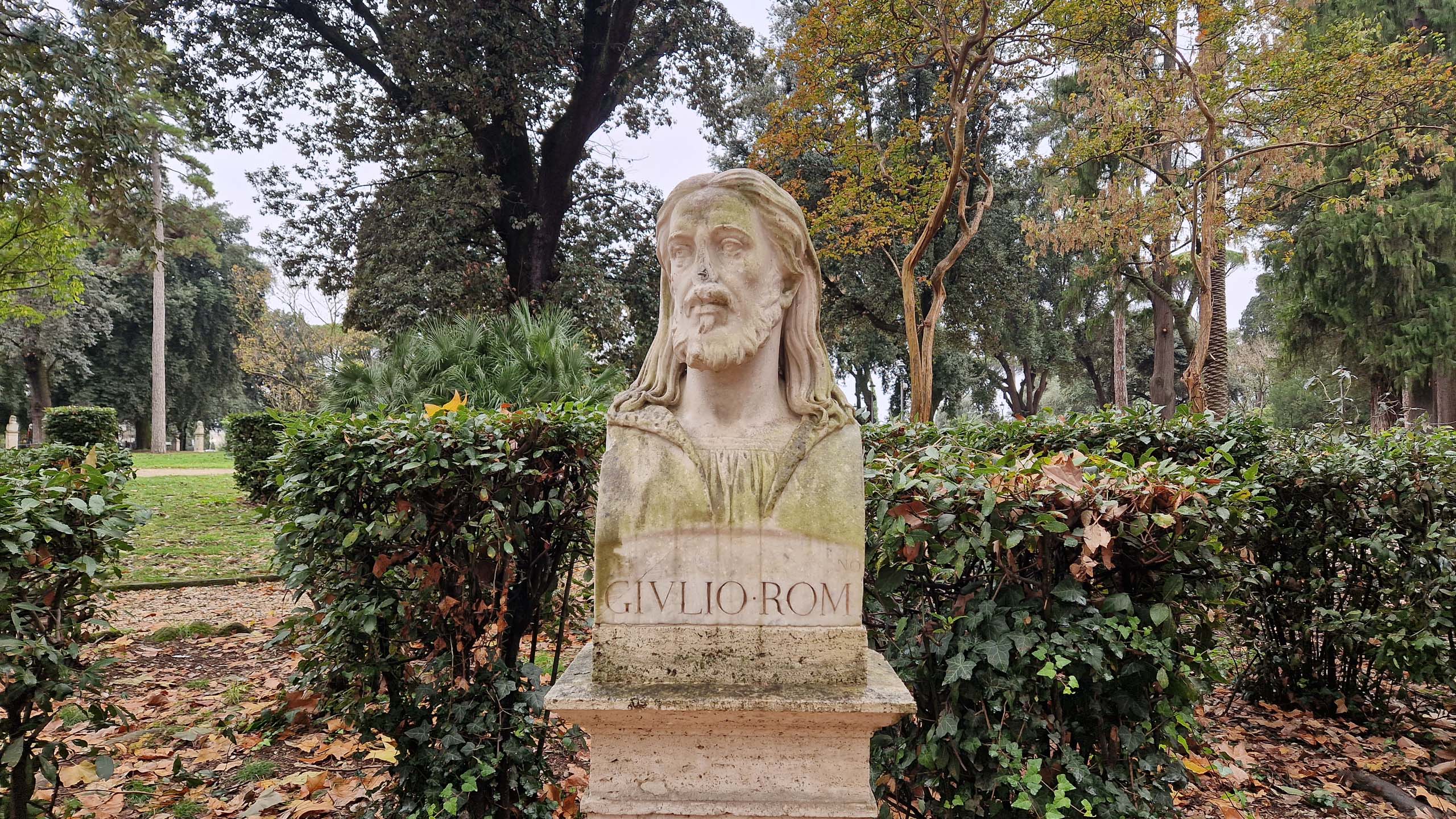
At Palazzo Te in Mantua, painted architecture seems to collapse around the viewer. In the Chamber of the Giants, the defeat of the Giants by the Olympian gods spreads across the walls and ceiling. Giulio Romano and his workshop turned a mythological episode into an experience that surrounds the body.
Born in Rome in the 1490s, Giulio trained in Raphael's circle and became one of his principal collaborators. After Raphael's death, he helped complete projects left in the workshop. In 1524 he moved to Mantua to work for Federico II Gonzaga.
At Palazzo Te, architecture and painting were conceived together. Classical forms remain recognizable, but unexpected details disturb their regularity; expansive fresco programs answered the pleasures and ambitions of a courtly patron. Wit had a place here. So did learned references and political display.
Giulio died in 1546. His career shows how an artist could carry workshop knowledge from Rome to another court and deliberately alter its effects. The apparent ease of Raphael's compositions became, in some of Giulio's rooms, a source of controlled instability.
Pincio gardens · Nearby
Columbus’s Atlantic voyages connected Europe and the Caribbean through navigation, conquest, colonization, and violence against Indigenous peoples.
Find on the mapPincio gardens · Nearby
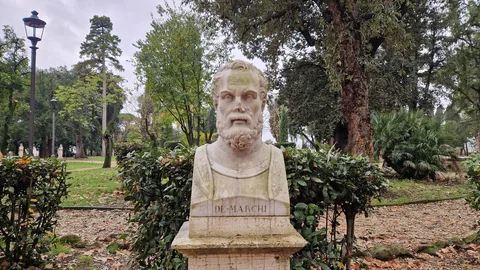
De Marchi studied fortifications, explored the submerged ships at Lake Nemi, and recorded an ascent of the Gran Sasso in 1573.
Find on the mapPincio gardens · Nearby
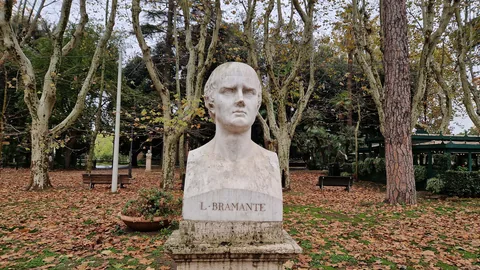
Donato Bramante used ancient Roman forms to rethink churches and helped launch the rebuilding of St. Peter’s in 1506.
Find on the mapPincio gardens · Nearby
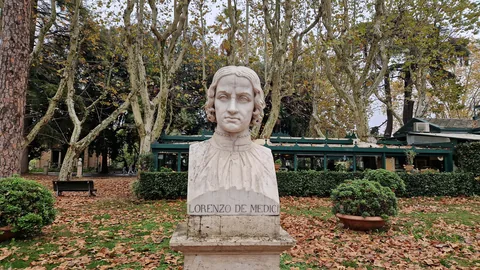
Lorenzo the Magnificent combined political control, diplomacy, poetry, and patronage in fifteenth-century Florence.
Find on the map