Pincio gardens · Nearby
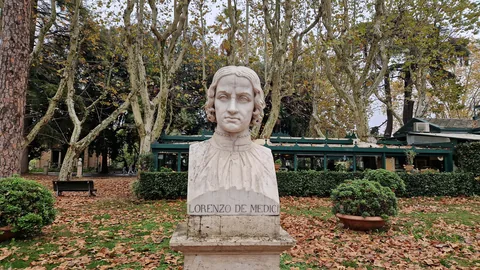
Lorenzo de' Medici
Lorenzo the Magnificent combined political control, diplomacy, poetry, and patronage in fifteenth-century Florence.
Find on the mapRead aloud with your device’s voice.
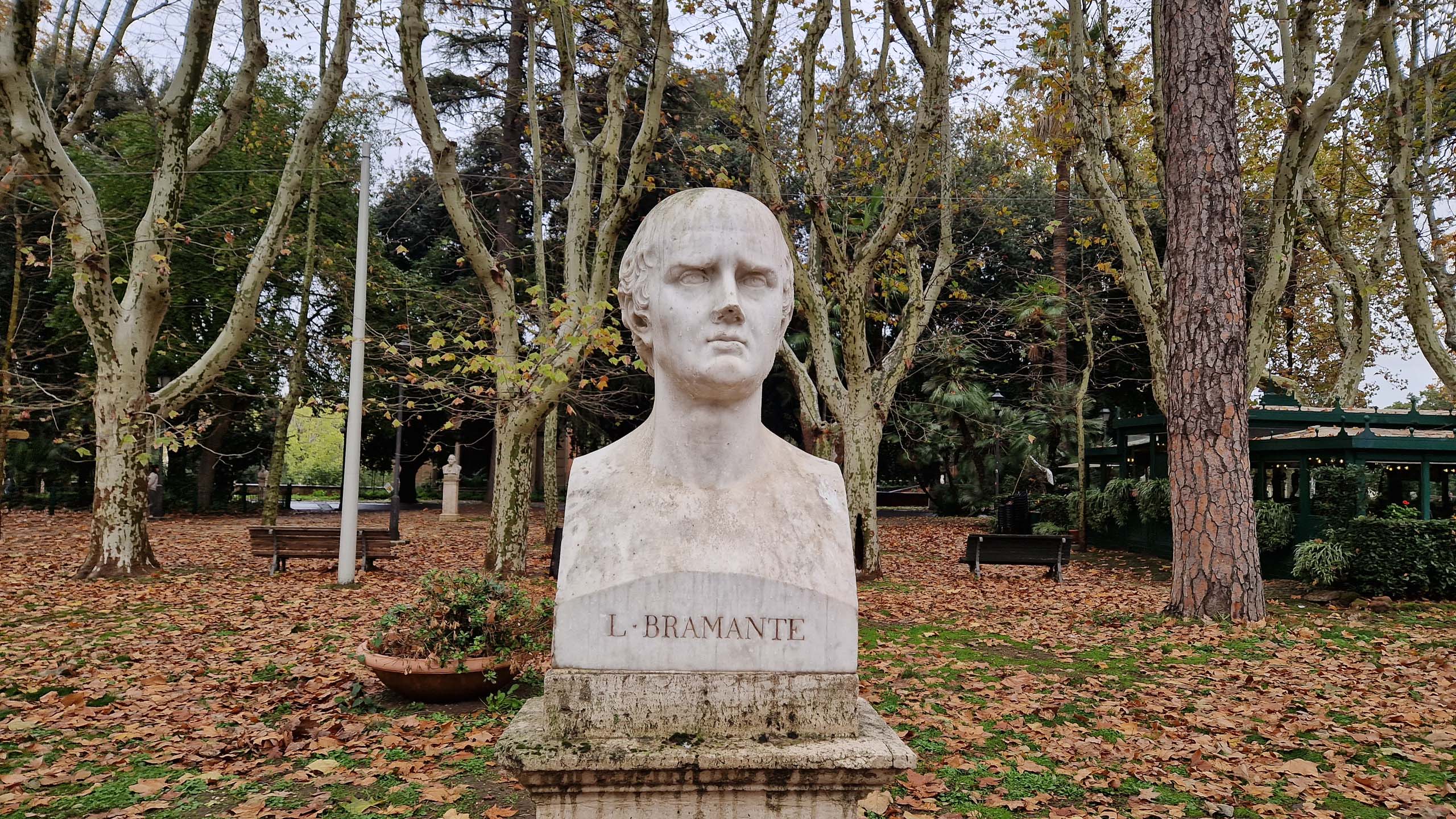
Donato Bramante used the architecture of ancient Rome as a working language. Born around 1444 in the region of Urbino, he developed his early career in northern Italy before moving to Rome. His buildings explore how a few clear geometric forms can organize a space.
The Tempietto at San Pietro in Montorio places a small circular shrine within a ring of columns. Its compact scale concentrates attention on proportion and the relationship between the parts. The design evokes classical temples while serving a Christian site associated by tradition with St. Peter's martyrdom.
Under Julius II, Bramante helped begin the rebuilding of St. Peter's Basilica in 1506. His proposals favored a monumental centralized church. Later architects substantially revised the project, so the basilica standing today cannot be treated as the execution of a single Bramante design.
Work at St. Peter’s remained unfinished at Bramante’s death in 1514. His drawings and early construction established problems that subsequent architects had to solve.
Pincio gardens · Nearby
Lorenzo the Magnificent combined political control, diplomacy, poetry, and patronage in fifteenth-century Florence.
Find on the mapPincio gardens · Nearby
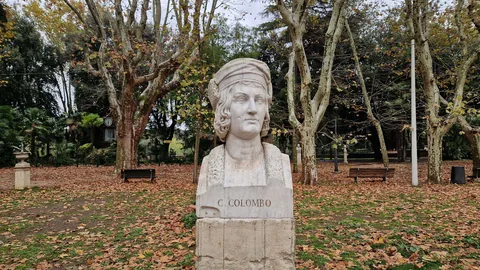
Columbus’s Atlantic voyages connected Europe and the Caribbean through navigation, conquest, colonization, and violence against Indigenous peoples.
Find on the mapPincio gardens · Nearby
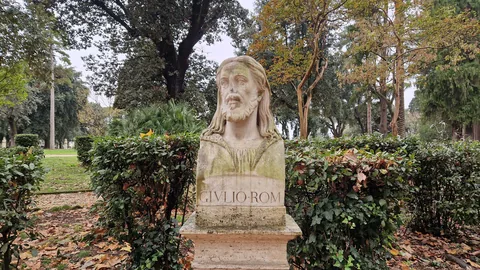
Raphael’s collaborator became a court artist in Mantua, where Palazzo Te turns classical order into theatrical surprise.
Find on the mapPincio gardens · Nearby
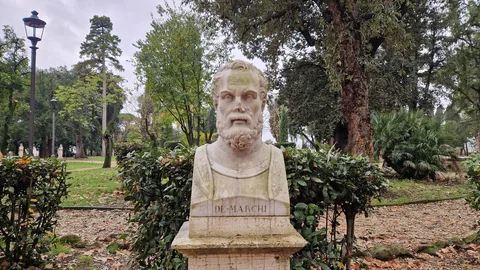
De Marchi studied fortifications, explored the submerged ships at Lake Nemi, and recorded an ascent of the Gran Sasso in 1573.
Find on the map