Pincio gardens · Nearby
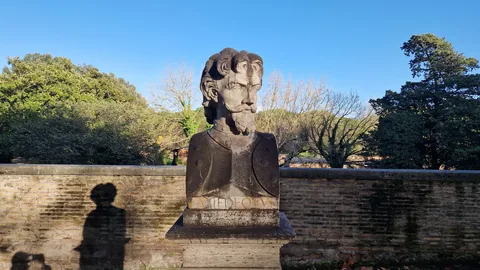
Amadeus V of Savoy
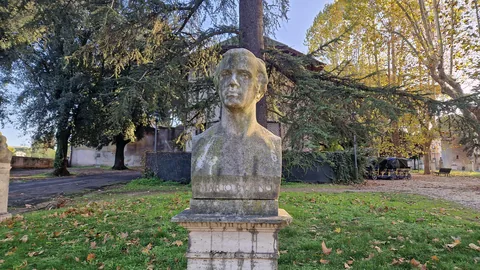
Amadeus V governed Savoy through disputed inheritance, marriage alliances, and negotiation across the Alps.
Find on the mapRead aloud with your device’s voice.
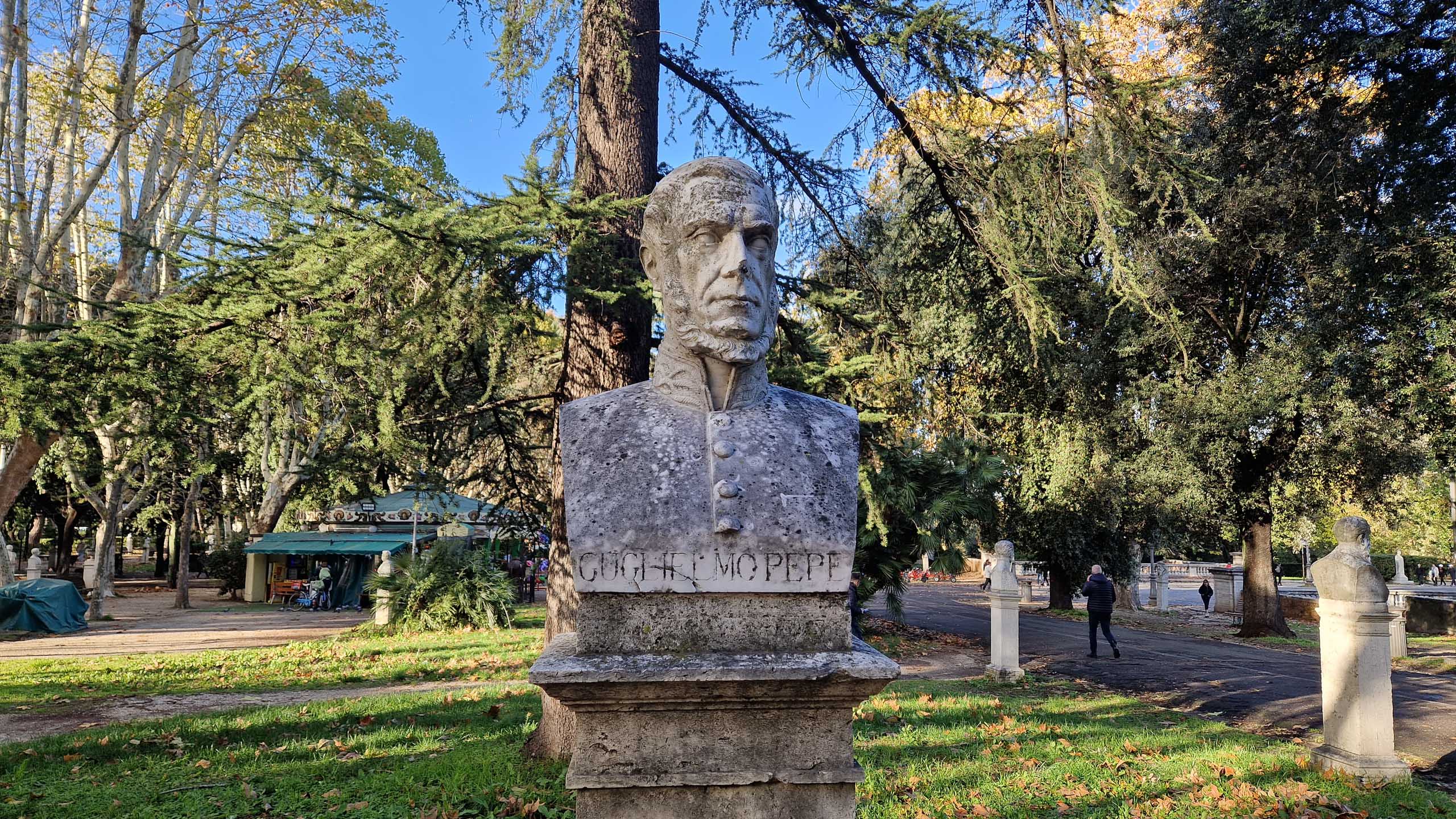
Guglielmo Pepe’s military career connects two widely separated centers of the Risorgimento: Naples and Venice. Born in Calabria in 1783, he served through the upheavals of the Napoleonic period and later became a leader of the constitutional movement in the Kingdom of the Two Sicilies.
In 1821 he opposed the Austrian intervention that restored absolute royal authority. Defeat forced him into exile. He used those years to write about military affairs and the organization of future insurrections.
When revolution returned in 1848, the Bourbon king sent him north with troops, then ordered their recall. Pepe stayed and took command of forces defending Venice against Austria. The decision placed commitment to the anti-Austrian struggle above obedience to his own monarch. He died in Turin in 1855. His bust recalls a career defined by failed campaigns, repeated exile, and the persistence of constitutional politics as much as by military command.
Pincio gardens · Nearby
Amadeus V governed Savoy through disputed inheritance, marriage alliances, and negotiation across the Alps.
Find on the mapPincio gardens · Nearby
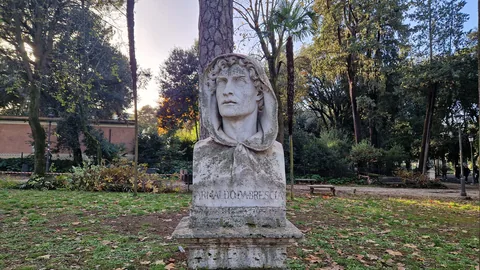
Arnold of Brescia challenged the Church’s worldly power and became involved in the medieval Roman commune.
Find on the mapPincio gardens · Nearby
Pagano brought Enlightenment arguments about criminal justice into the short-lived Neapolitan Republic of 1799.
Find on the mapPincio gardens · Nearby
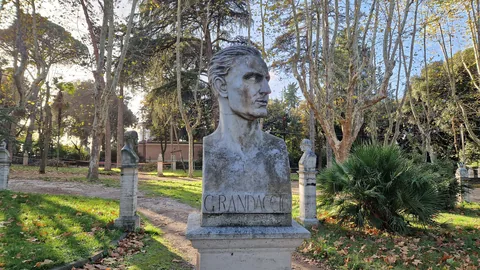
An infantry major killed near the Timavo in 1917, Randaccio became a prominent figure in Italy’s memory of the First World War.
Find on the map