Pincio gardens · Nearby
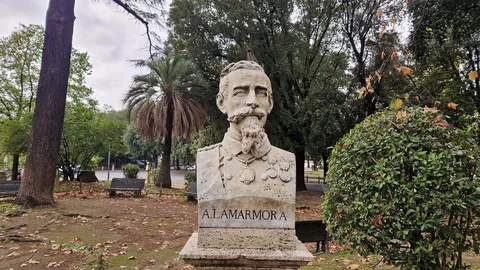
Alfonso La Marmora
La Marmora helped organize the Piedmontese and Italian armies, served as prime minister, and faced bitter criticism after the defeat at Custoza.
Find on the mapRead aloud with your device’s voice.
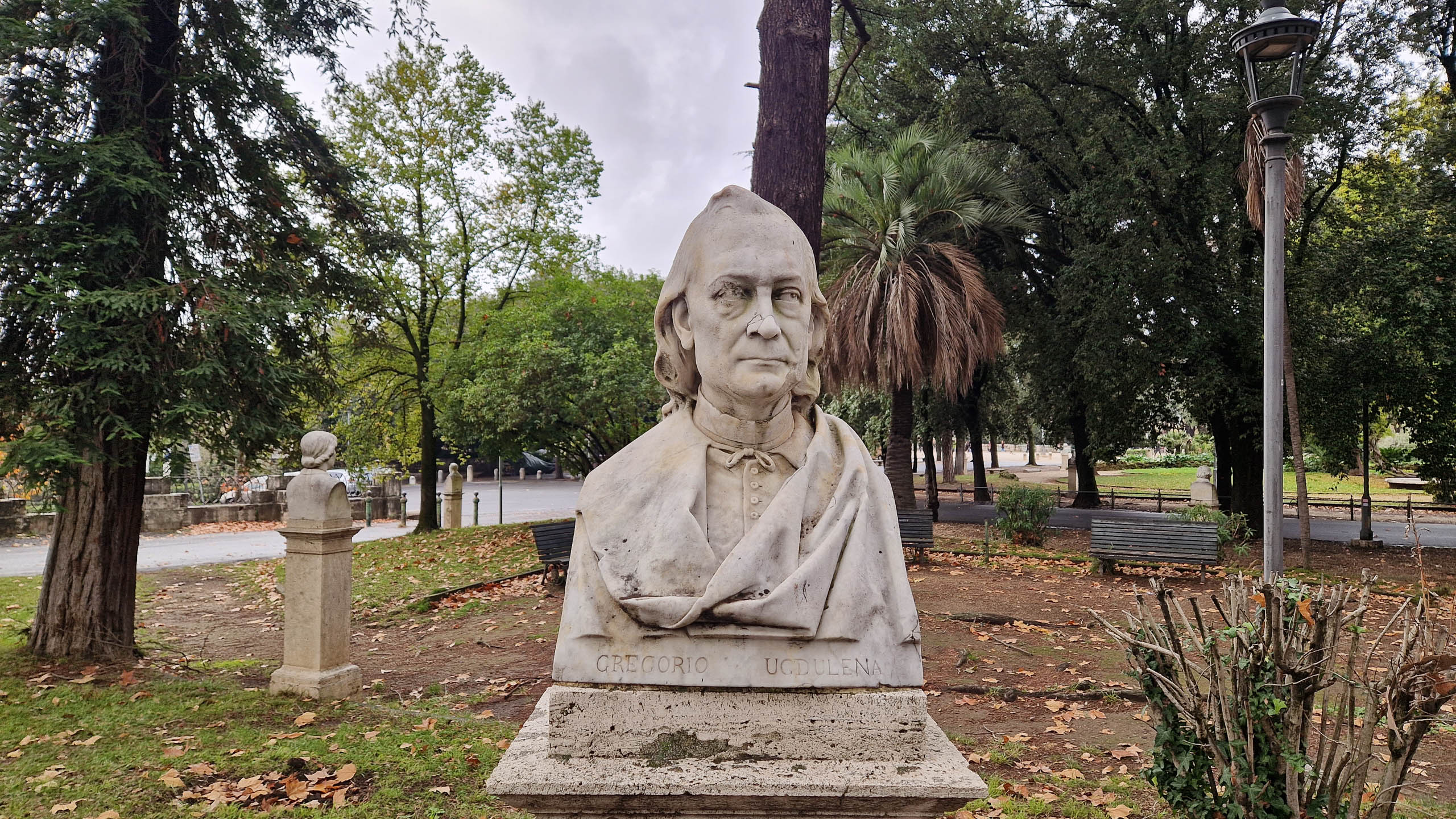
Gregorio Ugdulena brought the study of ancient languages into a politically unsettled life. Born in Termini Imerese in 1815, he became a priest and taught Hebrew at the University of Palermo. Liberal convictions also drew him into the Sicilian revolution of 1848.
After Bourbon authority was restored, he lost his teaching post and was confined on Favignana. There he began work on an Italian translation of scripture checked against the original languages and supplied with commentary. Two volumes appeared in 1859; political events interrupted the larger project.
In 1860 Ugdulena supported Garibaldi and served in the provisional government of Sicily with responsibility for education. He later entered national parliamentary life and continued teaching, first in Florence and then in Rome, where he held a university post until his death in 1872.
His biography joins subjects that modern readers may expect to find apart: priesthood, philology, liberal politics, and national government. For Ugdulena, the authority of a text and the education of citizens were both matters requiring sustained scholarly work.
Pincio gardens · Nearby
La Marmora helped organize the Piedmontese and Italian armies, served as prime minister, and faced bitter criticism after the defeat at Custoza.
Find on the mapPincio gardens · Nearby
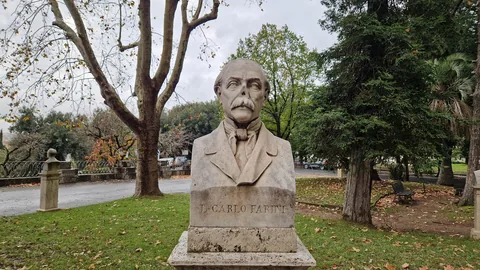
Farini helped bring the central Italian provinces into the Savoy state and briefly led the government of the new Kingdom of Italy.
Find on the mapPincio gardens · Nearby
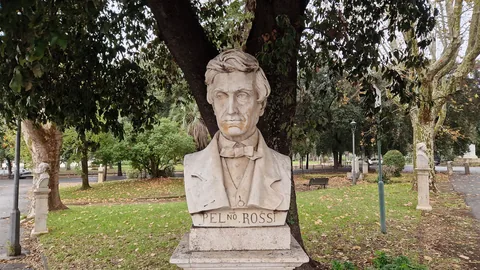
Rossi’s career crossed Switzerland, France, and Rome before his assassination during the constitutional crisis of 1848.
Find on the mapPincio gardens · 33 m away
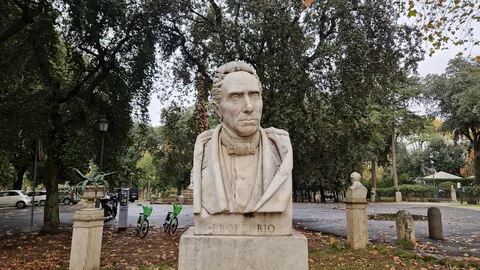
Brofferio joined journalism, theater, poetry, and parliamentary opposition in the democratic politics of the Risorgimento.
Find on the map