Pincio gardens · Nearby
Camillo Benso, Count of Cavour
Cavour used parliamentary government, economic policy, and international alliances to advance Italian unification under the Savoy monarchy.
Find on the mapRead aloud with your device’s voice.
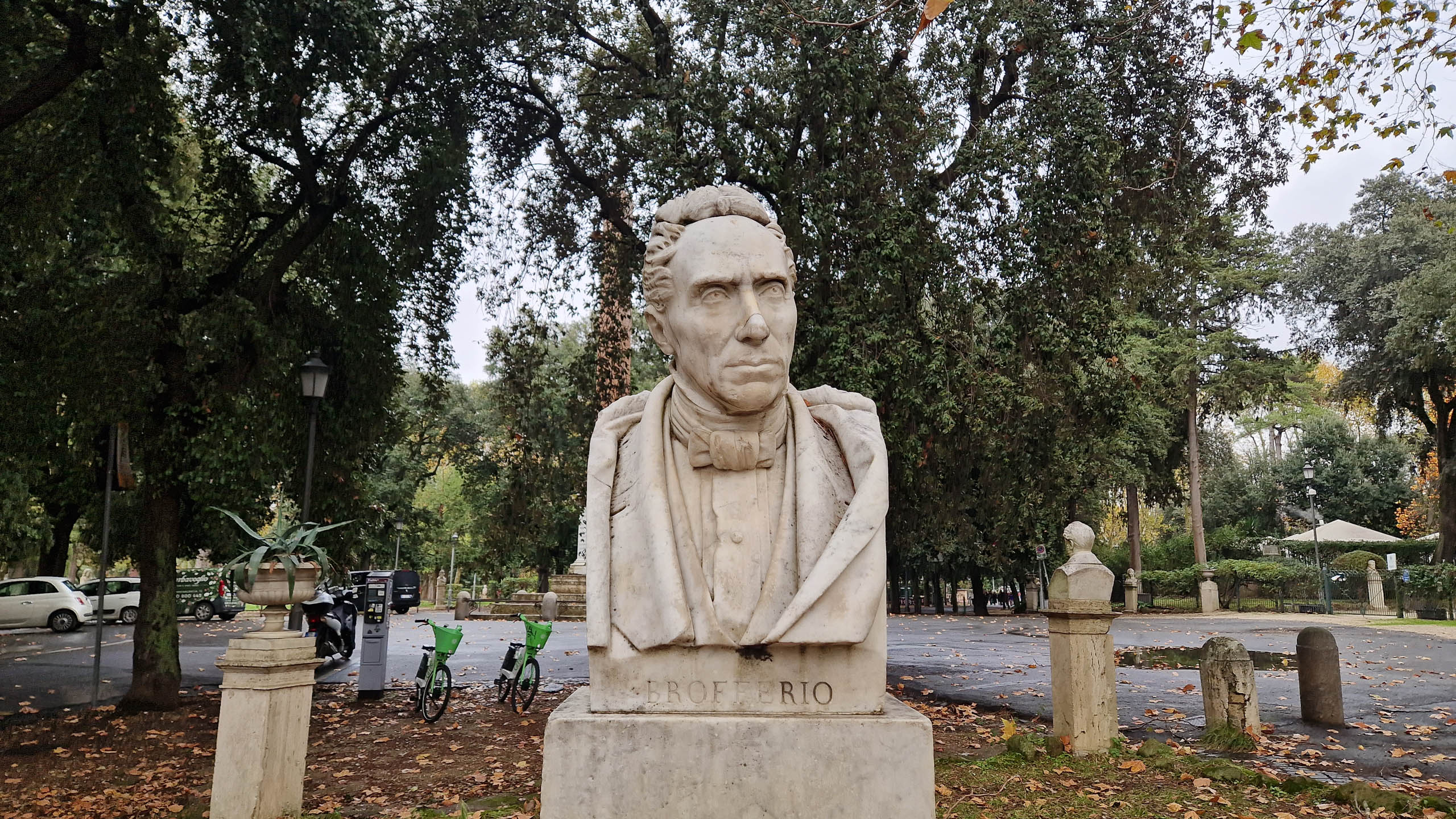
Angelo Brofferio argued in several public languages. Born in Piedmont in 1802, he trained as a lawyer, wrote for the theater and the press, and composed poetry in Piedmontese. Political criticism could reach an audience through a parliamentary speech, a newspaper, or a familiar spoken idiom.
His democratic commitments brought conflict with authority before constitutional government and continued to shape his work afterward. As a deputy, he opposed important parts of Cavour's policy and the dominance of moderate liberal interests. Supporting Italian independence did not require agreement about how the new political order should be built.
Brofferio also wrote history and memoirs. These accounts preserve the perspective of a participant, which gives them immediacy while requiring attention to personal loyalties and disputes. They should be read alongside the arguments of the opponents he describes.
He died in 1866. His career broadens the Risorgimento beyond its eventual winners, preserving the voice of a critic whose journalism and verse challenged the terms on which change was being delivered.
Pincio gardens · Nearby
Cavour used parliamentary government, economic policy, and international alliances to advance Italian unification under the Savoy monarchy.
Find on the mapPincio gardens · Nearby
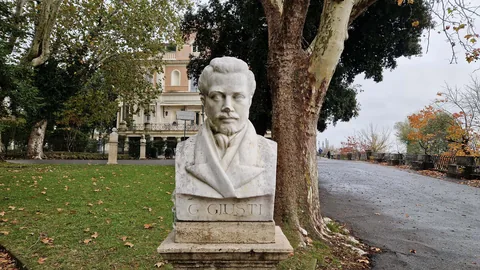
Giusti used satirical verse to expose political vanity, conformity, and the comfortable excuses of respectable society.
Find on the mapPincio gardens · Nearby
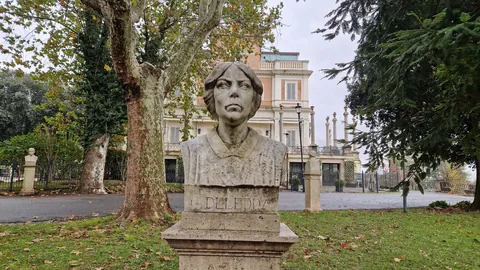
Deledda’s fiction examines desire, guilt, obligation, and social pressure through lives rooted in Sardinia.
Find on the mapPincio gardens · 28 m away
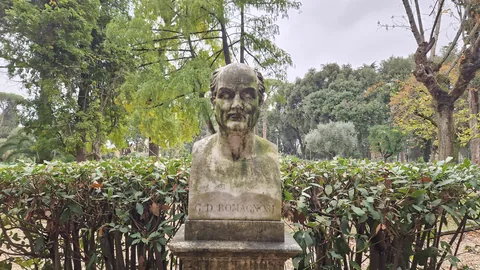
Romagnosi examined punishment, administration, and social development, linking legal thought to the study of human society.
Find on the map