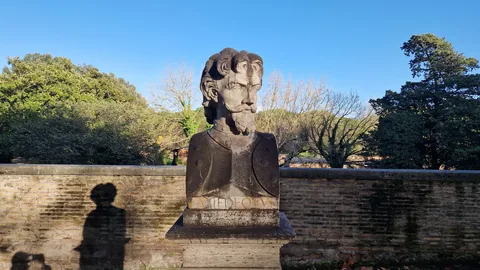
Pincio gardens · Nearby
Amadeus V of Savoy
Amadeus V governed Savoy through disputed inheritance, marriage alliances, and negotiation across the Alps.
Find on the mapRead aloud with your device’s voice.
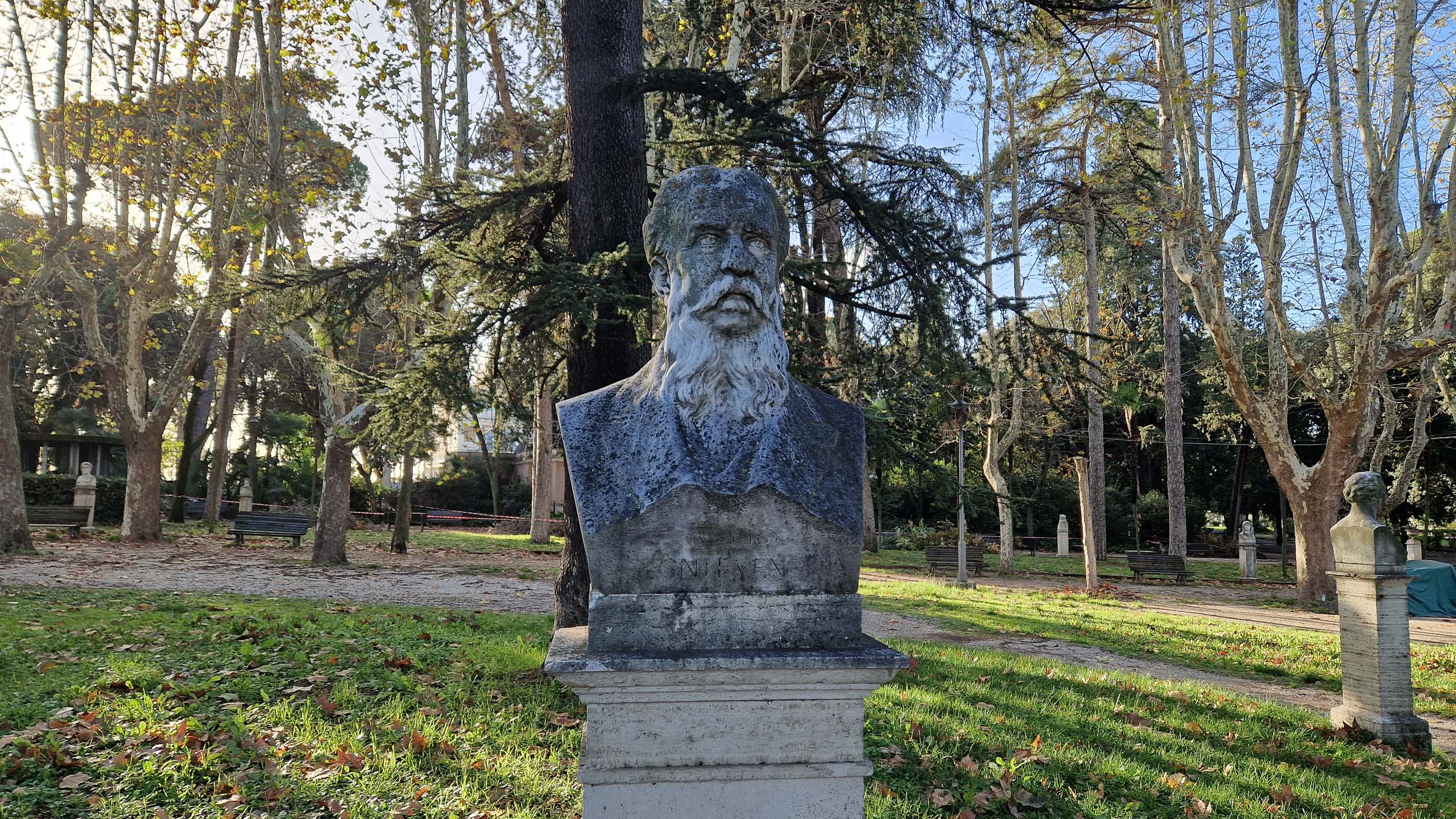
Emilio Visconti Venosta worked to give a newly unified Italy room to act within European diplomacy. Born in Milan in 1829, he moved from youthful Mazzinian sympathies toward moderate liberal politics. He held the foreign ministry several times across a long career.
The Roman question was an early challenge. The September Convention of 1864 addressed French protection of papal territory and Italy's commitments toward it, but did not settle the future of Rome. The collapse of Napoleon III's position in 1870 changed the international circumstances in which Italy could act.
Later, Visconti Venosta sought workable relations with the central European powers while also improving ties with France. These policies involved balancing alliances and interests rather than committing the country to permanent friendship or hostility with one neighbor.
He died in 1914. His biography records a less visible part of state-building than a military campaign: patient negotiation over what other governments would accept, and over how far a new state could pursue its aims without becoming isolated.
Pincio gardens · Nearby
Amadeus V governed Savoy through disputed inheritance, marriage alliances, and negotiation across the Alps.
Find on the mapPincio gardens · Nearby
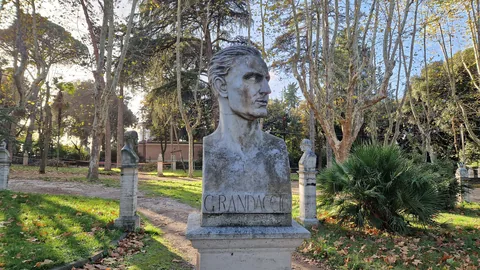
An infantry major killed near the Timavo in 1917, Randaccio became a prominent figure in Italy’s memory of the First World War.
Find on the mapPincio gardens · Nearby
A teacher and draftsman who helped shape nineteenth-century Rome’s turn toward earlier Italian religious art.
Find on the mapPincio gardens · Nearby
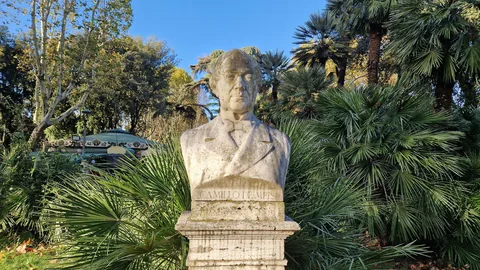
A physician and philosopher, De Meis treated the history of medicine as part of a larger argument about science and society.
Find on the map