Pincio gardens · Nearby
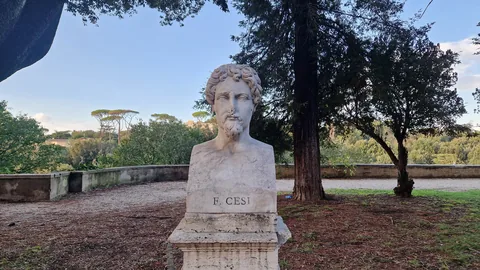
Federico Cesi
Cesi made the Accademia dei Lincei a setting for collaborative observation, with Galileo among its members.
Find on the mapRead aloud with your device’s voice.
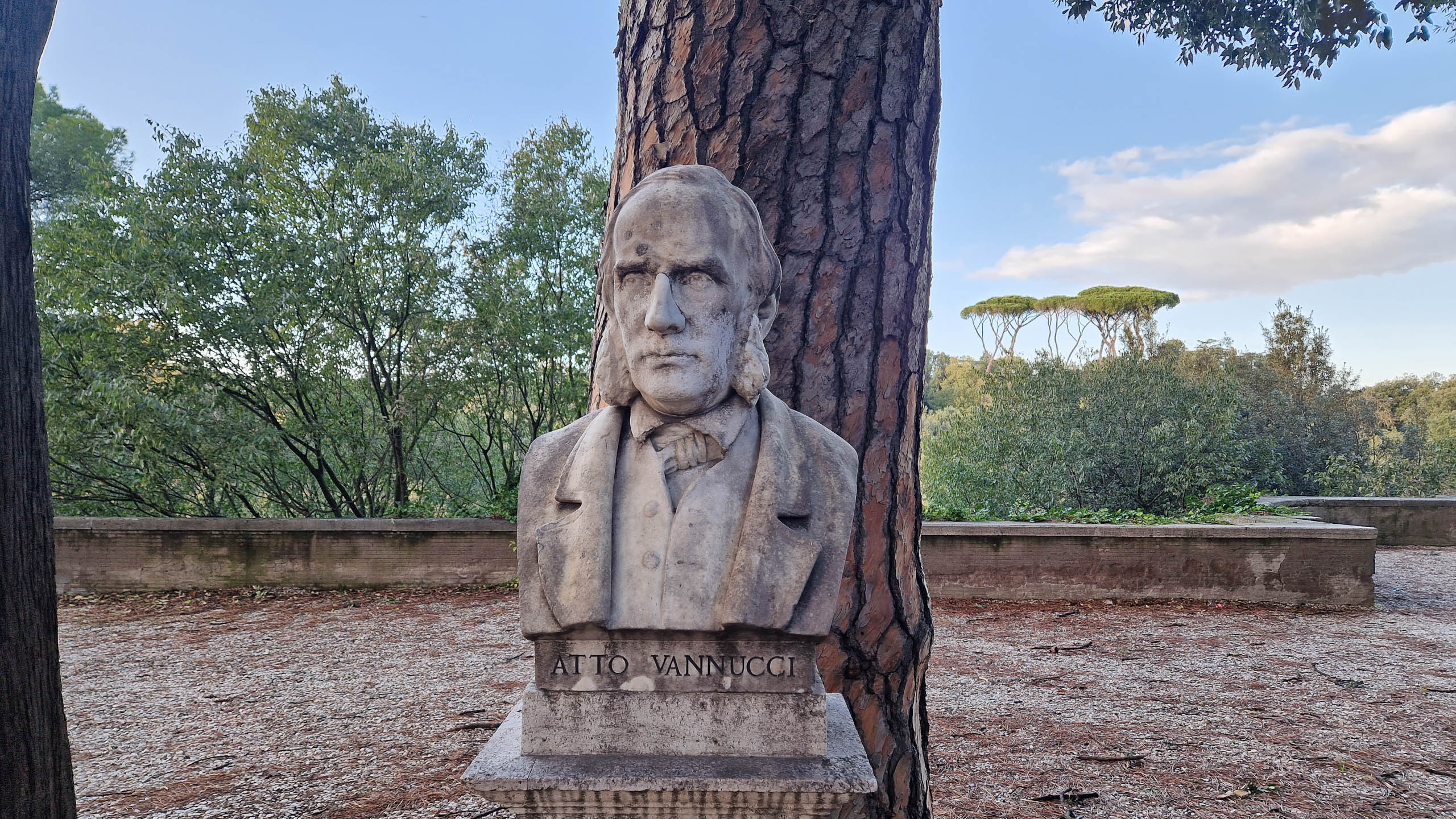
Atto Vannucci made the lives of political victims into an argument about Italian liberty. His Martyrs of Italian Freedom gathered biographies first developed in the press and published as a collection in 1848. The work grew through later editions as the events of the national movement supplied new subjects.
Vannucci was born in Tuscany in 1810 and combined classical scholarship with political journalism. He participated in the struggles of 1848 and opposed censorship. His later career included service in the Parliament of unified Italy and appointment to the Senate in 1865.
A collection of martyrs is a particular kind of history. It selects exemplary lives and organizes them around sacrifice, with the purpose of influencing the reader’s political judgment. That purpose does not make every detail false, but it does require the evidence to be distinguished from the commemorative design.
Vannucci created a gallery of remembered people in print; his own bust places him in a gallery of stone portraits. Both collections depend on choices about whose life should serve as an example.
Pincio gardens · Nearby
Cesi made the Accademia dei Lincei a setting for collaborative observation, with Galileo among its members.
Find on the mapPincio gardens · Nearby
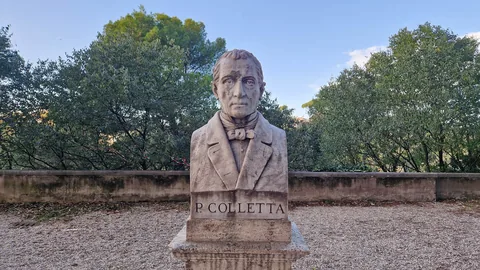
Colletta wrote the history of Naples after serving successive regimes. His account combines firsthand knowledge with the judgments of a participant.
Find on the mapPincio gardens · Nearby
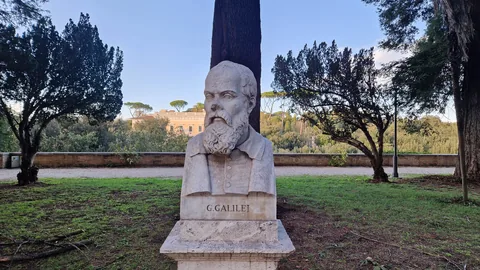
Galileo joined instrument-making, mathematical argument, and observation, while his Roman trial exposed the limits placed on cosmological debate.
Find on the mapPincio gardens · 28 m away
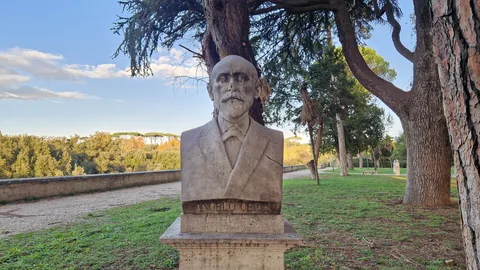
Celli connected malaria research with access to medicine, education, and the living conditions of rural workers around Rome.
Find on the map