Pincio gardens · Nearby
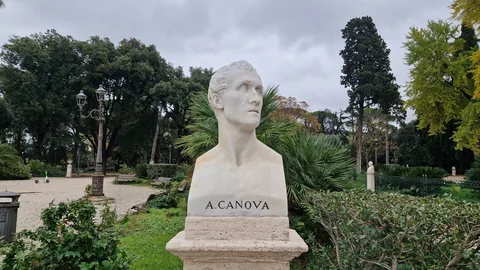
Antonio Canova
Canova’s sculpture joined classical forms to carefully finished marble, including the Borghese portrait of Pauline Bonaparte as Venus.
Find on the mapRead aloud with your device’s voice.
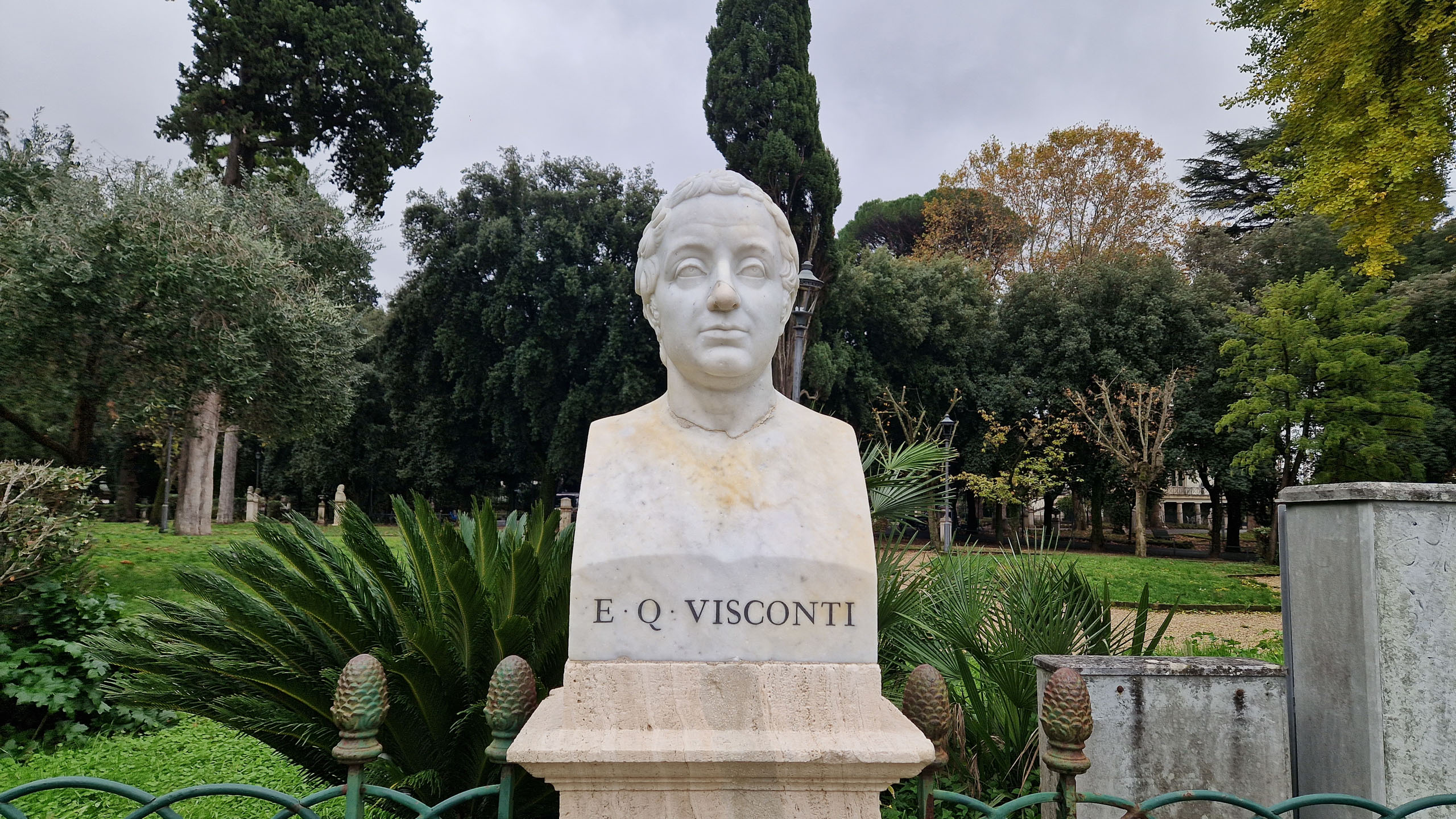
Ennio Quirino Visconti helped turn collections of ancient sculpture into objects of systematic study. Born in Rome in 1751, he received an intensive classical education and worked on the catalog of the Museo Pio-Clementino, continuing an undertaking begun by his father.
He compared statues and portraits with coins, inscriptions, and ancient writing to identify subjects and explain their meaning. A museum catalog could therefore do more than list possessions: it could make an argument about the ancient world. Some identifications have changed as the evidence and methods have developed.
Visconti took part in the Roman Republic of 1798 and later settled in Paris, where he worked with antiquities during the Napoleonic period. His career followed the movement of both scholars and artworks through war, political upheaval, and the growth of major public museums.
He died in 1818. The portrait honors a scholar whose interpretations helped visitors look at ancient objects, while the movements of those objects raise separate questions about conquest, collection, and ownership.
Pincio gardens · Nearby
Canova’s sculpture joined classical forms to carefully finished marble, including the Borghese portrait of Pauline Bonaparte as Venus.
Find on the mapPincio gardens · Nearby
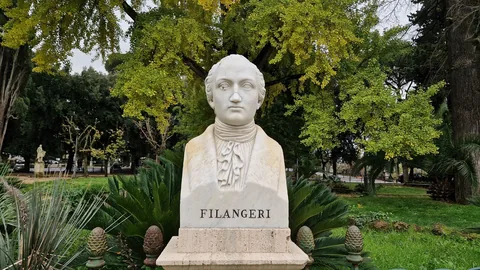
Gaetano Filangieri examined how laws could change society and exchanged ideas with Benjamin Franklin across the Atlantic.
Find on the mapPincio gardens · Nearby
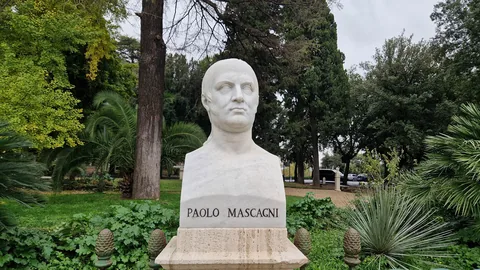
Mascagni mapped the lymphatic system and helped make anatomical illustration a precise instrument of study.
Find on the mapPincio gardens · 25 m away
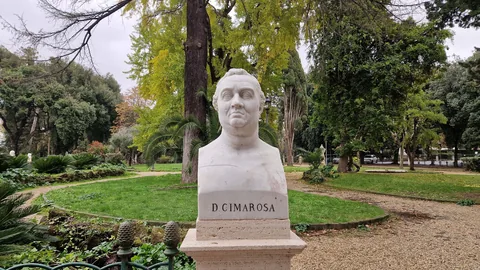
Cimarosa’s comic operas use ensembles and sharply drawn situations to turn social confusion into musical drama.
Find on the map