Pincio gardens · Nearby
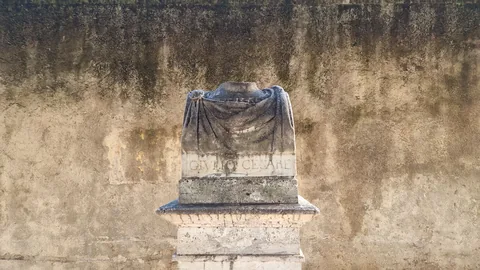
Julius Caesar
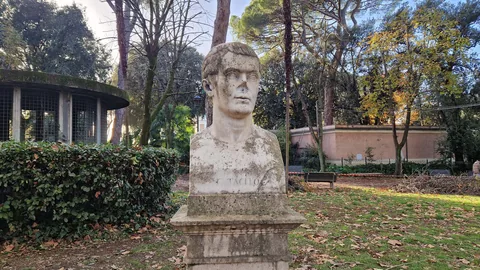
Caesar used conquest, political alliances, and civil war to gain powers that the Republican system could no longer contain.
Find on the mapRead aloud with your device’s voice.
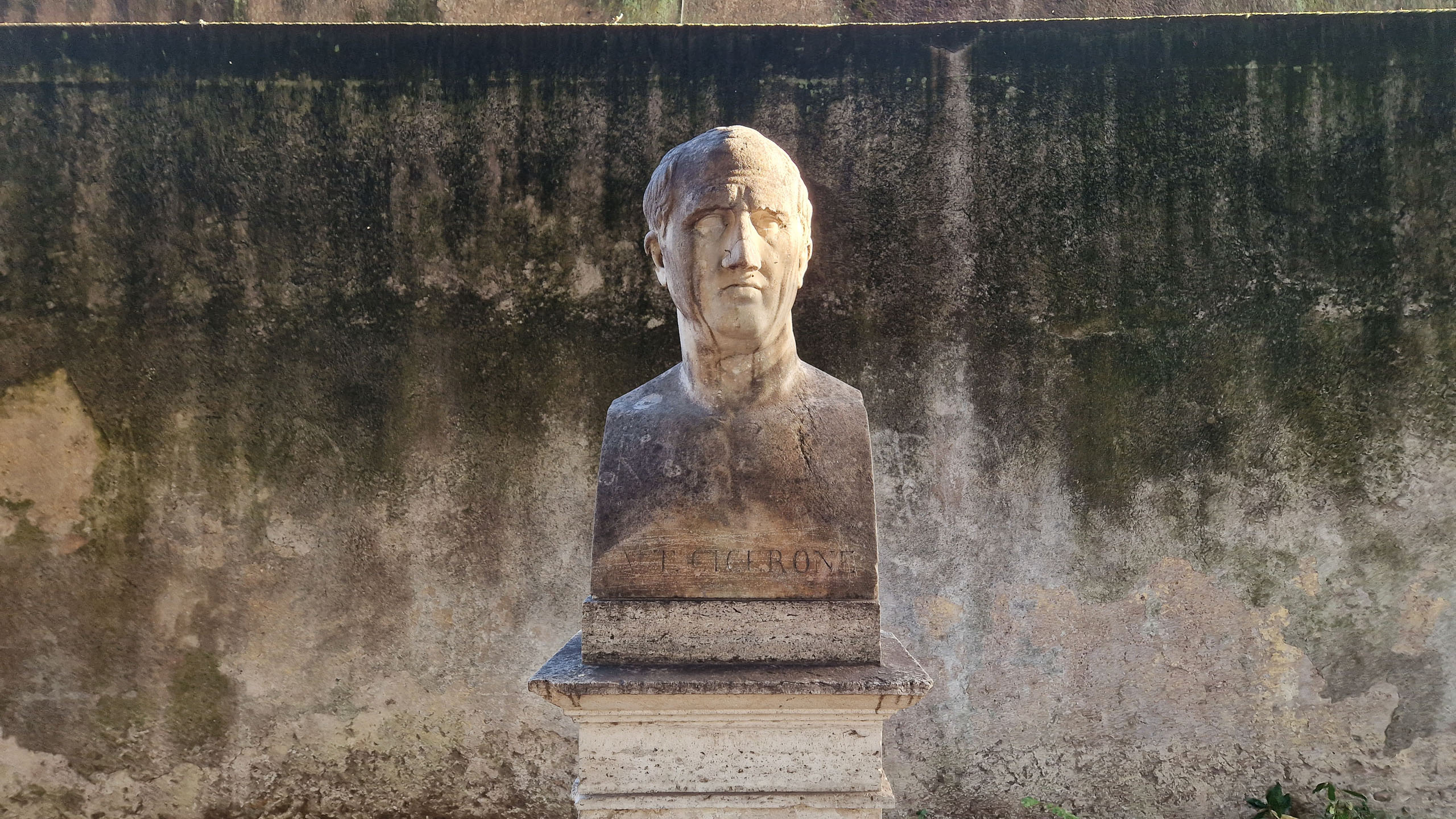
Cicero’s surviving words allow an unusually close view of Roman political life. His speeches were crafted to persuade, while his letters reveal changing judgments and anxieties behind public positions. Neither should be read as a neutral transcript of the Republic’s final decades.
Born at Arpinum in 106 BCE, Marcus Tullius Cicero rose through advocacy and public office to the consulship in 63 BCE. His prosecution of the former Sicilian governor Verres made provincial exploitation a subject of powerful public accusation. During his consulship, he confronted Catiline’s conspiracy against the state.
That confrontation also exposed a contradiction in his defense of lawful government. Cicero had captured conspirators executed without a regular trial, a decision used against him when he was driven into exile. His political principles and his conduct under pressure did not always coincide.
His philosophical works brought Greek debates about ethics and knowledge into Latin prose. After Caesar’s assassination, the speeches known as the Philippics attacked Mark Antony. Cicero was killed in the proscriptions of 43 BCE after Antony, Octavian, and Lepidus formed their triumvirate. His later reputation as a model of eloquence should remain connected to this dangerous setting of partisan argument.
Pincio gardens · Nearby
Caesar used conquest, political alliances, and civil war to gain powers that the Republican system could no longer contain.
Find on the mapPincio gardens · Nearby
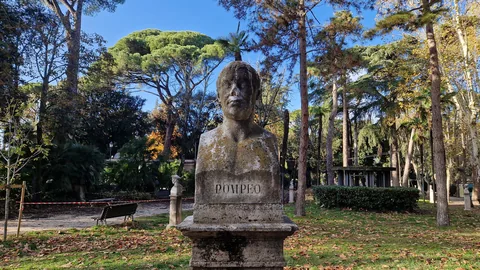
Pompey’s extraordinary commands and public buildings made him a dominant Roman figure before civil war with Caesar.
Find on the mapPincio gardens · Nearby
The anatomist behind the Eustachian tube, whose major anatomical plates reached print long after his death.
Find on the mapPincio gardens · Nearby
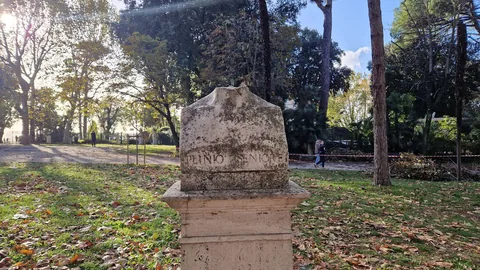
A Roman writer and fleet commander whose Natural History preserves ancient knowledge about the natural world and the arts.
Find on the map