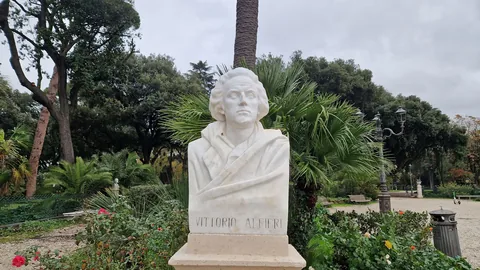
Pincio gardens · 59 m away
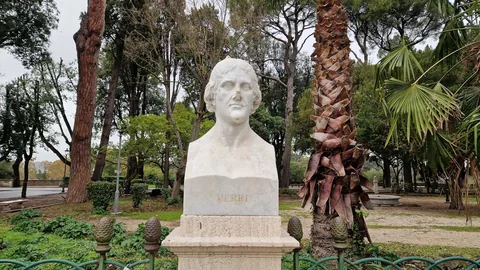
Vittorio Alfieri
Alfieri’s tragedies compress conflicts between freedom, power, and private desire into stark dramatic confrontations.
Find on the mapRead aloud with your device’s voice.
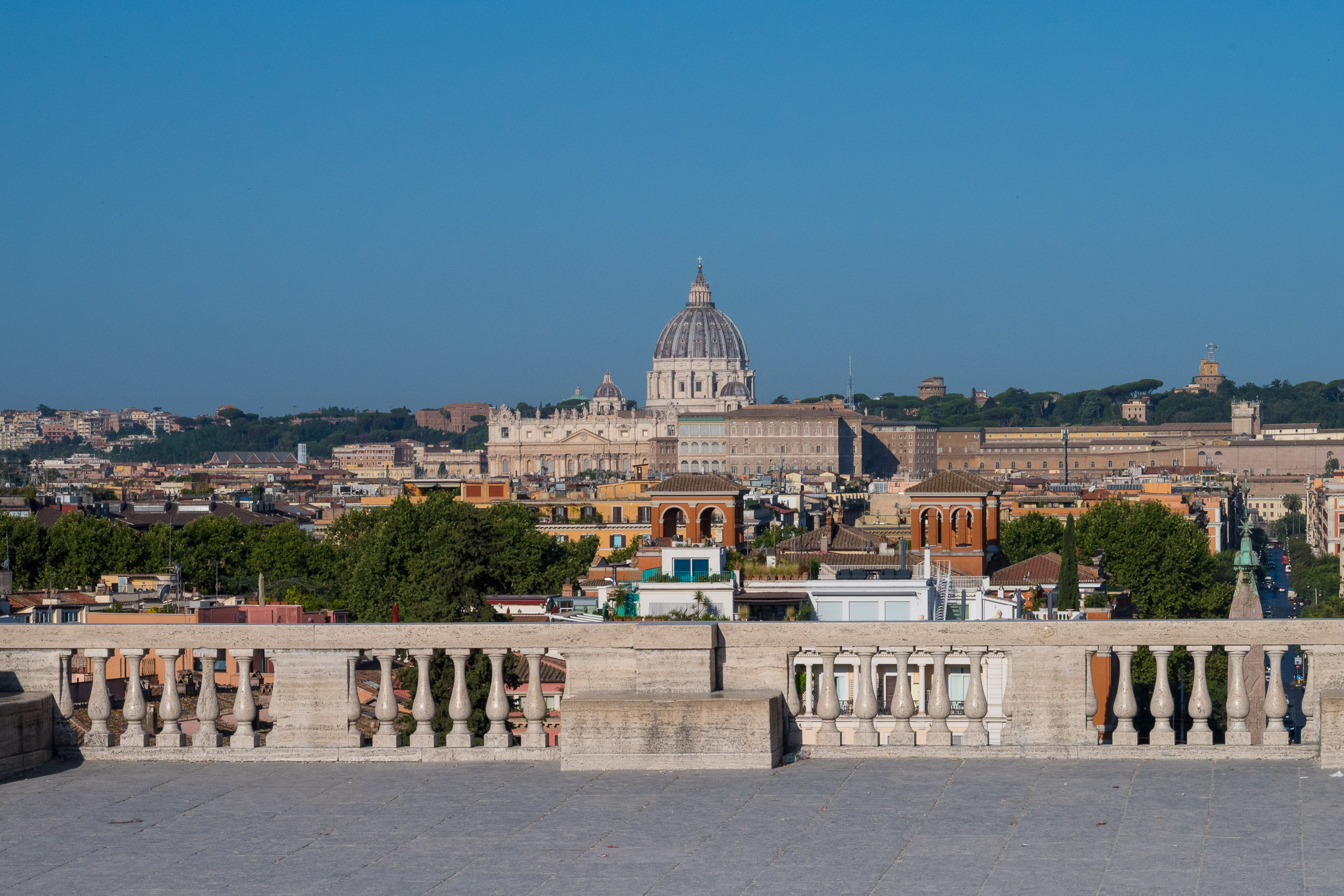
The Pincio terrace turns the slope above Piazza del Popolo into a public viewpoint. The square lies below, with Rome's roofs and domes extending toward the horizon. Its relationship to the city is part of a larger design joining roads, terraces, planting, and architecture.
Plans for a public promenade took shape under the Napoleonic administration from 1810, with Giuseppe Valadier closely involved. Work continued under restored papal government. The resulting garden had a civic purpose distinct from the private aristocratic origins of neighboring Villa Borghese, even though the two landscapes now connect naturally on foot.
Behind the terrace, avenues lined with busts turn the promenade into a gallery of selected historical figures. The portraits were added in successive campaigns, so they record changing ideas about whom Rome and Italy should commemorate.
The approach from Piazza del Popolo climbs the hillside and includes routes with stairs. Visitors who need to avoid steps should plan the approach carefully and check the actual path, rather than assuming every route shown by a navigation app is suitable. From the terrace, the adjacent garden paths offer several ways to continue toward the park.
Pincio gardens · 59 m away
Alfieri’s tragedies compress conflicts between freedom, power, and private desire into stark dramatic confrontations.
Find on the mapPincio gardens · 75 m away
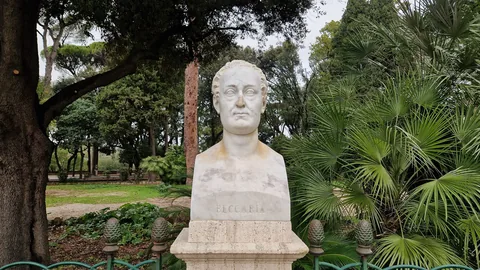
Verri moved from Milanese Enlightenment journalism to historical fiction inspired by the ancient remains of Rome.
Find on the mapPincio gardens · 75 m away
Beccaria’s On Crimes and Punishments challenged torture, excessive penalties, and the arbitrary use of state power.
Find on the mapPincio gardens · 75 m away
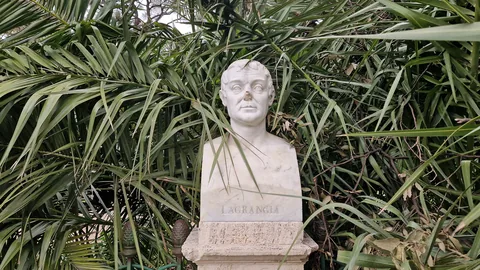
Lagrange developed mathematical methods that expressed mechanics through general equations rather than separate solutions for each machine or motion.
Find on the map