Pincio gardens · Nearby
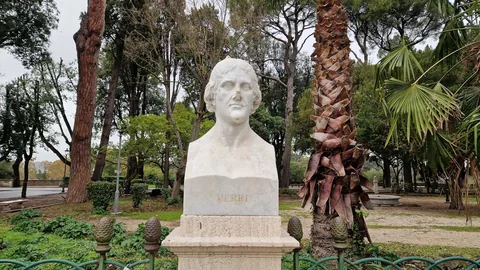
Alessandro Verri
Verri moved from Milanese Enlightenment journalism to historical fiction inspired by the ancient remains of Rome.
Find on the mapRead aloud with your device’s voice.
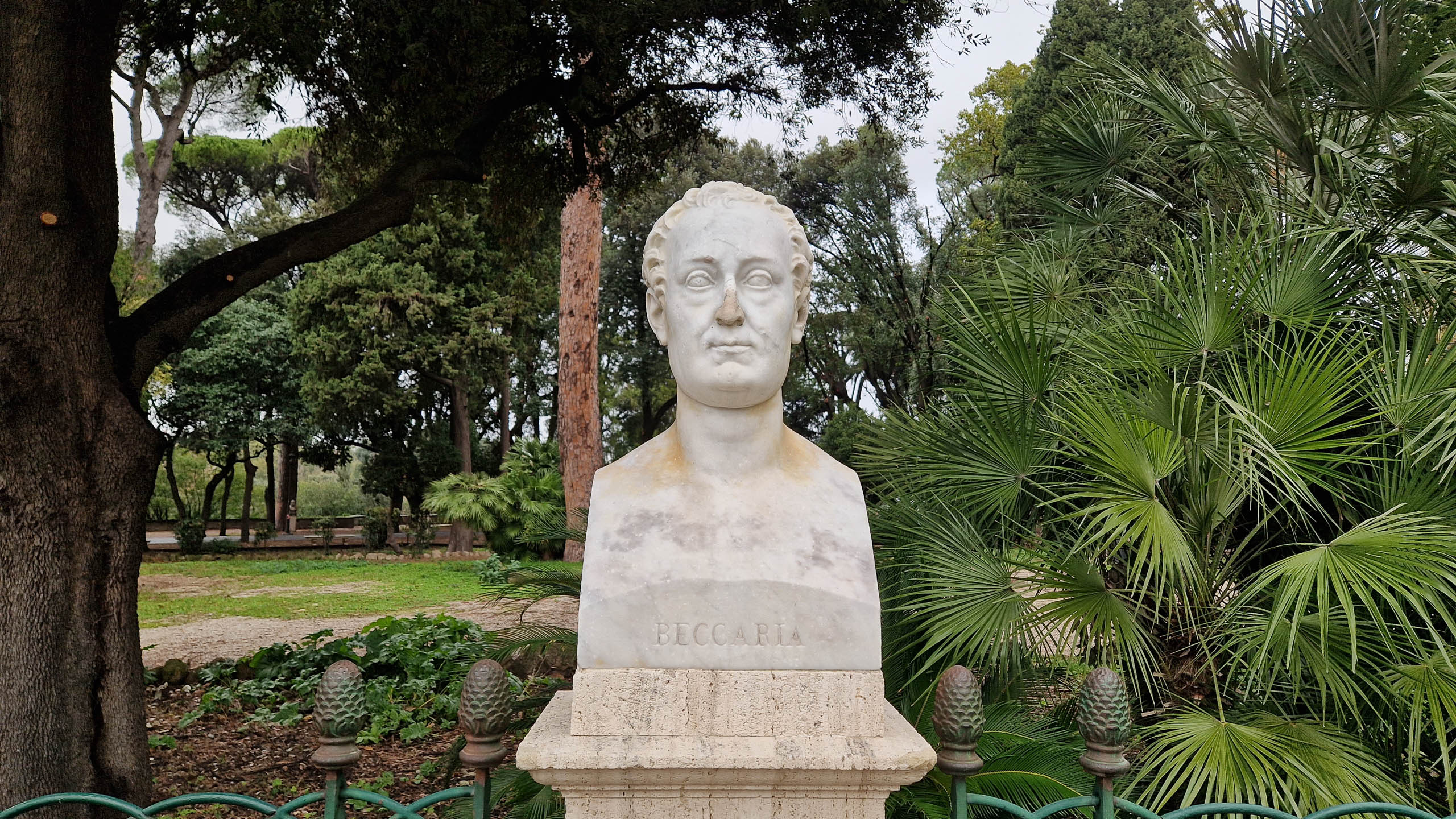
Cesare Beccaria asked what could justify the state's power to punish. His answer in On Crimes and Punishments, published anonymously in 1764, challenged practices that inflicted suffering without reliably establishing guilt or preventing crime.
Born in Milan in 1738, Beccaria developed his arguments within the Enlightenment circle of Pietro and Alessandro Verri. The book attacked torture as an unreliable test of truth: endurance could determine the result more than innocence. It also questioned the death penalty and argued that punishment should be proportionate, predictable, and directed toward a public purpose.
The work circulated rapidly in translation and entered debates well beyond Italy. Its force came partly from making familiar procedures appear open to rational examination. A custom did not become just merely because courts had long used it.
Beccaria also taught economics and worked in public administration before his death in 1794. His later career connects the famous essay to a broader concern with reforming institutions through an understanding of how people actually behave.
Pincio gardens · Nearby
Verri moved from Milanese Enlightenment journalism to historical fiction inspired by the ancient remains of Rome.
Find on the mapPincio gardens · Nearby
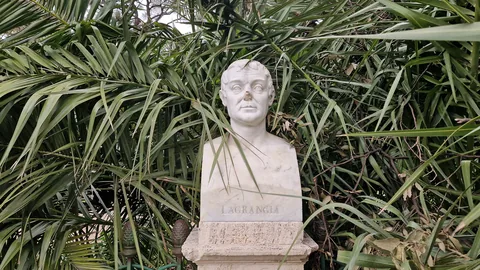
Lagrange developed mathematical methods that expressed mechanics through general equations rather than separate solutions for each machine or motion.
Find on the mapPincio gardens · Nearby
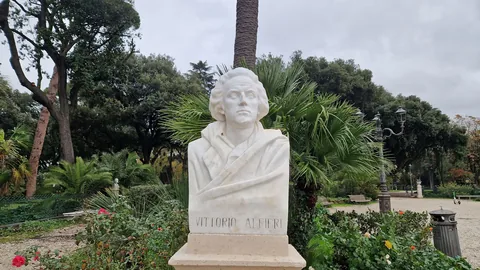
Alfieri’s tragedies compress conflicts between freedom, power, and private desire into stark dramatic confrontations.
Find on the mapPincio gardens · Nearby
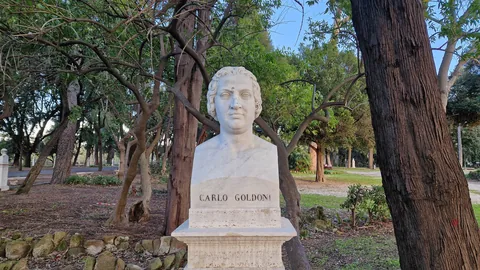
Goldoni developed written comedies from the practices of working theater and brought social observation into dramatic action.
Find on the map