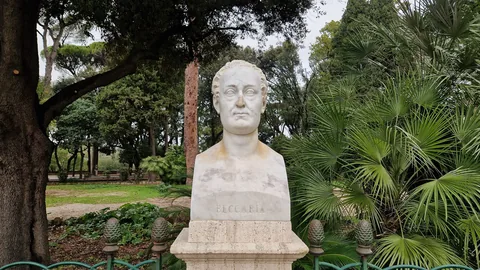
Pincio gardens · Nearby
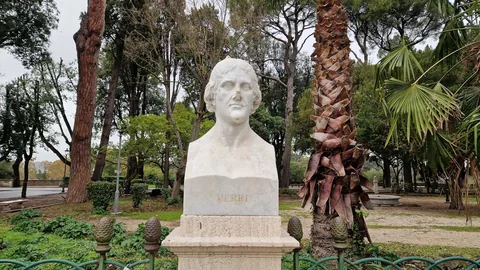
Alessandro Verri
Verri moved from Milanese Enlightenment journalism to historical fiction inspired by the ancient remains of Rome.
Find on the mapRead aloud with your device’s voice.
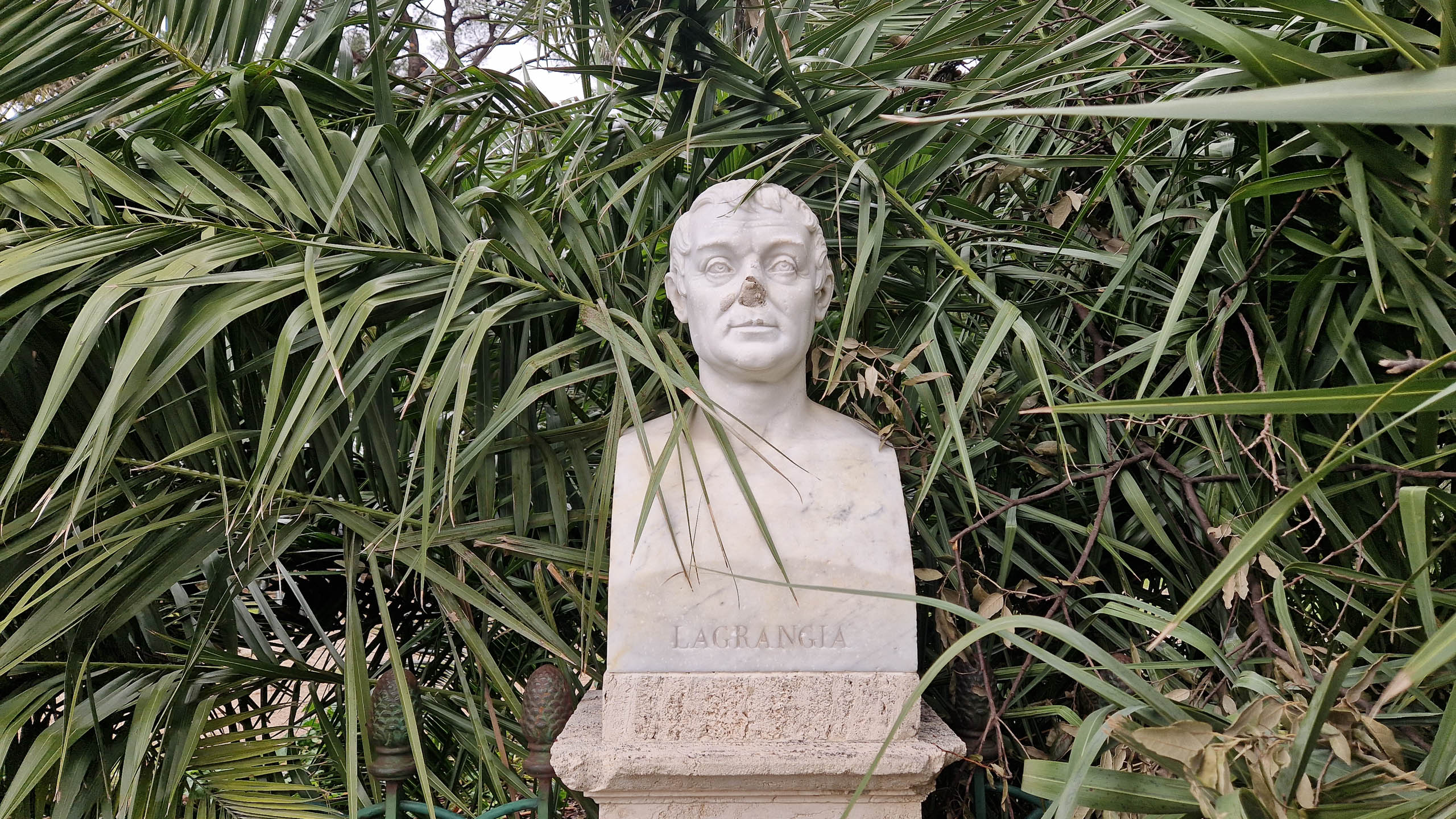
Joseph-Louis Lagrange sought a general mathematical language for motion. Born in Turin in 1736, he developed his career across Turin, Berlin, and Paris, corresponding with other scholars and working within the scientific institutions of several states.
His Mécanique analytique, published in 1788, organized mechanics through analysis. Instead of beginning afresh with a geometric diagram for each problem, a reader could use general methods and choose variables suited to the system being studied. The approach made it possible to connect problems that looked physically different.
Lagrange also contributed to the calculus of variations, number theory, and astronomy. These fields ask different questions, but his work repeatedly searches for a form in which a difficult problem becomes tractable. The mathematical elegance is the result of that search, rather than decoration added to it.
He died in Paris in 1813. His inclusion among Italian commemorative figures reflects his Turin origins, while his working life belongs to an international network of correspondence, academies, and patronage.
Pincio gardens · Nearby
Verri moved from Milanese Enlightenment journalism to historical fiction inspired by the ancient remains of Rome.
Find on the mapPincio gardens · Nearby
Beccaria’s On Crimes and Punishments challenged torture, excessive penalties, and the arbitrary use of state power.
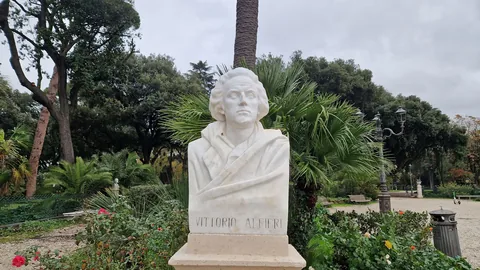
Find on the mapPincio gardens · Nearby
Alfieri’s tragedies compress conflicts between freedom, power, and private desire into stark dramatic confrontations.
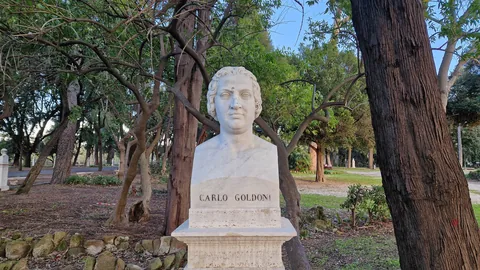
Find on the mapPincio gardens · Nearby
Goldoni developed written comedies from the practices of working theater and brought social observation into dramatic action.
Find on the map