Pincio gardens · Nearby
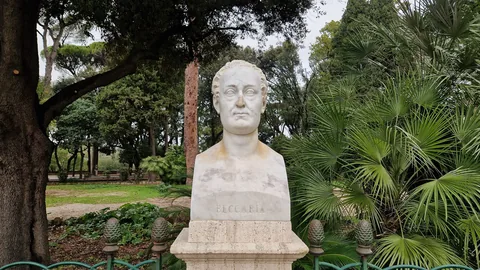
Cesare Beccaria
Beccaria’s On Crimes and Punishments challenged torture, excessive penalties, and the arbitrary use of state power.
Find on the mapRead aloud with your device’s voice.
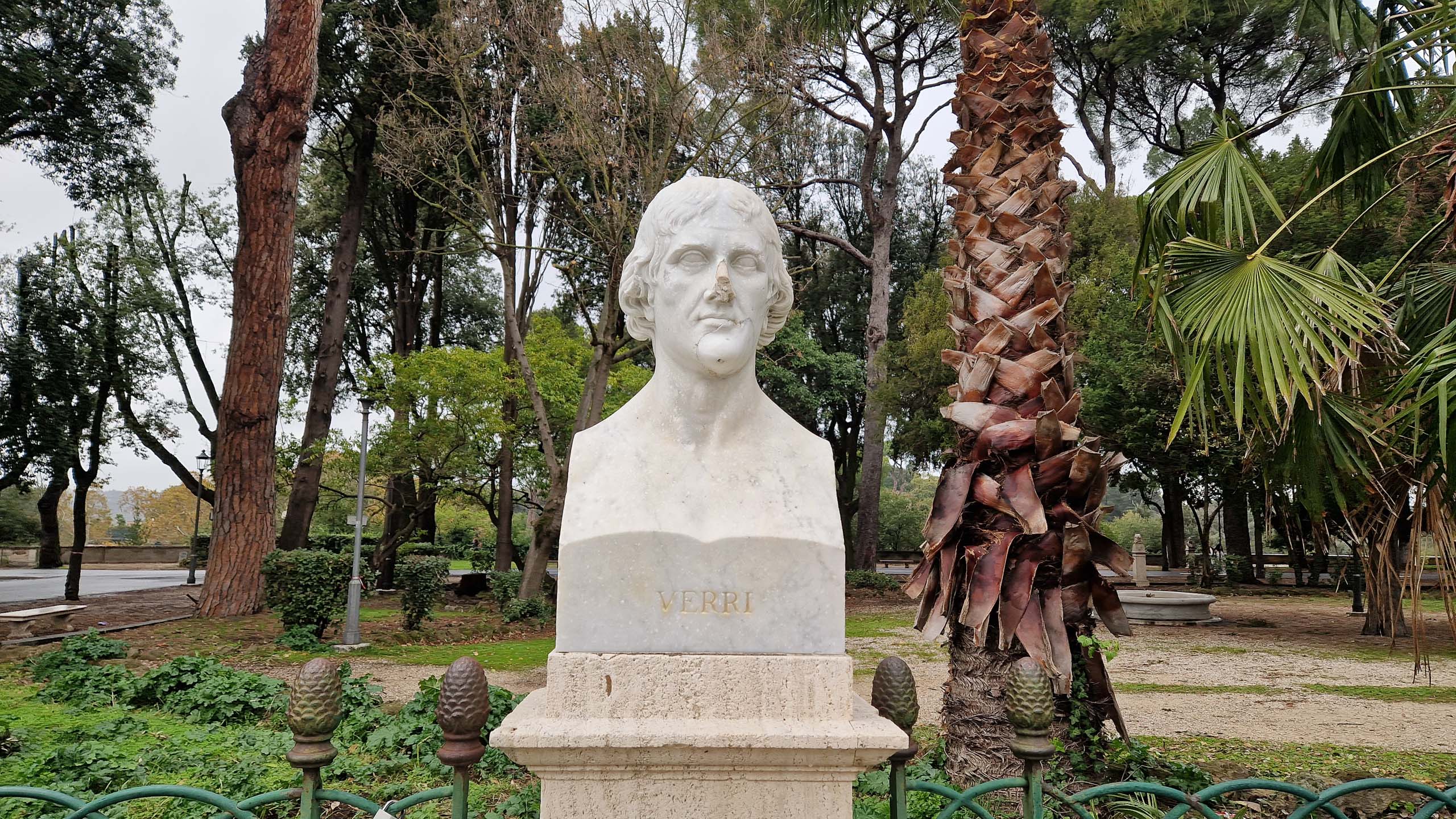
Alessandro Verri's writing changed as his life moved from Milan to Rome. Born in 1741, he joined the intellectual circle around his older brother Pietro and contributed to Il Caffè, the journal associated with the Milanese Enlightenment. Its writers debated education, language, law, and the usefulness of knowledge.
After settling in Rome, Verri turned increasingly toward literature and antiquity. The rediscovery of the tomb of the Scipios in 1780 prompted the Notti romane al sepolcro de' Scipioni. In that work, imagined encounters with the ancient dead become a way to discuss Roman history and moral judgment.
The book is historical fiction, not testimony recovered from the tomb. Its dialogue between past and present reveals an eighteenth-century writer using antiquity to test ideas about civilization, religion, and political conduct. Verri's later outlook also moved away from some of the confidence of his earlier reformist circle.
He died in Rome in 1816. His biography offers a useful companion to the city's commemorative busts: both literary dialogue and sculpted portrait bring the dead into a conversation shaped by the needs of a later age.
Pincio gardens · Nearby
Beccaria’s On Crimes and Punishments challenged torture, excessive penalties, and the arbitrary use of state power.
Find on the mapPincio gardens · Nearby
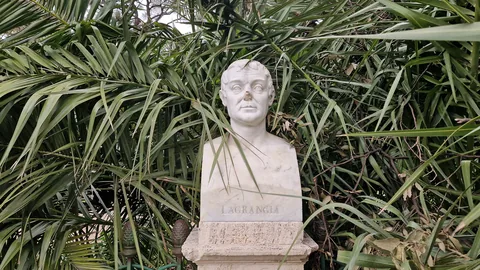
Lagrange developed mathematical methods that expressed mechanics through general equations rather than separate solutions for each machine or motion.
Find on the mapPincio gardens · Nearby
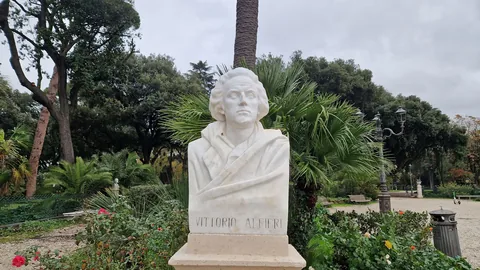
Alfieri’s tragedies compress conflicts between freedom, power, and private desire into stark dramatic confrontations.
Find on the mapPincio gardens · Nearby
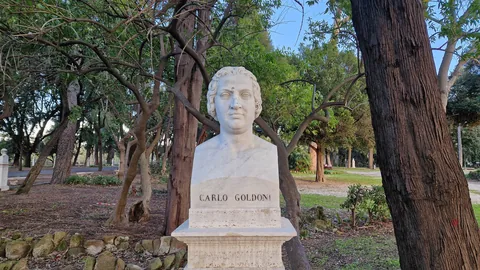
Goldoni developed written comedies from the practices of working theater and brought social observation into dramatic action.
Find on the map