Pincio gardens · Nearby
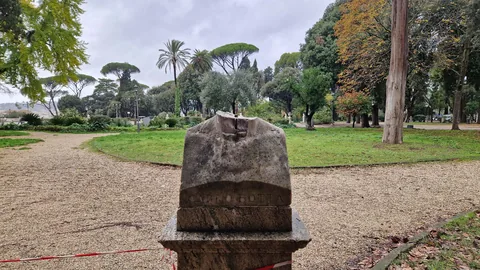
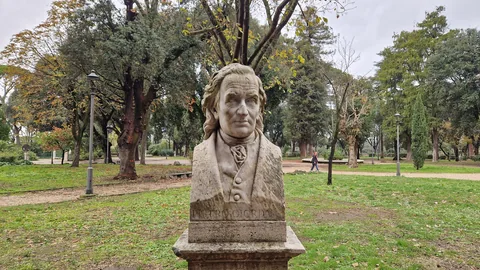
Pietro Giordani
Giordani defended Italian literary tradition and became an important correspondent and early supporter of Giacomo Leopardi.
Find on the mapVoice changes restart the current paragraph.
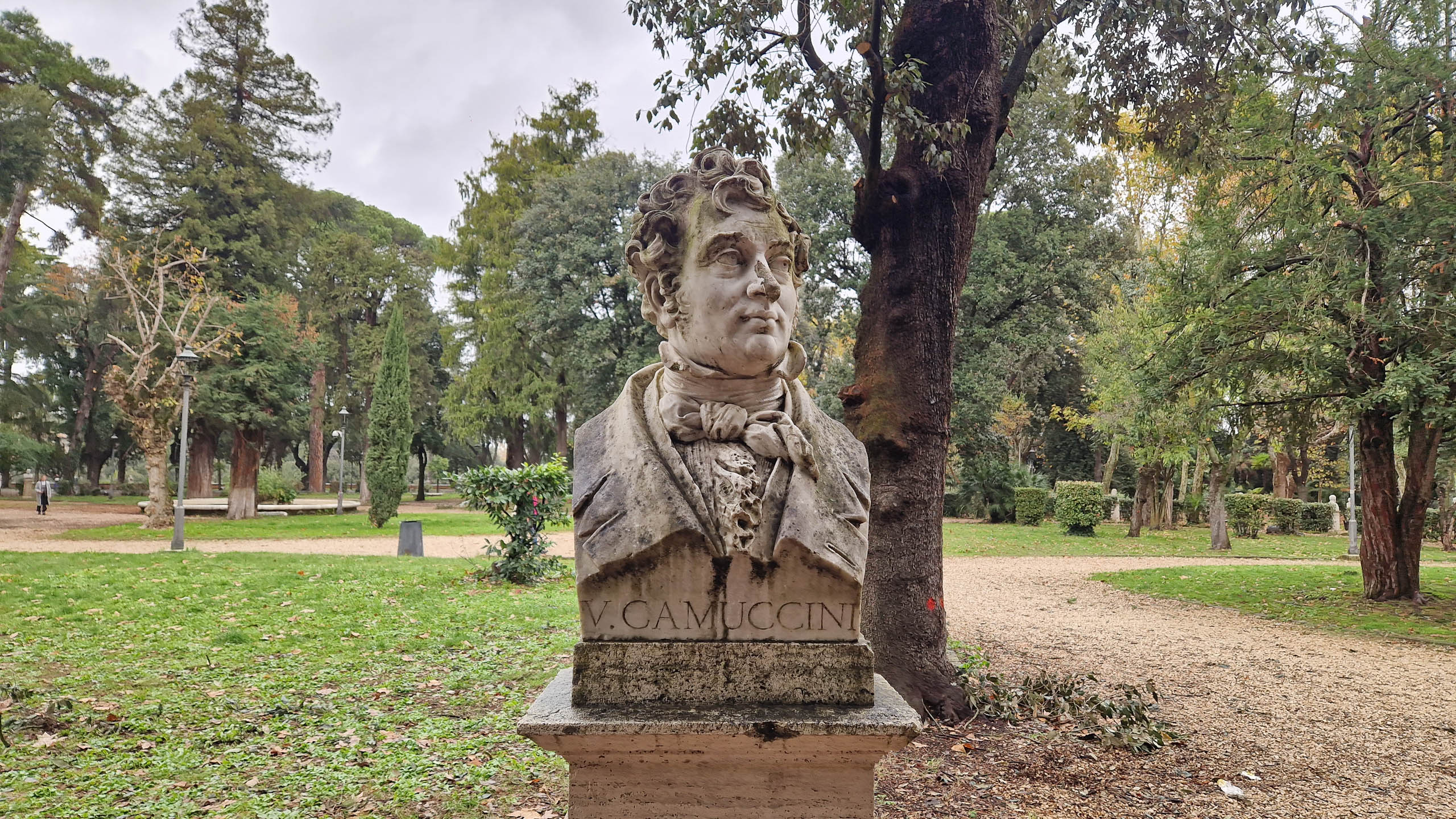
Vincenzo Camuccini built paintings around moments of decision. In his scenes from ancient history, gestures and groups direct attention toward a central action. The arrangement prompts a judgment about the people involved. The figures act within a carefully ordered composition.
Born in Rome in 1771, he studied older masters and ancient art while developing a Neoclassical style. Works such as the Death of Caesar use antiquity as a language for drama and moral conflict. They are later interpretations of historical episodes, rather than visual records of how an ancient event looked.
Camuccini also worked within Rome's artistic institutions and carried out commissions for prominent patrons. Early in his career he painted a subject involving the young Paris for Villa Borghese. The commission connects his work to the collection’s eighteenth-century renewal.
He died in 1844. His art asks for attention to the arrangement of a scene: who looks toward the action, who withdraws, and how the painter turns a complicated story into a single readable moment.
Pincio gardens · Nearby
Giordani defended Italian literary tradition and became an important correspondent and early supporter of Giacomo Leopardi.
Find on the mapPincio gardens · Nearby
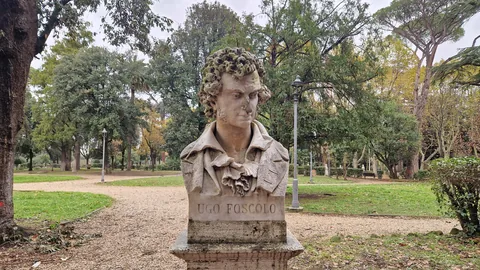
Foscolo made exile, political disappointment, and the power of remembrance central subjects of Italian poetry and fiction.
Find on the mapPincio gardens · 27 m away
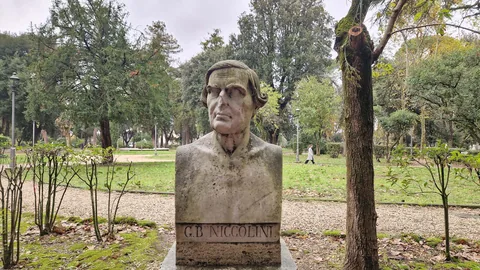
Niccolini used historical drama to argue about tyranny, national independence, and the political power of the papacy.
Find on the mapPincio gardens · 35 m away
Carlo Botta wrote histories of the American Revolution and modern Italy after a career shaped by revolutionary politics and exile.
Find on the map