Pincio gardens · Nearby
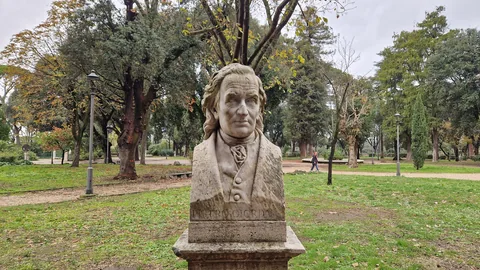
Pietro Giordani
Giordani defended Italian literary tradition and became an important correspondent and early supporter of Giacomo Leopardi.
Find on the mapVoice changes restart the current paragraph.
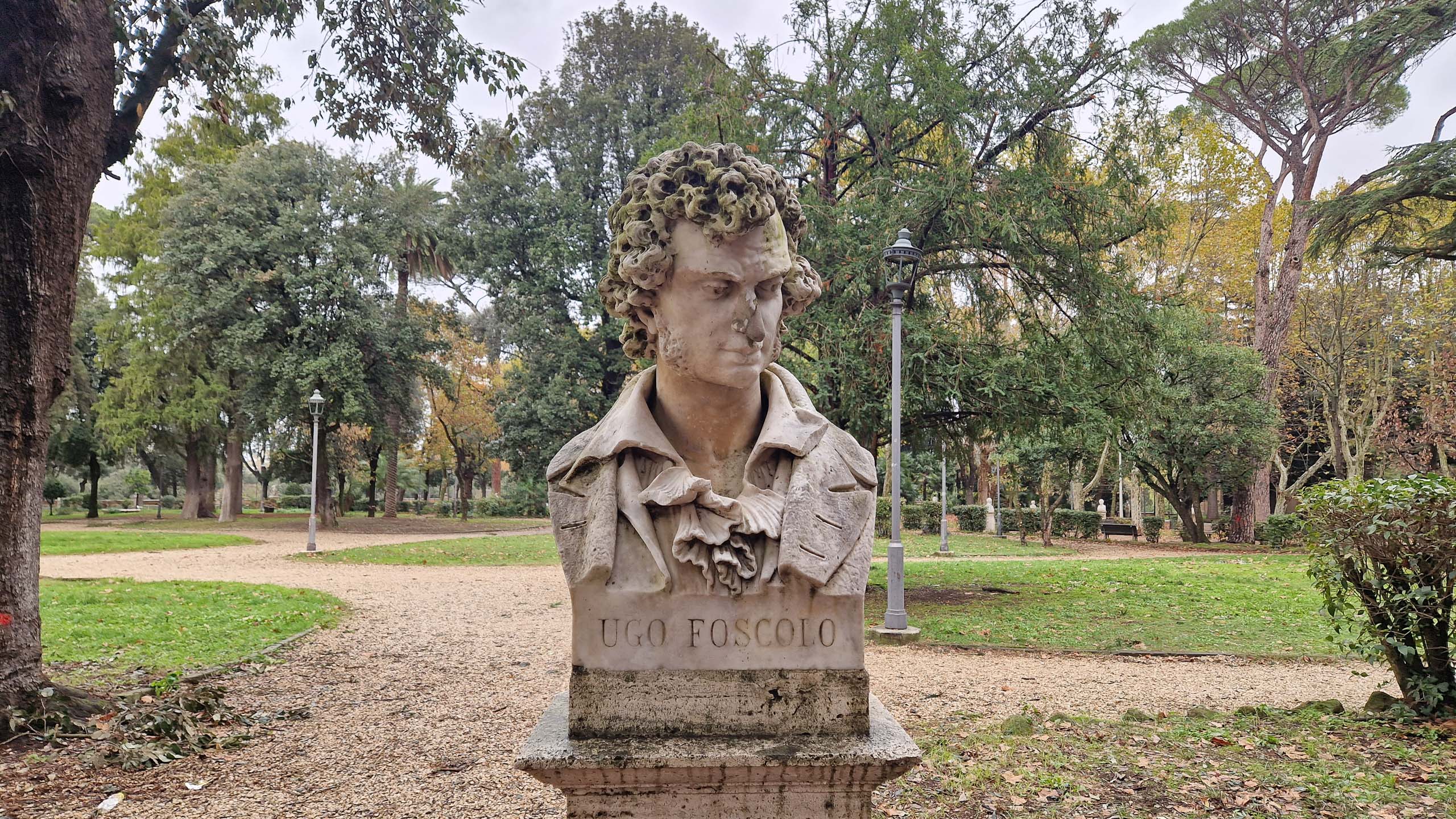
Ugo Foscolo wrote about belonging from the experience of losing it. Born on Zakynthos in 1778, when the island was under Venetian rule, he moved through the upheavals that followed the French Revolution. Hopes invested in Napoleon gave way to disappointment when political settlements overrode promises of liberty.
The Last Letters of Jacopo Ortis turns that disappointment into an epistolary novel, joining frustrated love to a blocked political future. Its protagonist is a literary construction, though the pressures around him draw on conflicts Foscolo knew. The intensity comes from allowing private feeling and public history to bear on one another.
In Dei Sepolcri, published in 1807, Foscolo examines what tombs and remembrance can do for the living. Memory creates bonds across generations and gives examples of conduct a public presence. The poem is especially relevant to a garden lined with commemorative portraits.
Foscolo spent his final years in exile and died near London in 1827. His writing keeps the desire for a homeland in tension with the knowledge that political belonging can be fragile, compromised, or lost.
Pincio gardens · Nearby
Giordani defended Italian literary tradition and became an important correspondent and early supporter of Giacomo Leopardi.
Find on the mapPincio gardens · Nearby
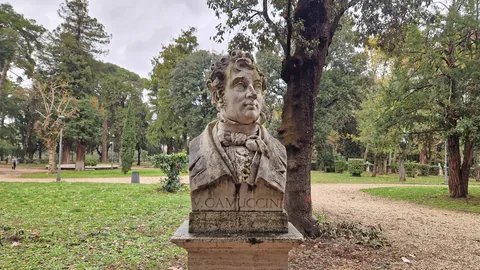
Camuccini used the disciplined composition of history painting to make episodes from antiquity legible as public and moral drama.
Find on the mapPincio gardens · 27 m away
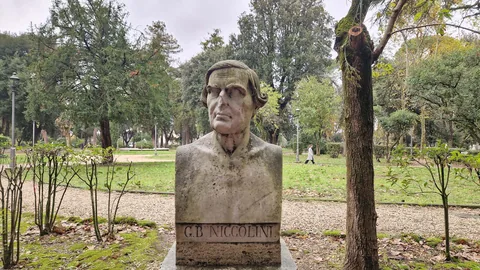
Niccolini used historical drama to argue about tyranny, national independence, and the political power of the papacy.
Find on the mapPincio gardens · 35 m away
Carlo Botta wrote histories of the American Revolution and modern Italy after a career shaped by revolutionary politics and exile.
Find on the map