Pincio gardens · Nearby
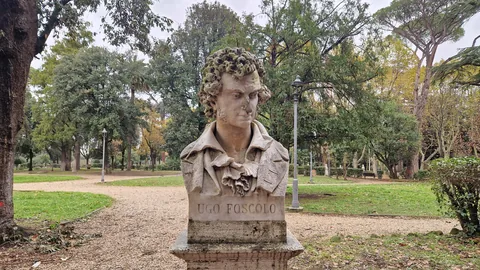
Ugo Foscolo
Foscolo made exile, political disappointment, and the power of remembrance central subjects of Italian poetry and fiction.
Find on the mapVoice changes restart the current paragraph.
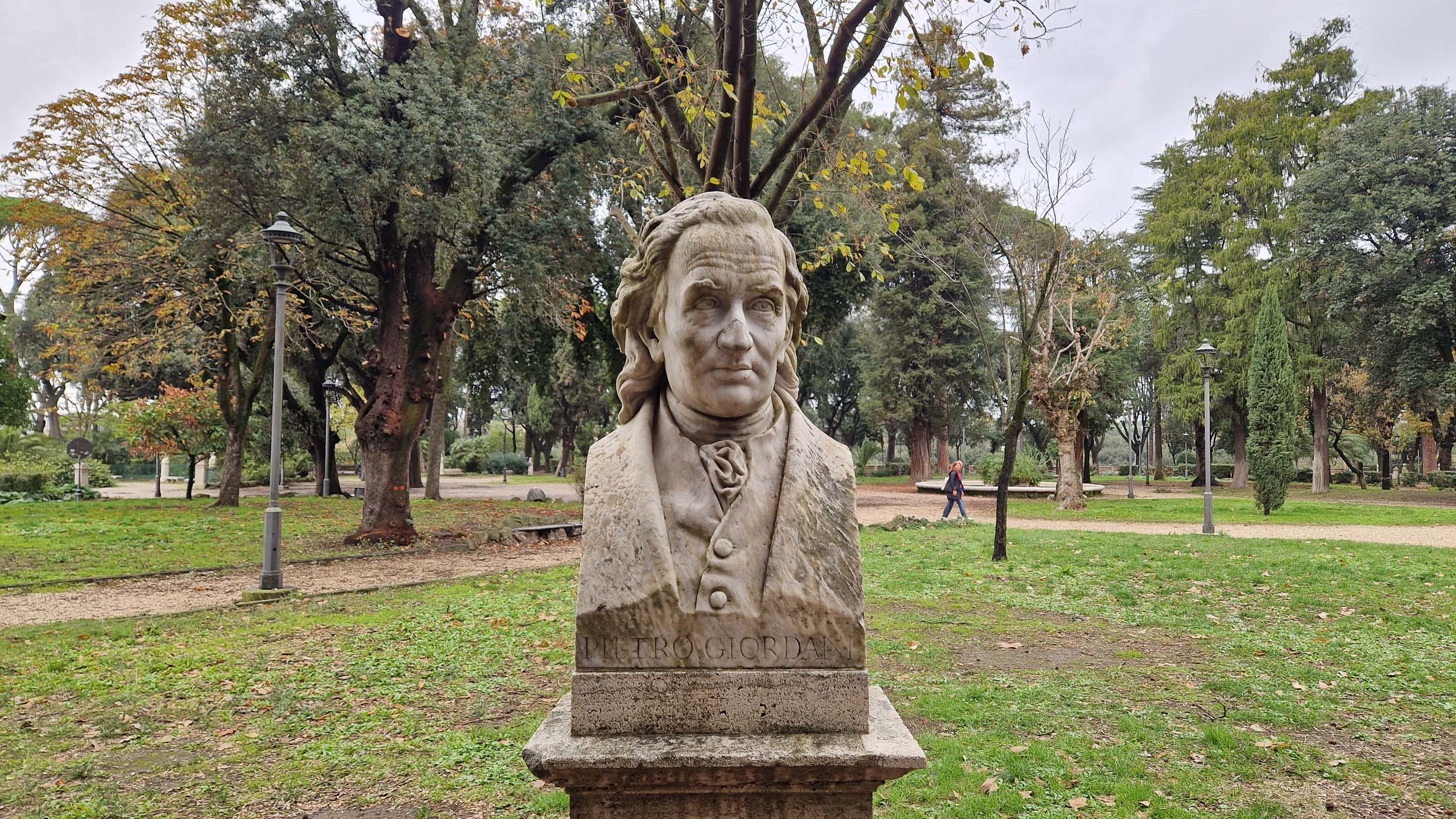
Pietro Giordani believed the craft of Italian prose carried a civic responsibility. Born in Piacenza in 1774, he became a writer, critic, and prolific correspondent whose influence often worked through advice, argument, and personal encouragement rather than a single large book.
He defended the study of classical and Italian literary models during the debates over Romanticism. For Giordani, a disciplined language was a resource that writers should understand before abandoning it. That commitment did not make him a comfortable supporter of political authority: his views and associations brought suspicion from governments.
His correspondence with the young Giacomo Leopardi became especially significant. Giordani recognized an unusual talent and offered an intellectual relationship beyond the confines of Leopardi's family home in Recanati. The letters preserve both literary discussion and the emotional force of finding a sympathetic reader.
Giordani died in 1848. His portrait recalls the less visible work of literary culture: criticism, editing, correspondence, and the confidence one writer can give another at a decisive moment.
Pincio gardens · Nearby
Foscolo made exile, political disappointment, and the power of remembrance central subjects of Italian poetry and fiction.
Find on the mapPincio gardens · Nearby
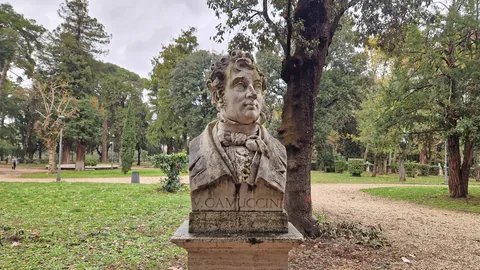
Camuccini used the disciplined composition of history painting to make episodes from antiquity legible as public and moral drama.
Find on the mapPincio gardens · 27 m away
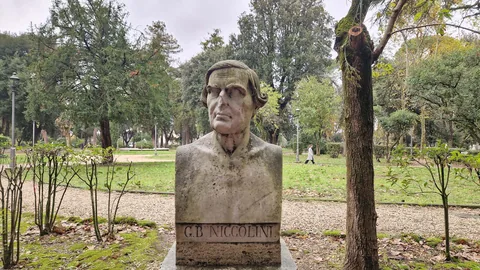
Niccolini used historical drama to argue about tyranny, national independence, and the political power of the papacy.
Find on the mapPincio gardens · 35 m away
Carlo Botta wrote histories of the American Revolution and modern Italy after a career shaped by revolutionary politics and exile.
Find on the map