Pincio gardens · Nearby
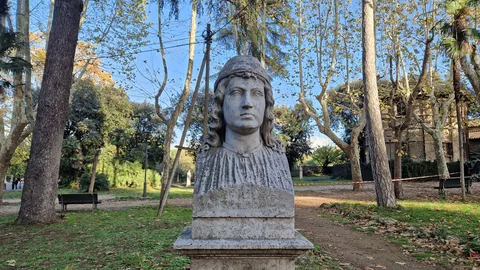
Pico della Mirandola
Pico planned a public debate on 900 propositions, but papal objections prevented the ambitious Roman gathering.
Find on the mapVoice changes restart the current paragraph.
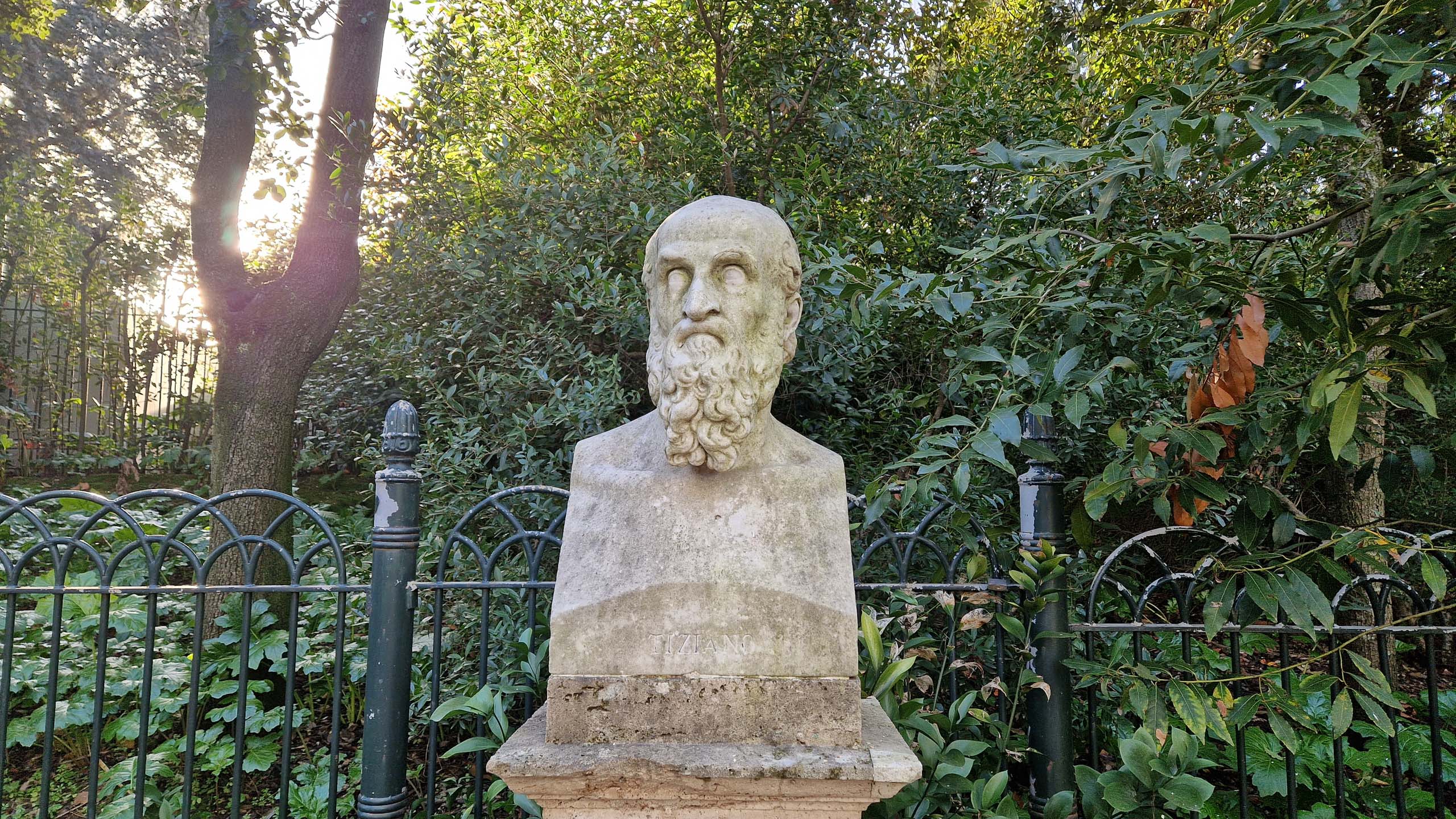
Titian’s paintings make color do structural work. A change in light across flesh or fabric can turn a body in space, while a landscape establishes both distance and mood. His long Venetian career moved from comparatively smooth early surfaces toward paintings in which the action of the brush becomes harder to separate from the image.
Born in the Dolomites around 1490, Tiziano Vecellio worked in Venice and for patrons beyond the city. The mythological paintings he called poesie, made for Philip II of Spain, treated painting as a counterpart to poetry. Their stories of desire also contain violence and unequal power; decorative beauty does not remove those subjects.
At the Borghese Gallery, Sacred and Profane Love belongs to an earlier phase, around 1514 or 1515. Two women, one clothed and one nude, sit beside a carved stone basin. The familiar title is not a secure instruction from the painter about how to identify them. Marriage imagery and the heraldry of the patron’s family have supported readings connected with a Venetian wedding, while other interpretations emphasize different kinds of love.
Start with what the painting actually shows before assigning each figure a fixed moral label. The relation between the women, the water, and the landscape is more complex than a simple division into good and bad. The work’s continuing interest lies partly in how much its carefully ordered scene allows viewers to argue about.
Titian died in 1576. His bust commemorates a painter whose methods changed across decades; a single description of Venetian color cannot substitute for comparing the early Borghese pictures with the much looser surfaces of his later work.
Pincio gardens · Nearby
Pico planned a public debate on 900 propositions, but papal objections prevented the ambitious Roman gathering.
Find on the mapPincio gardens · Nearby
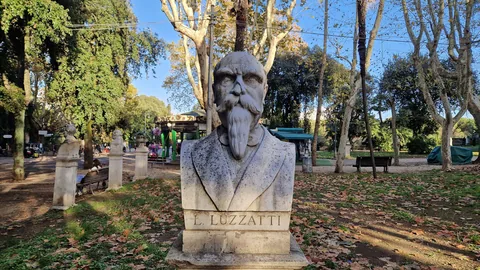
Luzzatti promoted cooperative credit and religious liberty, with a brief premiership forming only one part of his public career.
Find on the mapPincio gardens · 21 m away
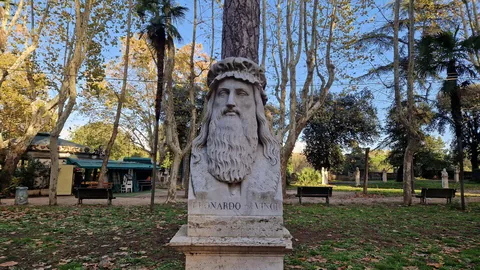
A painter who used drawing to investigate anatomy, moving water, and the mechanics of sight. His Roman years came late in his career.
Find on the mapPincio gardens · 27 m away
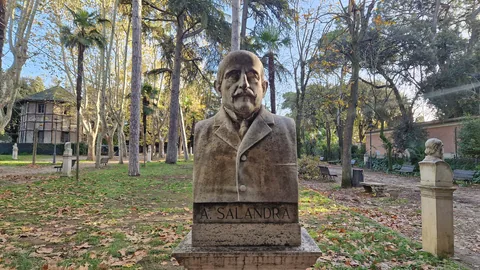
Salandra led the government that moved Italy from neutrality into World War I in 1915.
Find on the map