Pincio gardens · Nearby
Titian
Titian built figures and landscapes through color; his Borghese paintings reward attention to meanings that remain open to debate.
Find on the mapRead aloud with your device’s voice.
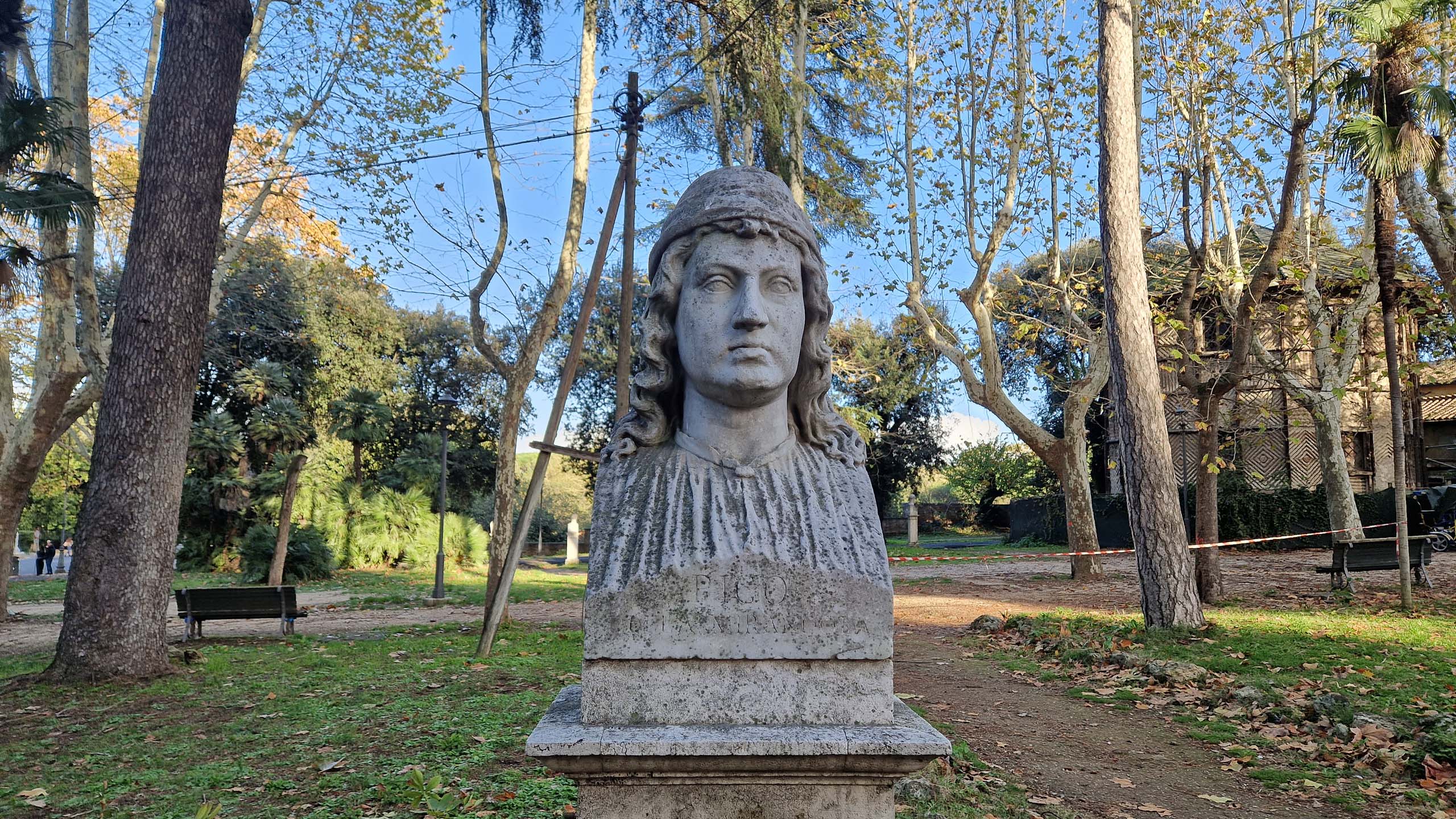
Giovanni Pico della Mirandola proposed to bring scholars to Rome to debate 900 propositions. The theses, prepared in 1486, drew on several philosophical and religious traditions. The intended gathering did not take place: papal scrutiny condemned a number of the propositions and stopped the project.
The speech written to introduce the debate became known as the Oration on the Dignity of Man. Its account of humanity’s capacity for self-formation later became a favored statement of Renaissance humanism. Reading it in isolation, however, removes it from a project concerned with theological agreement and spiritual ascent.
Pico, born in 1463, studied Greek and Hebrew traditions alongside Latin philosophy. His use of Jewish Kabbalah served a Christian intellectual program. It should not be confused with religious pluralism in the modern sense, even when his appetite for learning crossed boundaries that other scholars respected more rigidly.
He died in Florence in 1494. The unfulfilled Roman debate gives his career an unusually clear focus: a vast proposal for agreement that encountered the authority responsible for deciding what could be publicly argued.
Pincio gardens · Nearby
Titian built figures and landscapes through color; his Borghese paintings reward attention to meanings that remain open to debate.
Find on the mapPincio gardens · Nearby
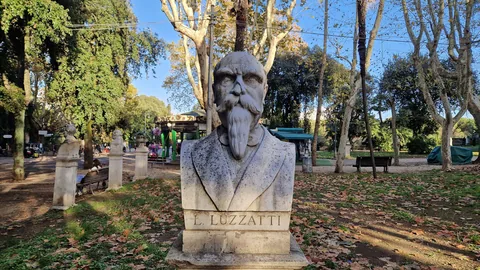
Luzzatti promoted cooperative credit and religious liberty, with a brief premiership forming only one part of his public career.
Find on the mapPincio gardens · 21 m away
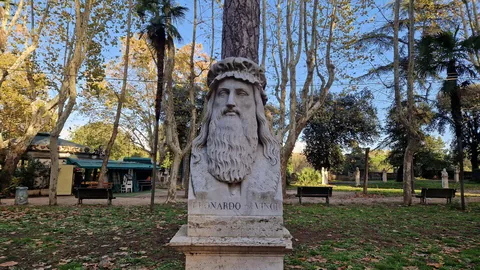
A painter who used drawing to investigate anatomy, moving water, and the mechanics of sight. His Roman years came late in his career.
Find on the mapPincio gardens · 27 m away
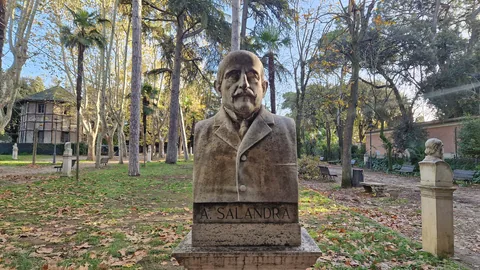
Salandra led the government that moved Italy from neutrality into World War I in 1915.
Find on the map