Pincio gardens · Nearby
Giovanni Giolitti
Giolitti expanded political participation while directing colonial war and relying on contested methods of parliamentary government.
Find on the mapRead aloud with your device’s voice.
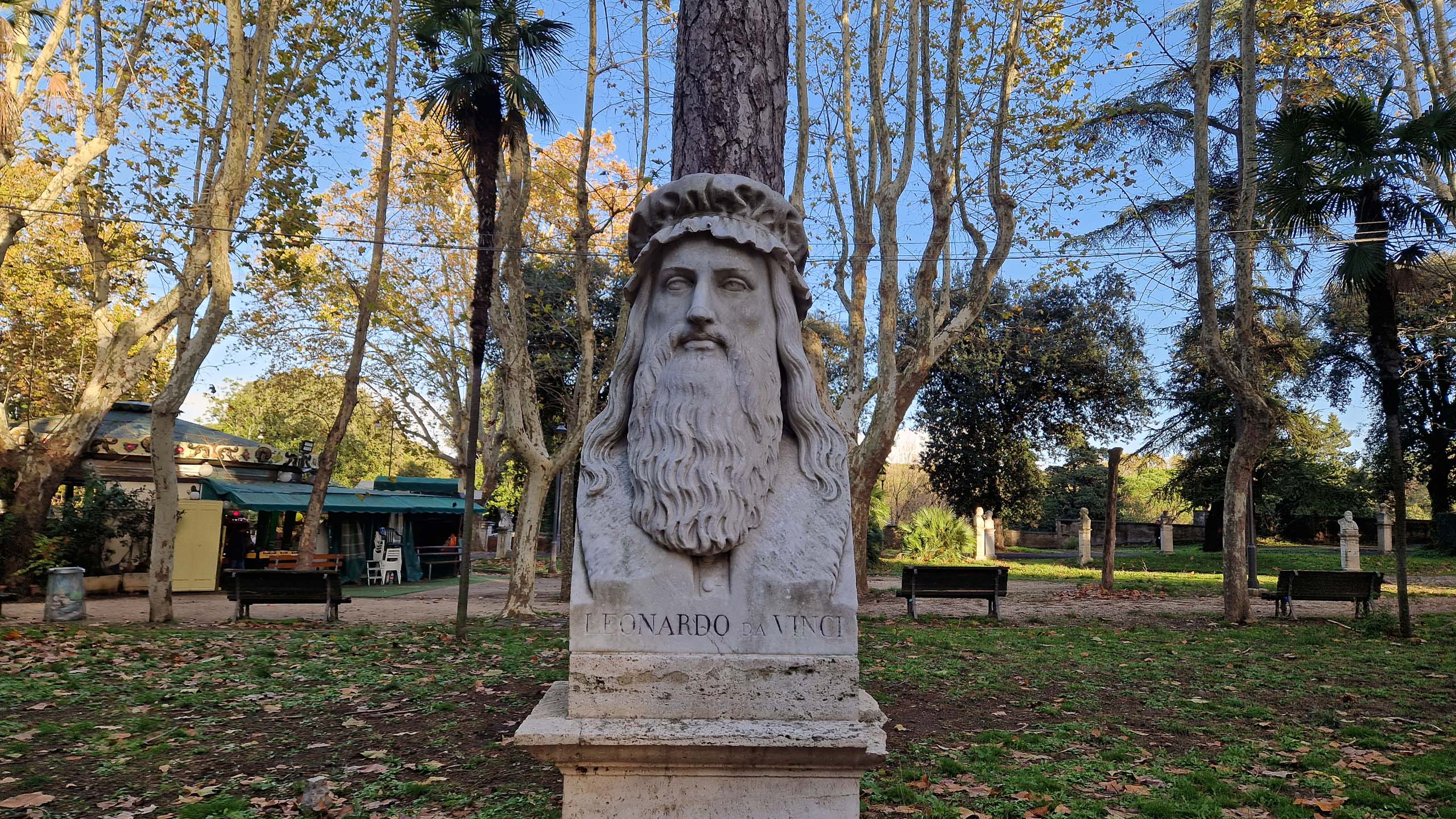
Leonardo da Vinci used drawing to work out how things functioned: a joint bending, water turning in a current, light falling across a face. The connection between these investigations and his paintings is more revealing than a list of inventions credited to him. Looking closely was a method, and a drawing could test an idea as well as record an appearance.
Born near Vinci in 1452, Leonardo trained in Andrea del Verrocchio’s Florentine workshop. Painting belonged to a working environment that also involved sculpture, metalwork, and practical design. Leonardo later offered his services to the Sforza court in Milan, where his responsibilities extended from painted commissions to engineering and court entertainment. His career depended on patrons with very different needs.
In his paintings, observation became a way of organizing human relationships. The Last Supper turns a shared table into a field of responses: figures lean, turn, and gesture around Christ. The soft transitions between light and dark in Leonardo’s portraits make a face seem to emerge gradually from its surroundings. The familiar term sfumato describes this avoidance of a hard boundary. It is a painter’s way of asking how forms actually appear to the eye.
Rome entered his life relatively late. From 1513 to 1516 he worked under Giuliano de’ Medici, the brother of Pope Leo X. His Roman period produced no public commission comparable to the Last Supper in Milan. He then moved to France to serve Francis I and died there in 1519. The bust in the Pincio commemorates this artist; it is not evidence that he worked in the gardens or helped design Villa Borghese.
The notebooks need an equally careful reading. Anatomical drawings and studies of water document sustained research, but much of this material remained unpublished during his lifetime. His scientific reputation grew as later readers gained access to those papers. Calling him “ahead of his time” can obscure that history: an observation in a private notebook and a finding that changes contemporary practice have different kinds of influence.
Pincio gardens · Nearby
Giolitti expanded political participation while directing colonial war and relying on contested methods of parliamentary government.
Find on the mapPincio gardens · Nearby
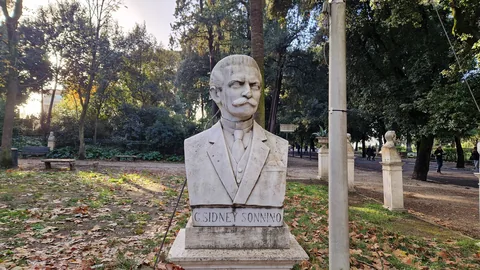
Sonnino investigated rural poverty in Sicily before becoming a central negotiator of Italy’s entry into World War I.
Find on the mapPincio gardens · Nearby
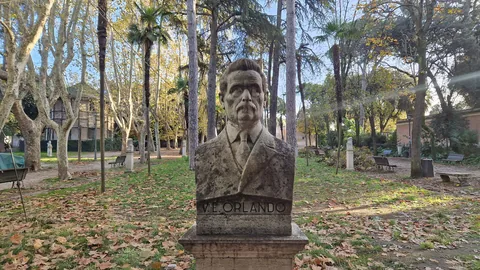
A scholar of public law, Orlando led Italy after Caporetto and represented it at the Paris peace conference.
Find on the mapPincio gardens · Nearby
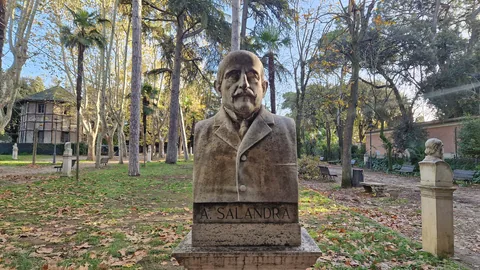
Salandra led the government that moved Italy from neutrality into World War I in 1915.
Find on the map