Pincio gardens · Nearby
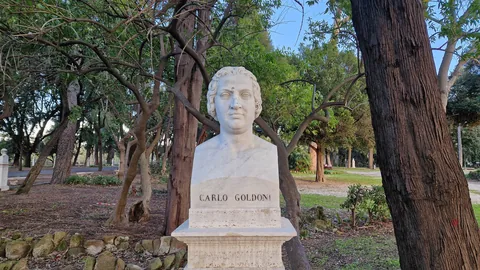
Carlo Goldoni
Goldoni developed written comedies from the practices of working theater and brought social observation into dramatic action.
Find on the mapRead aloud with your device’s voice.
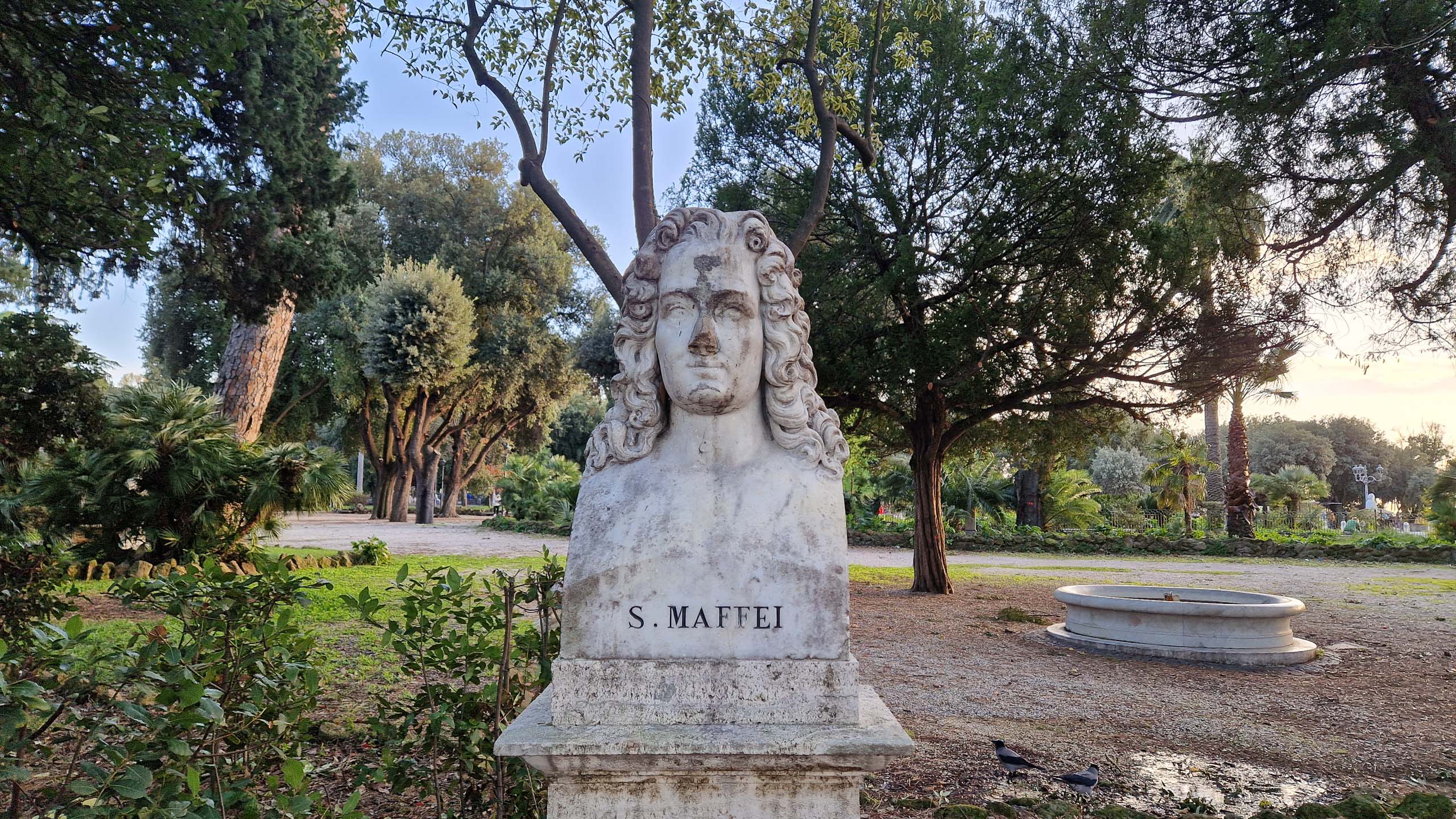
Scipione Maffei treated inscriptions as objects that could be collected, compared, and used to test historical claims. His work in Verona helped establish a public collection in which texts carved on stone became material for systematic study. The setting joined antiquarian scholarship to a civic institution.
Born in 1675, Maffei also wrote for the stage. His tragedy Merope sought dramatic force in a classical story and became a widely discussed example of Italian tragic writing. Scholarship about antiquity and experiments in contemporary theater belonged to the same broad intellectual career.
His Verona illustrata examined the city through its history and monuments. The local focus did not make the inquiry narrow: correspondence and travel placed it within a European network of scholars. A detail preserved in one city could change an argument made elsewhere.
Maffei died in 1755. His Pincio portrait is a useful place to consider a form of cultural work less visible than making a famous painting: establishing collections and methods through which other people can examine the evidence themselves.
Pincio gardens · Nearby
Goldoni developed written comedies from the practices of working theater and brought social observation into dramatic action.
Find on the mapPincio gardens · Nearby
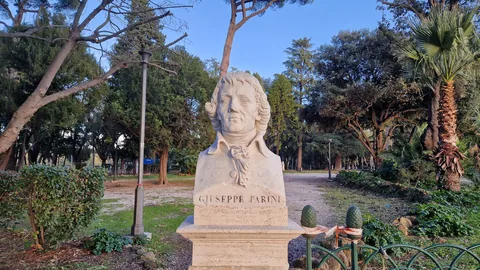
Parini’s mock instruction of a fashionable young nobleman turns the language of refinement into a critique of idleness.
Find on the mapPincio gardens · Nearby
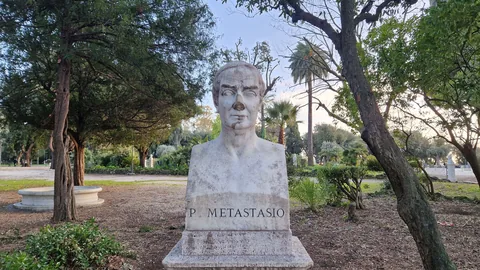
Metastasio wrote opera librettos that many composers reused, shaping stories around the pressure between public duty and private feeling.
Find on the mapPincio gardens · Nearby
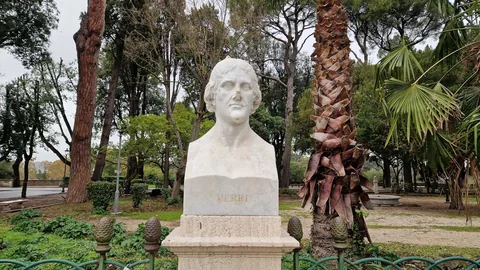
Verri moved from Milanese Enlightenment journalism to historical fiction inspired by the ancient remains of Rome.
Find on the map